Art Institute of Chicago
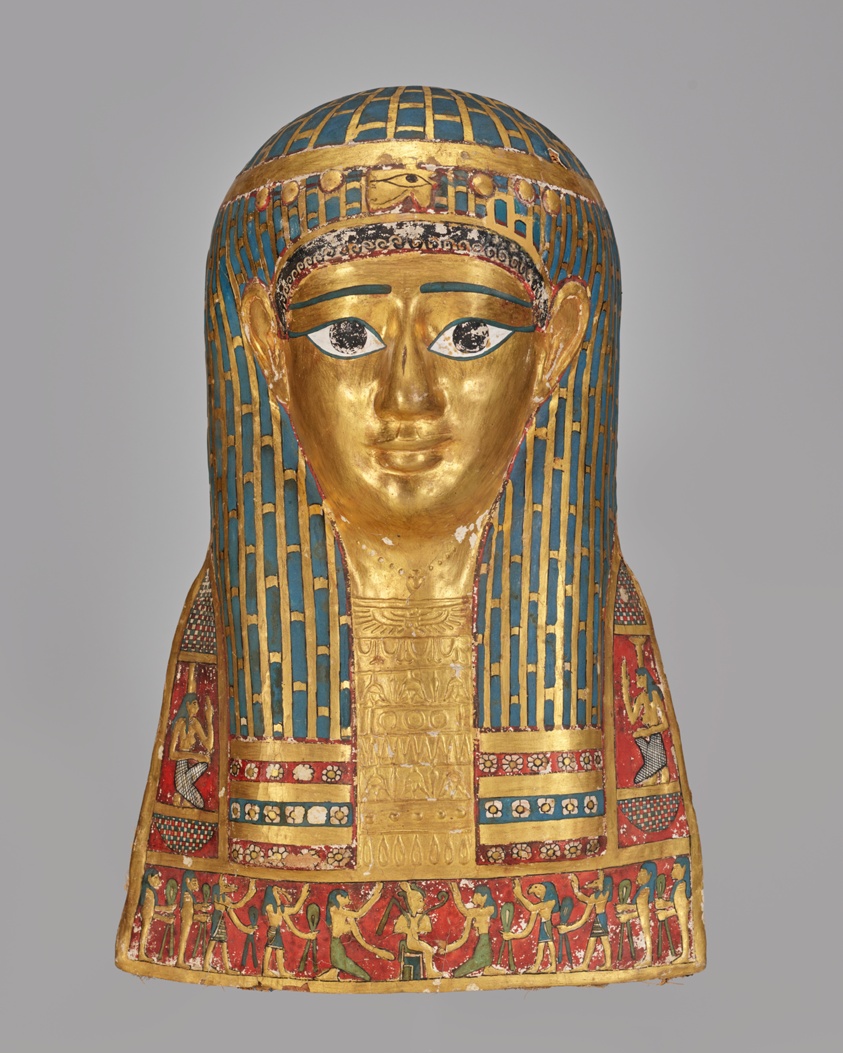
Funerary Mask
Egyptian; probably from Hawara, EgyptLinkedCulture matchlcp-48435b347976
- Date
- Late Ptolemaic Period-early Roman Period, 1st century BCE
- Medium
- Cartonnage, gold leaf, and pigment
- Culture
- Egypt
- Department
- Arts of Africa
- Institution
- Art Institute of Chicago
- Object ID
- 64312
From the Art Institute of Chicago record
Funerary masks protected the head and chest of a mummified body. They present an idealized version of the wearer, ensuring that they would continue to breathe, eat, hear, see, and speak in the next life. Preserving the body and its individual parts through mummification or depiction was essential to life after death in ancient Egypt. Potent symbols, such as the amulets shaped like anatomical hearts strung around the neck of the mask here, provided an extra layer of protection. For ancient Egyptians the heart—not the brain—was the center of thought and emotion. In the final judgment, a tribunal of gods weighed the deceased’s heart against the feather of Maat (truth) to determine whether they had led a just life, which included providing for the poor, widows, and orphans and avoiding misdeeds such as theft and murder. A balanced scale granted entrance to the afterlife, while a heavy heart doomed its owner to an eternity of nonexistence.
The authoritative record is held by Art Institute of Chicago. LinkedCulture surfaces this object and its connections; it does not alter institutional metadata.
Get printable QR codesHide QR codes
Open QR codes for this object page and the museum record. They stay collapsed until needed.
Provenance & credit
As published by the source institution. Coverage varies — not every institution's open-data feed includes ownership history.
- Credit line
- W. Moses Willner Fund
- Provenance
- The Art Institute of Chicago, acquired in 1910.
Linked open data
Authority identifiers that link this record into the wider web of cultural data — stable references you can follow to the source.
- Object type
- AAT300234126
Part of a LinkedCulture topic
 Ancient Egyptian Personal Objects
These objects are cosmetic implements and grooming tools from ancient Egypt, including mirrors, palettes for grinding pigments, and decorative knives, representing daily life and personal adornment practices.
476 objects from 5 institutions
Related across collections
Semantically similar works from Art Institute of Chicago and other institutions.