Art Institute of Chicago
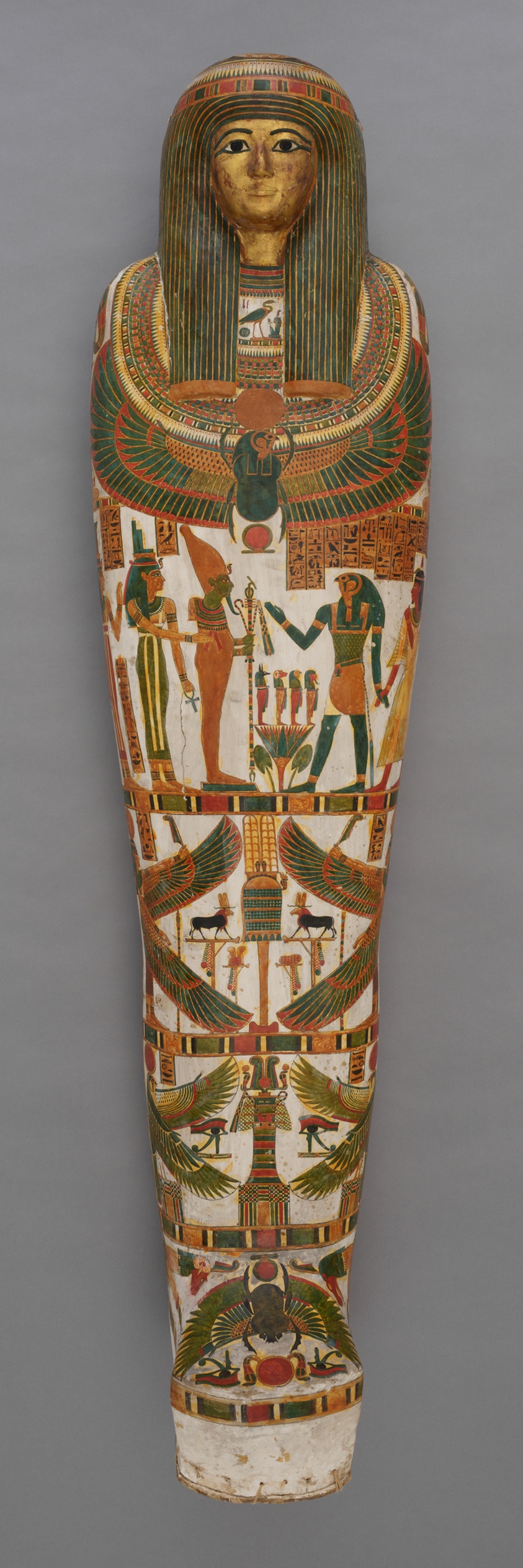
Coffin and Mummy of Paankhaenamun
Egyptian; Thebes (now Luxor), EgyptLinkedCulture matchlcp-228a4502183e
- Date
- Third Intermediate Period, Dynasty 22, reign of Osorkon I (about 924–889 BCE)
- Medium
- Cartonnage, gold leaf, pigment, and mummified human remains
- Culture
- Thebes
- Department
- Arts of Africa
- Institution
- Art Institute of Chicago
- Object ID
- 64339
From the Art Institute of Chicago record
Mummification is the ancient Egyptian funerary practice of drying out a corpse for preservation. Anointed with oils and spices and protected with amulets, this linen-wrapped body was placed in a series of nesting coffins; the vividly painted cartonnage was the innermost shell. Across the surface of the mummy case, inscriptions and painted scenes and symbols identify the deceased—Paankhaenamun—and proclaim his wish to live well in the afterlife. Another inscription records that he was the doorkeeper of the temple of Amun. The names and titles on the coffin suggest that he lived at Thebes. The central scene depicts the presentation of the deceased by the falcon-headed deity Horus to Osiris, the ruler of eternity (shown, as was common, as a mummy). Other divinities help the deceased in his journey to the afterlife. Despite the youthful features of the gilt face, X-rays reveal that Paankhaenamun was middle-aged.
The authoritative record is held by Art Institute of Chicago. LinkedCulture surfaces this object and its connections; it does not alter institutional metadata.
Get printable QR codesHide QR codes
Open QR codes for this object page and the museum record. They stay collapsed until needed.
Provenance & credit
As published by the source institution. Coverage varies — not every institution's open-data feed includes ownership history.
- Credit line
- W. Moses Willner Fund
- Provenance
- The Art Institute of Chicago, acquired in 1910.
Linked open data
Authority identifiers that link this record into the wider web of cultural data — stable references you can follow to the source.
- Object type
- AAT300234126
Part of a LinkedCulture topic
 Ancient Egyptian Personal Objects
These objects are cosmetic implements and grooming tools from ancient Egypt, including mirrors, palettes for grinding pigments, and decorative knives, representing daily life and personal adornment practices.
476 objects from 5 institutions
Related across collections
Semantically similar works from Art Institute of Chicago and other institutions.