Art Institute of Chicago
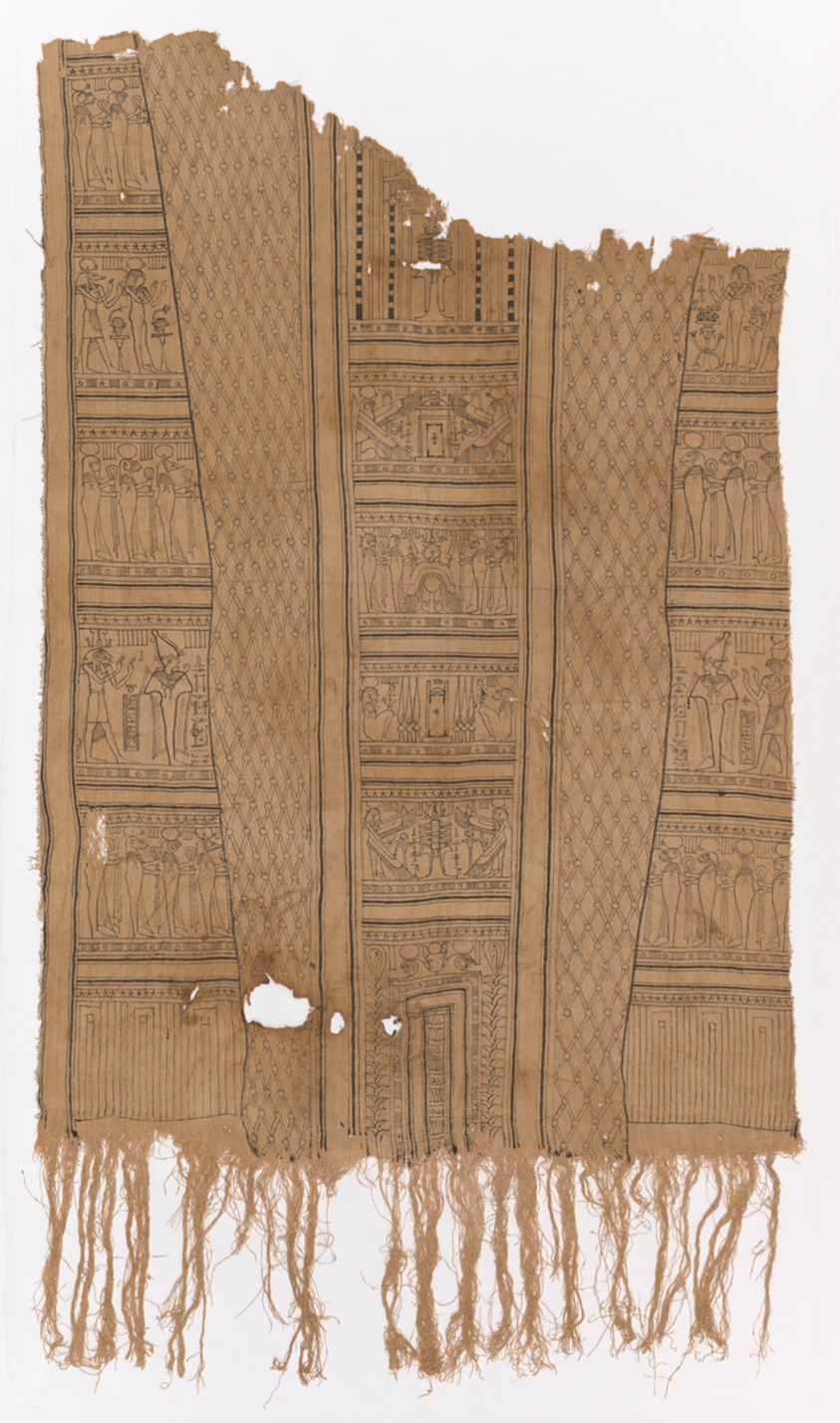
Funerary Shroud Fragment
EgyptLinkedCulture matchlcp-ef7a7d382bc3
- Date
- Ptolemaic Period (332-30 BCE)
- Medium
- Linen, plain weave; painted; warp fringe
- Culture
- Egypt
- Department
- Textiles
- Institution
- Art Institute of Chicago
- Object ID
- 64378
From the Art Institute of Chicago record
For thousands of years ancient Egyptians used linen for clothing and other purposes. Such textiles included mummy wrappings and funerary shrouds, like this fragmentary example, that were essential to preserving the body after death. The images of gods, goddesses, and other sacred symbols painted onto this shroud magically protected its owner, ensuring their access to a corporeal form in the afterlife. Along the sides, alternating panels depict deities with their hands raised in worship and gods carrying long folded strips of cloth to be used in the mummification process. The decoration at the center of the shroud replicates the form of the mummified body that once lay below, with the contours of the legs (covered in a beaded net) still preserved on this fragment.
The authoritative record is held by Art Institute of Chicago. LinkedCulture surfaces this object and its connections; it does not alter institutional metadata.
Get printable QR codesHide QR codes
Open QR codes for this object page and the museum record. They stay collapsed until needed.
Provenance & credit
As published by the source institution. Coverage varies — not every institution's open-data feed includes ownership history.
- Credit line
- W. Moses Willner Fund
- Provenance
- Art Institute of Chicago from 1910 [purchased by Martin A. Ryerson on behalf of the Art Institute of Chicago during a trip to Egypt in 1910; collection of Egyptian art objects arrived on May 28, 1910, recorded in Day Book, vol. 4, 122; former accession number X.400; memo R6000, July 13, 1936, 92 and 108].
Linked open data
Authority identifiers that link this record into the wider web of cultural data — stable references you can follow to the source.
- Object type
- AAT300014063
Part of a LinkedCulture topic
 Ancient Egyptian Personal Objects
These objects are cosmetic implements and grooming tools from ancient Egypt, including mirrors, palettes for grinding pigments, and decorative knives, representing daily life and personal adornment practices.
476 objects from 5 institutions
Related across collections
Semantically similar works from Art Institute of Chicago and other institutions.