Art Institute of Chicago
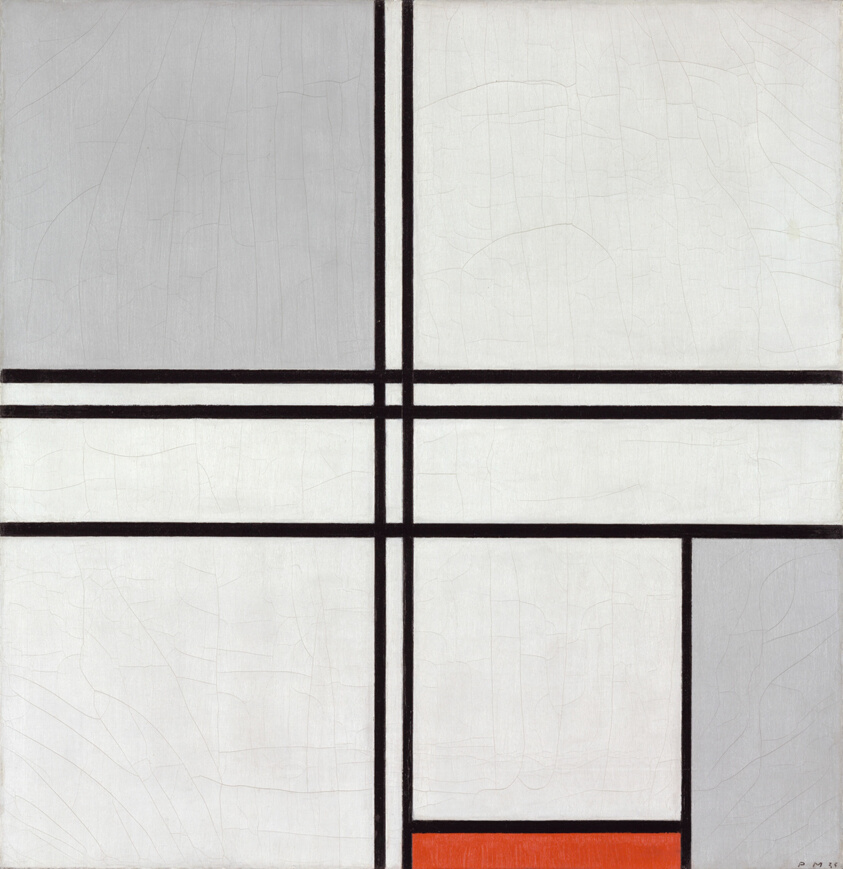
Composition (No. 1) Gray-Red
Piet MondrianLinkedCulture matchlcp-020392a14ce9
- Date
- 1935
- Medium
- Oil on canvas
- Culture
- Netherlands
- Department
- Modern Art
- Institution
- Art Institute of Chicago
- Object ID
- 65821
From the Art Institute of Chicago record
The roots of 20th-century abstract art can be traced to the late 19th century, when artists began to move away from the direct representation of objects toward the communication of emotional states or moods. In doing so, the formal properties of art—such visual elements as line, color, and composition—assumed a primary role in its production. After World War I, many artists, including Piet Mondrian, believed that abstract art could contribute to a more harmonious society by communicating in a universal, visual language. In the wake of the war's destruction, artists associated with De Stijl (meaning, "the style") in the Netherlands recognized the need for a break with the past, as well as a new aesthetic language to correspond to their utopian vision of the world. In 1917 Mondrian joined the De Stijl movement and began to develop a purely visual language of verticals and horizontals, restricting his compositions to predominantly off-white grounds divided by black rectilinear lines that framed smaller blocks of primary colors.
The authoritative record is held by Art Institute of Chicago. LinkedCulture surfaces this object and its connections; it does not alter institutional metadata.
Get printable QR codesHide QR codes
Open QR codes for this object page and the museum record. They stay collapsed until needed.
Provenance & credit
As published by the source institution. Coverage varies — not every institution's open-data feed includes ownership history.
- Credit line
- Gift of Mrs. Gilbert W. Chapman
- Provenance
- Sold by the artist to Elizabeth Goodspeed, Chicago, Jan. 1936 [conversation between Elizabeth Chapman (previously Goodspeed) and Courtney Donnell, Oct. 1977; notes in curatorial file]; given to the Art Institute of Chicago, 1949.
Linked open data
Authority identifiers that link this record into the wider web of cultural data — stable references you can follow to the source.
- Object type
- AAT300033618
Related across collections
Semantically similar works from Art Institute of Chicago and other institutions.