Art Institute of Chicago
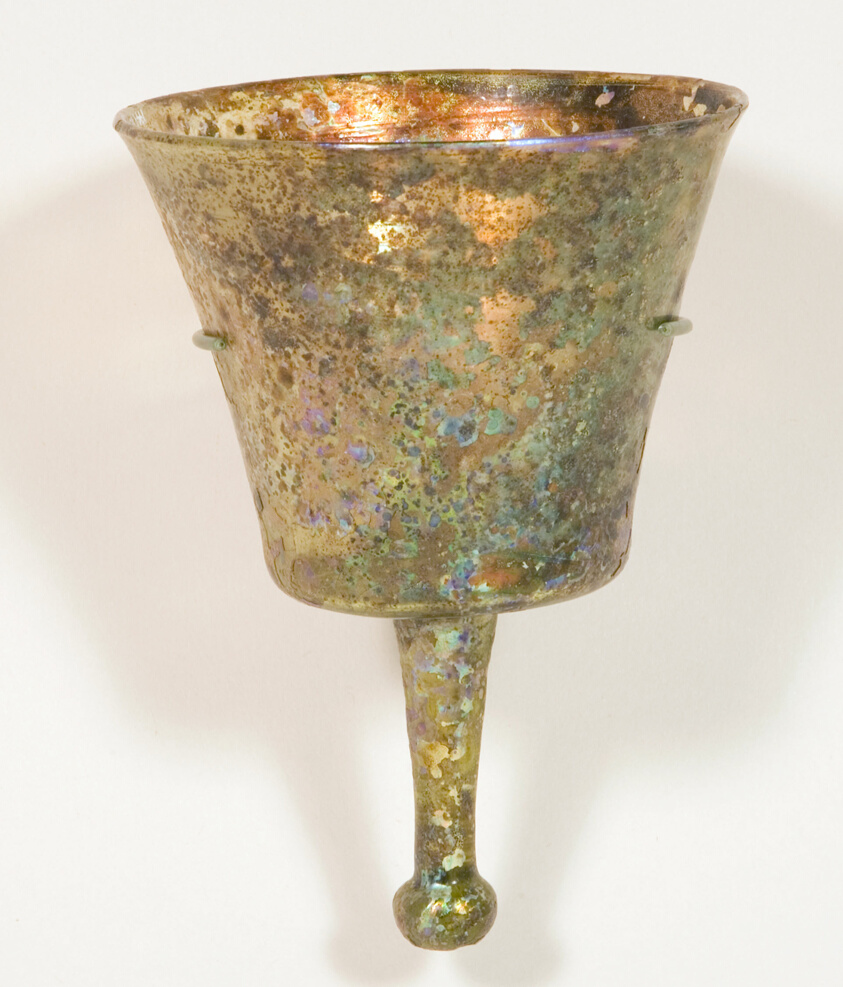
Lamp
Byzantine; Eastern MediterraneanLinkedCulture matchlcp-7aabd2819933
- Date
- 6th century
- Medium
- Glass, blown and tooled technique
- Culture
- Eastern Mediterranean Region
- Department
- Arts of Greece, Rome, and Byzantium
- Institution
- Art Institute of Chicago
- Object ID
- 67385
From the Art Institute of Chicago record
This lamp was meant to be suspended from polykandela, or chandeliers, which hung from the ceiling. The early Byzantines, like the Romans before them, typically burned olive oil for light. Lamps made from glass such as this were more expensive than the numerous surviving terracotta examples, and they were likely used to light the most important part of a church, such as, the altar or the nave. Keeping the lamps lit was costly, and generous donors gave endowments to churches to literally keep the lights on. Emperor Constantine, for example, donated the revenue from seven large estates specifically for the maintenance of 174 lamps, polykandela, and candlesticks in the Basilica of Saint John Lateran in Rome. Small lamps like this example held oil and a string wick that was pulled through a floating piece of wood or cork. Lamps were suspended, individually or in groups, in elaborate metal chandeliers.
The authoritative record is held by Art Institute of Chicago. LinkedCulture surfaces this object and its connections; it does not alter institutional metadata.
Get printable QR codesHide QR codes
Open QR codes for this object page and the museum record. They stay collapsed until needed.
Provenance & credit
As published by the source institution. Coverage varies — not every institution's open-data feed includes ownership history.
- Credit line
- Gift of Theodore W. and Frances S. Robinson
- Provenance
- Theodore W. and Frances S. Robinson, Chicago, by 1931; given to the Art Institute of Chicago, 1949.
Linked open data
Authority identifiers that link this record into the wider web of cultural data — stable references you can follow to the source.
- Object type
- AAT300193015
Part of a LinkedCulture topic
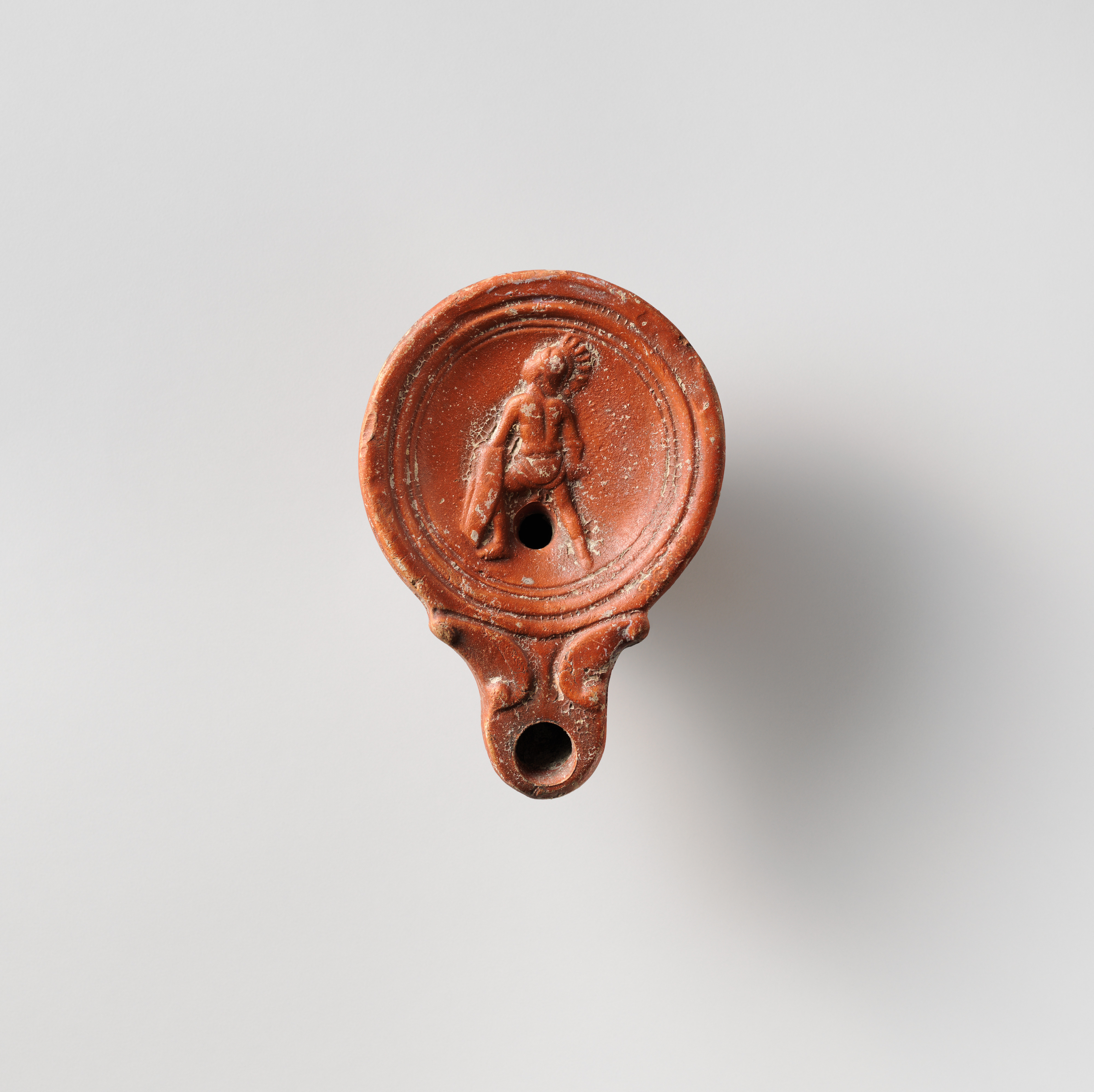 Ancient Oil Lamps
These objects are connected as examples of oil lamps and lighting devices, primarily from ancient Mediterranean civilizations including Roman, Greek, and Byzantine cultures, demonstrating the evolution and geographic spr
225 objects from 5 institutions
Related across collections
Semantically similar works from Art Institute of Chicago and other institutions.