Art Institute of Chicago
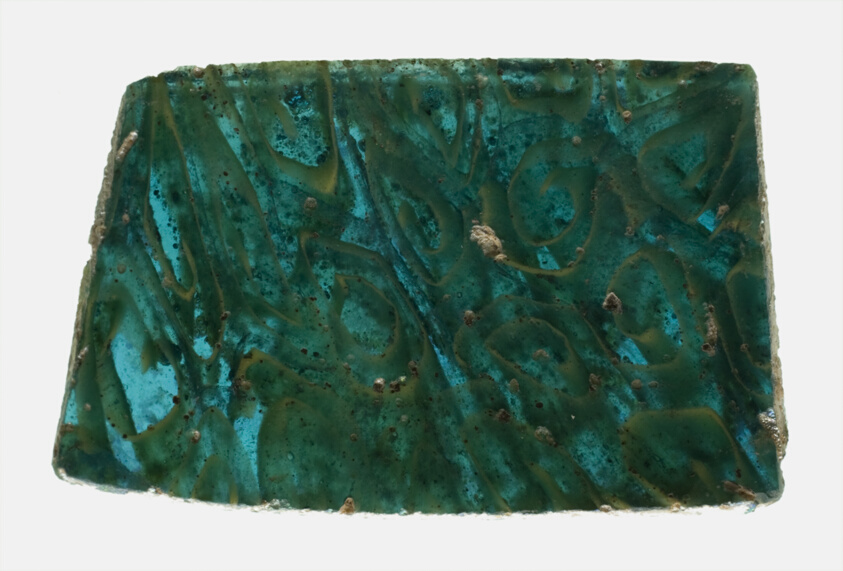
Bowl Fragment
RomanLinkedCulture matchlcp-e70b76de214d
- Date
- 1st century BCE-1st century CE
- Medium
- Glass, mosaic glass technique
- Culture
- Roman Empire
- Department
- Arts of Greece, Rome, and Byzantium
- Institution
- Art Institute of Chicago
- Object ID
- 67618
From the Art Institute of Chicago record
In ancient Rome, there was a high demand for colorful glass that could dazzle banquet guests alongside the expensive silver and gold serving wares meant to impress. Fragments like this one would have once been a part of larger mosaic dishes. The mosaic pattern was made by sagging molten glass into bowl-shaped molds, a technique used on many of these fragments is similar to millefiori, “thousand flowers” in Italian, a modern glass-making method in which tiny rods of colored glass are bundled together, wrapped in a sheet of glass, fused, and then thinly sliced to reveal swirls of a flower-like patterns. They were arranged side by side, sometimes together with bits of colored glass, and fused together with heat.
The authoritative record is held by Art Institute of Chicago. LinkedCulture surfaces this object and its connections; it does not alter institutional metadata.
Get printable QR codesHide QR codes
Open QR codes for this object page and the museum record. They stay collapsed until needed.
Provenance & credit
As published by the source institution. Coverage varies — not every institution's open-data feed includes ownership history.
- Credit line
- Gift of Theodore W. and Frances S. Robinson
- Provenance
- Theodore W. and Frances S. Robinson, Chicago, by 1931; given to the Art Institute of Chicago, 1949.
Linked open data
Authority identifiers that link this record into the wider web of cultural data — stable references you can follow to the source.
- Object type
- AAT300411641
Related across collections
Semantically similar works from Art Institute of Chicago and other institutions.