Art Institute of Chicago
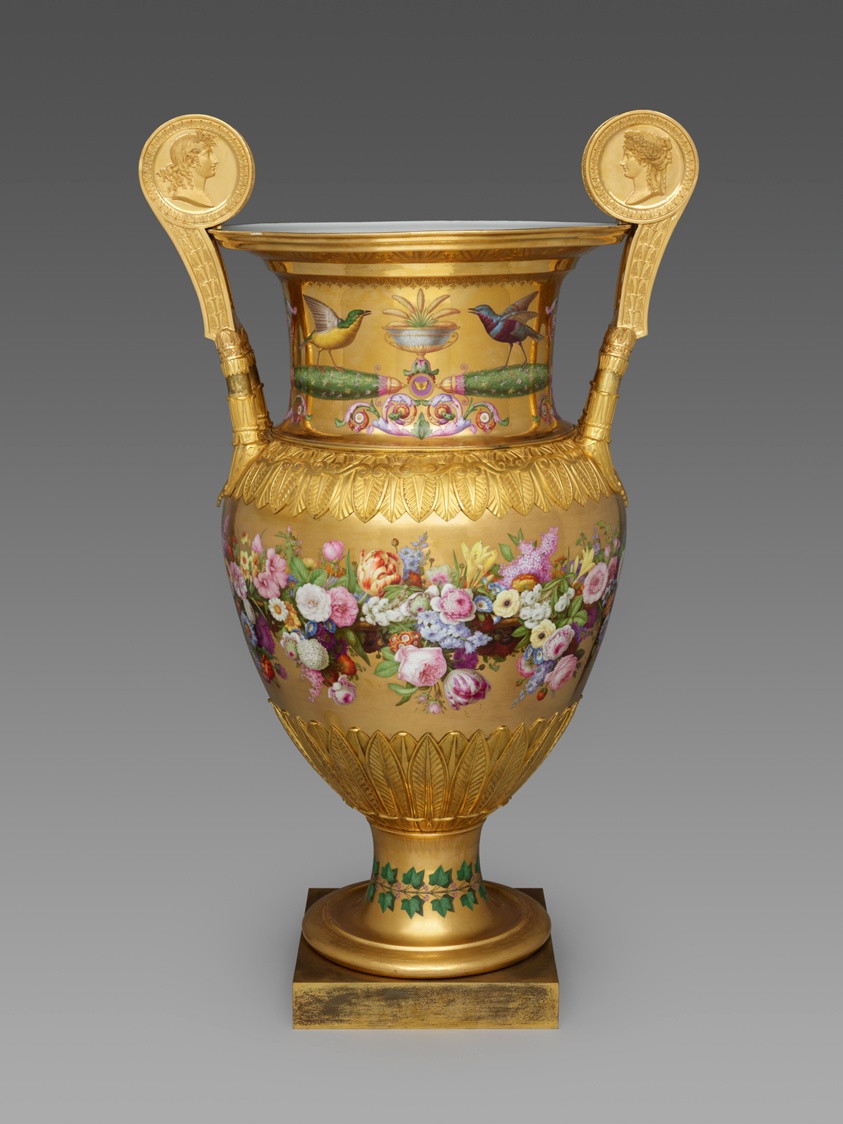
Vase (Vase étrusque à rouleau)
Sèvres Porcelain Manufactory (1756–present)LinkedCulture matchlcp-ee31089ce69a
- Date
- 1813
- Medium
- Enameled and gilded hard-paste porcelain and gilded bronze
- Culture
- Sèvres
- Department
- Applied Arts of Europe
- Institution
- Art Institute of Chicago
- Object ID
- 68769
From the Art Institute of Chicago record
The design for this monumental vase was begun around 1810 during the reign of Napoleon I, but it was not completed and released from the Sèvres Porcelain Manufactory until 1814, after the emperor’s defeat and the restoration of the Bourbon monarchy. Recognizing the diplomatic potential of such a magnificent vase, King Louis XVIII presented it to the British foreign secretary, Viscount Castlereagh, 2nd Marquess of Londonderry. The gift was likely a strategic attempt by the French to gain British favor, as Castlereagh played a key role in rebalancing power in Europe during the Congress of Vienna following Napoleon’s defeat.
The authoritative record is held by Art Institute of Chicago. LinkedCulture surfaces this object and its connections; it does not alter institutional metadata.
Get printable QR codesHide QR codes
Open QR codes for this object page and the museum record. They stay collapsed until needed.
Provenance & credit
As published by the source institution. Coverage varies — not every institution's open-data feed includes ownership history.
- Credit line
- Harold L. Stewart and Harry and Maribel G. Blum endowment funds
Linked open data
Authority identifiers that link this record into the wider web of cultural data — stable references you can follow to the source.
- Object type
- AAT300386308
Part of a LinkedCulture topic
 18th Century Porcelain Figurines
These objects are decorative ceramic figures and figure groups made from soft-paste or hard-paste porcelain during the 18th century, produced by major European porcelain factories including Meissen, Sèvres, Derby, Chelse
413 objects from 4 institutions
Related across collections
Semantically similar works from Art Institute of Chicago and other institutions.