Art Institute of Chicago
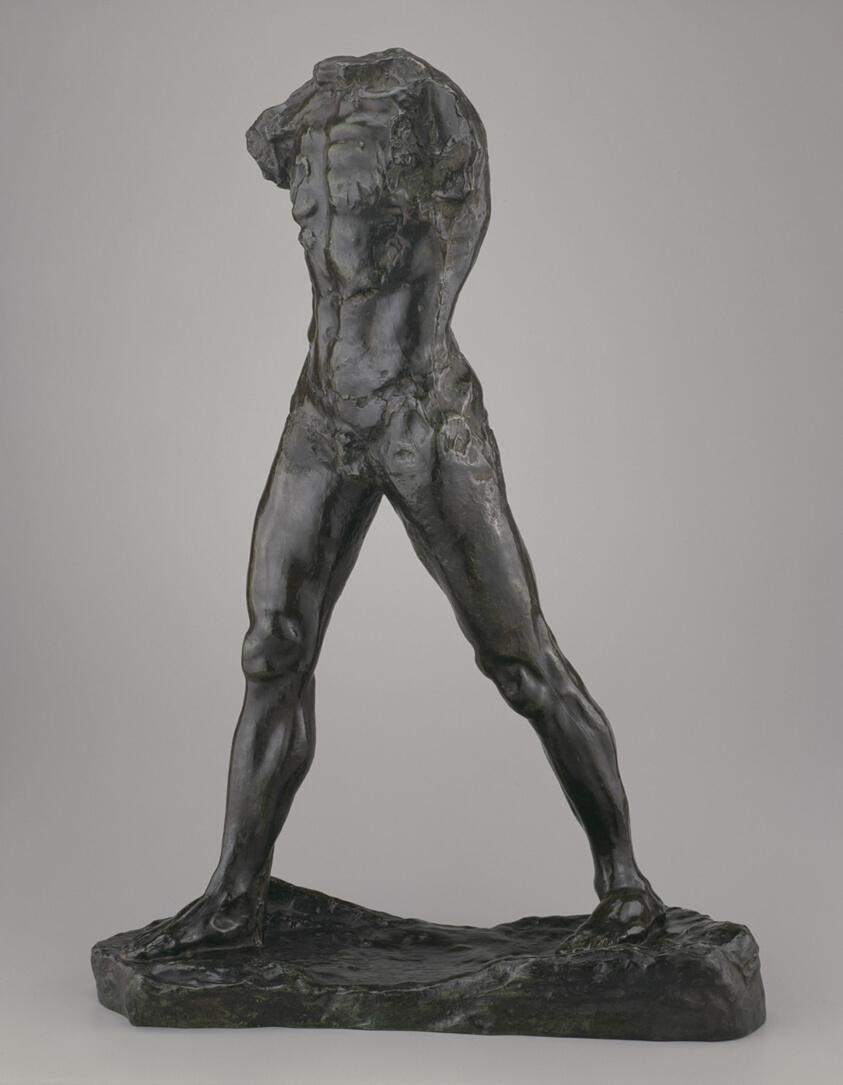
The Walking Man
Auguste Rodin (French, 1840–1917)LinkedCulture matchlcp-5fadac0041a2
- Date
- Modeled 1877–1900, cast before 1917
- Medium
- Bronze
- Culture
- France
- Department
- Painting and Sculpture of Europe
- Institution
- Art Institute of Chicago
- Object ID
- 69852
The Walking Man originated from one of Auguste Rodin’s early successes, his life-size Saint John the Baptist Preaching of 1878. Rodin made separate plaster studies of the sculpture’s components, and much later he returned to the legs of the Baptist, grafting onto them a torso from another composition. In 1900 he exhibited a half-life-size version of this work in plaster, and it made a deep impression on younger artists, notably Henri Matisse. The bronze cast of The Walking Man deliberately preserves the raw stages of artistic creation while elevating the fragmentary and unfinished to a new aesthetic plane.
The authoritative record is held by Art Institute of Chicago. LinkedCulture surfaces this object and its connections; it does not alter institutional metadata.
Get printable QR codesHide QR codes
Open QR codes for this object page and the museum record. They stay collapsed until needed.
Provenance & credit
As published by the source institution. Coverage varies — not every institution's open-data feed includes ownership history.
- Credit line
- Bequest of A. James Speyer
- Provenance
- A. James Speyer (d. 1986), Chicago, by 1986; bequeathed to the Art Institute, 1987.
Linked open data
Authority identifiers that link this record into the wider web of cultural data — stable references you can follow to the source.
- Object type
- AAT300301253
Related across collections
Semantically similar works from Art Institute of Chicago and other institutions.