Art Institute of Chicago
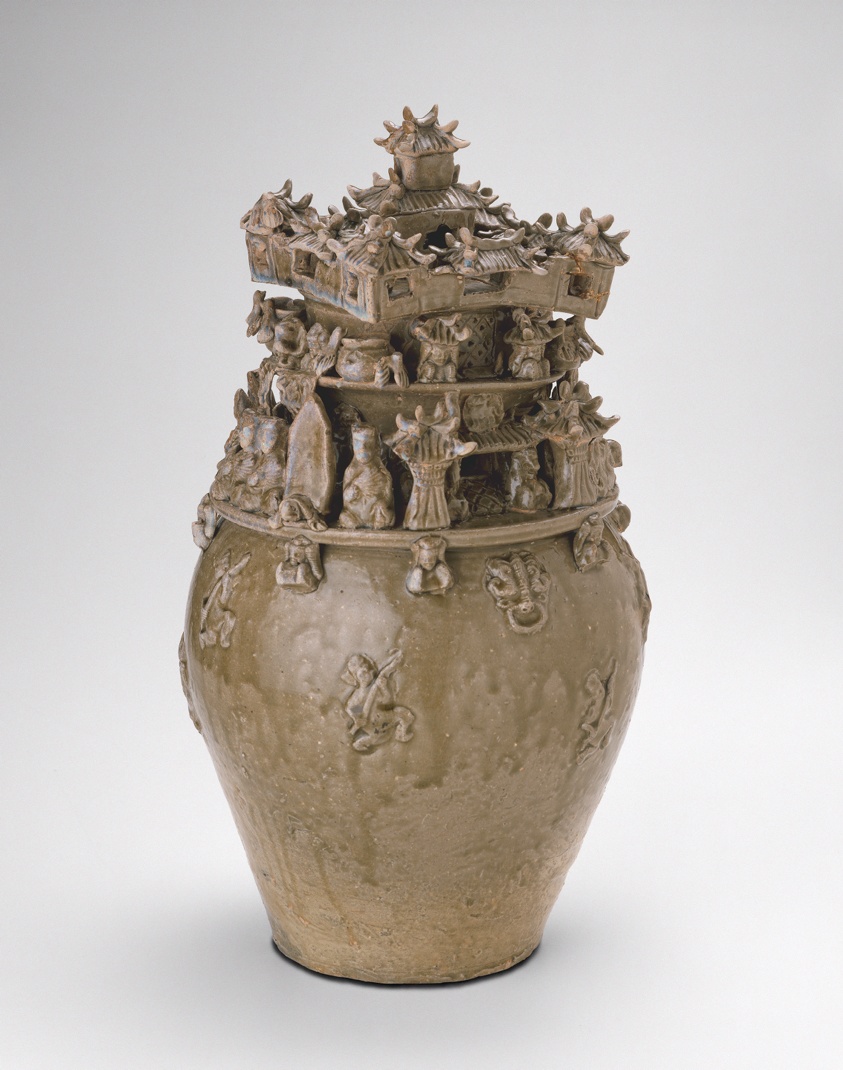
Funerary Urn (Hunping)
ChinaLinkedCulture matchlcp-777a05c2acea
- Date
- Western Jin dynasty (A.D. 265–316), late 3rd century
- Medium
- Stoneware with olive-green glaze and molded and applied decoration
- Culture
- China
- Department
- Arts of Asia
- Institution
- Art Institute of Chicago
- Object ID
- 70003
From the Art Institute of Chicago record
This complex and imaginatively modeled vessel is known as an “urn of the soul,” a symbolic dwelling for the spirit of the deceased. A profusion of figures was molded and applied to its sealed lid, which takes the form of a multistory pavilion. In the balcony-like mouth-rim, a tortoise supports a large vertical tablet, a common form of memorial stone. The real and mythical creatures on the vessel—birds, monkeys, bears, dragons, kneeling figures, and immortals riding dragons—all follow the iconography of early Chinese funerary art. Intermingled with these images, however, are depictions of the Buddha, who is identified by his meditating posture, topknot, and halo. The marginal role of Buddhist art in this decorative scheme reflects the adoption of the alien Indian religion, as the Chinese then understood it, into a hospitable mélange of different spiritual beliefs. Additionally, this jar reflects a formative stage in the development of China’s renowned celadon glaze, which became more uniform in color and texture over subsequent centuries.
The authoritative record is held by Art Institute of Chicago. LinkedCulture surfaces this object and its connections; it does not alter institutional metadata.
Get printable QR codesHide QR codes
Open QR codes for this object page and the museum record. They stay collapsed until needed.
Provenance & credit
As published by the source institution. Coverage varies — not every institution's open-data feed includes ownership history.
- Credit line
- Through prior bequests of Mary Hooker Dole and Grace Brown Palmer; through prior gifts of Josephine P. Albright in memory of Alice Higinbotham Patterson, and Mrs. Kent S. Clow; Russell Tyson, Robert C. Ross endowments
Linked open data
Authority identifiers that link this record into the wider web of cultural data — stable references you can follow to the source.
- Object type
- AAT300234126
Part of a LinkedCulture topic
 Jade Vessel Collection
These objects are all carved jade vessels and containers, predominantly from China's Qing Dynasty (especially the Qianlong period), demonstrating imperial patronage and mastery of jade carving techniques.
116 objects from 5 institutions
Related across collections
Semantically similar works from Art Institute of Chicago and other institutions.