Art Institute of Chicago
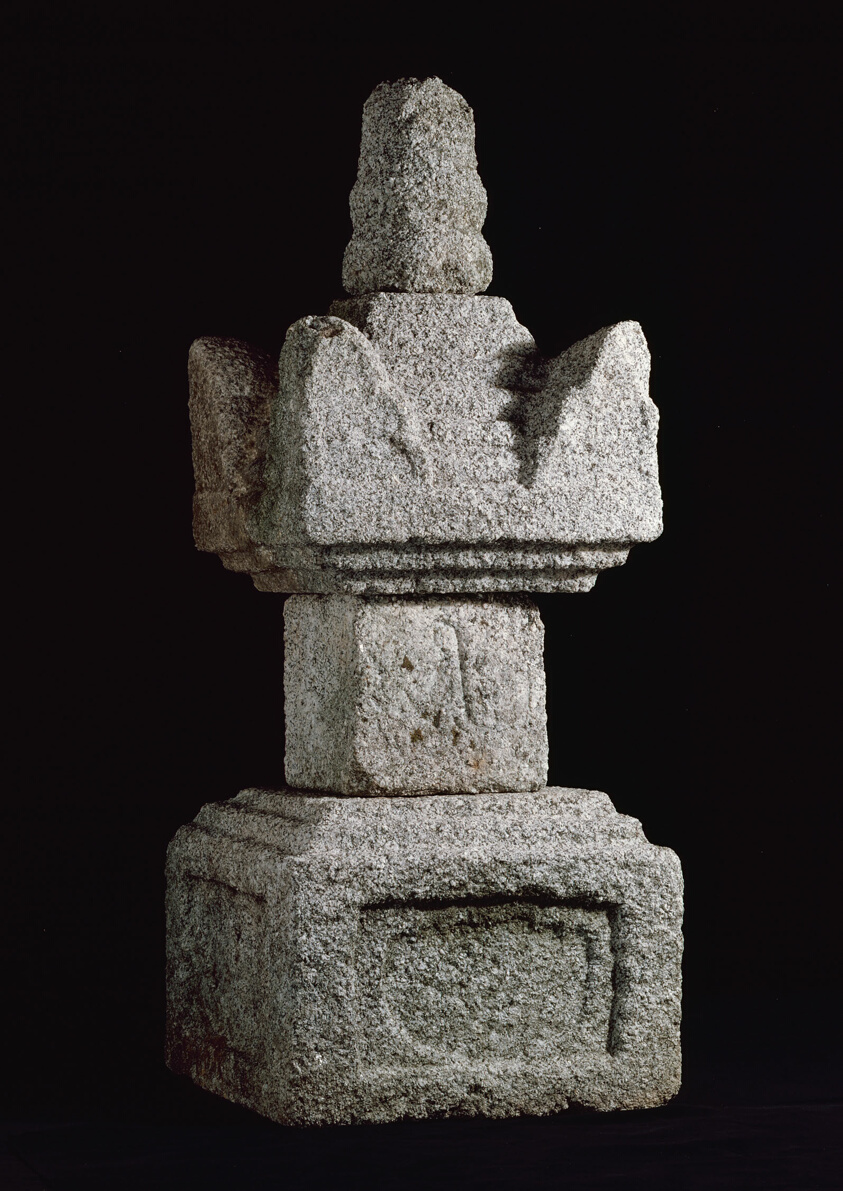
Buddhist Tower in Form of a Pagoda (Hokyointo)
JapanLinkedCulture matchlcp-59ff16a8c9fa
- Date
- 13th century
- Medium
- Granite
- Culture
- Japan
- Department
- Arts of Asia
- Institution
- Art Institute of Chicago
- Object ID
- 71783
From the Art Institute of Chicago record
The hokyointo is one of the earliest known types of stone pagoda in East Asia. Like other forms of pagoda, the design and function of this Buddhist monument originated in the ancient Indian memorial mounds (stupa), which were constructed to enshrine sacred remains or relics of the Buddha. In Japan distinct forms of multistoried stone and wood pagodas evolved to memorialize great Buddhist teachers and holy persons and to contain sacred texts (sutra). This hokyointo shows several early Kamakura period features, including the straight configuration of the petal-like projections, the Sanskrit characters carved on the vertical surfaces of the base, and the curved window frames, which are based on wood architecture.
The authoritative record is held by Art Institute of Chicago. LinkedCulture surfaces this object and its connections; it does not alter institutional metadata.
Get printable QR codesHide QR codes
Open QR codes for this object page and the museum record. They stay collapsed until needed.
Provenance & credit
As published by the source institution. Coverage varies — not every institution's open-data feed includes ownership history.
- Credit line
- Purchased with funds provided by The Rice Foundation
Linked open data
Authority identifiers that link this record into the wider web of cultural data — stable references you can follow to the source.
- Object type
- AAT300301253
Related across collections
Semantically similar works from Art Institute of Chicago and other institutions.