Art Institute of Chicago
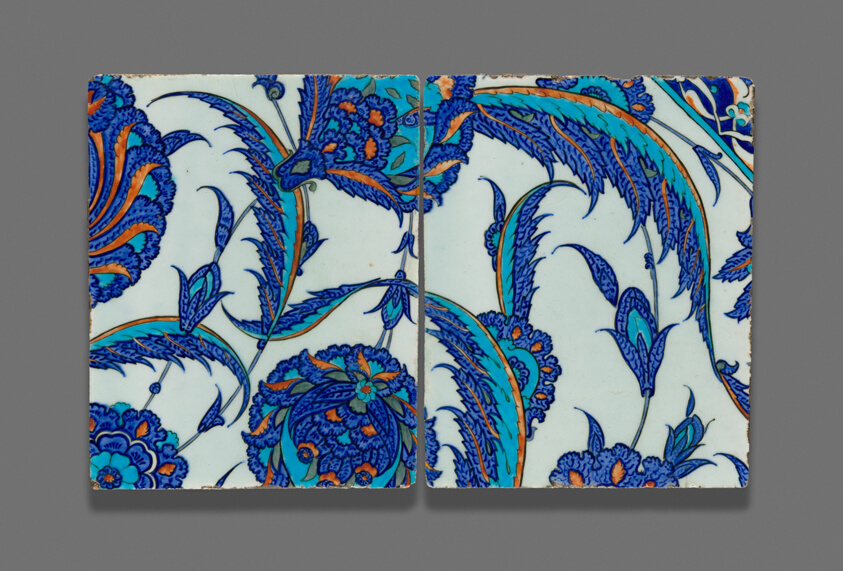
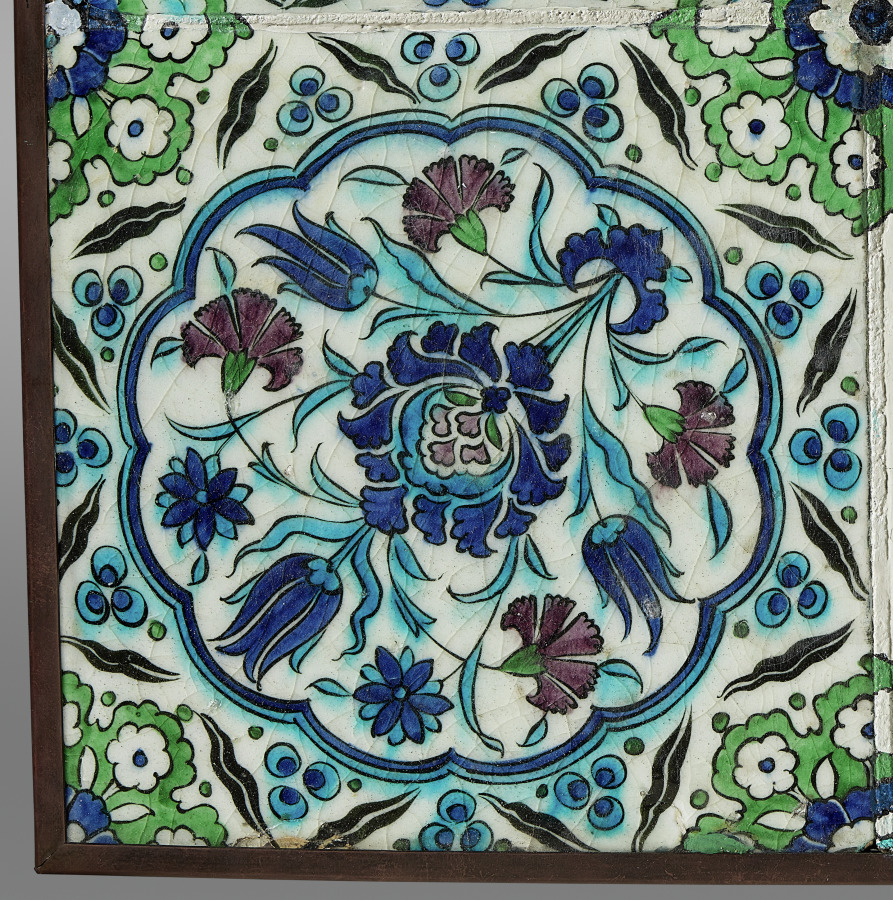
Pair of Tiles with Floral Design
Turkey
- Date
- Ottoman dynasty (1299–1923), c. 1560
- Medium
- Iznik ware, fritware painted in blue, turquoise, red, green, and black under a transparent glaze
- Culture
- Iznik
- Department
- Arts of Asia
- Institution
- Art Institute of Chicago
During the sixteenth and seventeenth centuries, at the height of the Ottoman Empire, ceramic vessels and tiles of remarkable artistic and technical quality were produced at Iznik, a city in northwestern Anatolia. The middle of the sixteenth century was an important moment in the evolution of Iznik wares. To the existing blue-and-white palette was added color: first turquoise, green, and purple, then a red slip. The earlier focus on tableware was supplemented by a new demand for architectural tilework. Also at this time a new style emerged that emphasized floral motifs, such as familiar flowers (roses, carnations, tulips, etc.), as well as compositions of leaves and palmettes. The enduring quality of Iznik at its best and most representative is the effect of bold patterning in brilliant polychrome set against a pure white ground. The design here consists of elaborate palmettes and sinuously writhing leaves with serrated edges. Rosettes are half-covered by leaves, which, in turn, are pierced by stems. This pattern is typical of the so-called saz style, a term that derives from the words saz kalem , or “reed pen.” The style developed in album drawings in black ink executed during the second half of the sixteenth century and became widely popular in various media. The two works in the Art Institute’s collection can be dated to about 1560, the apogee of Iznik tile production. They were meant to be contiguous since the pattern continues effortlessly from one to the other.
The authoritative record is held by Art Institute of Chicago. LinkedCulture surfaces this object and its connections; it does not alter institutional metadata.
Linked open data
Authority identifiers that link this record into the wider web of cultural data — stable references you can follow to the source.
- Object type
- AAT300190691
Related across collections
Semantically similar works from Art Institute of Chicago and other institutions.
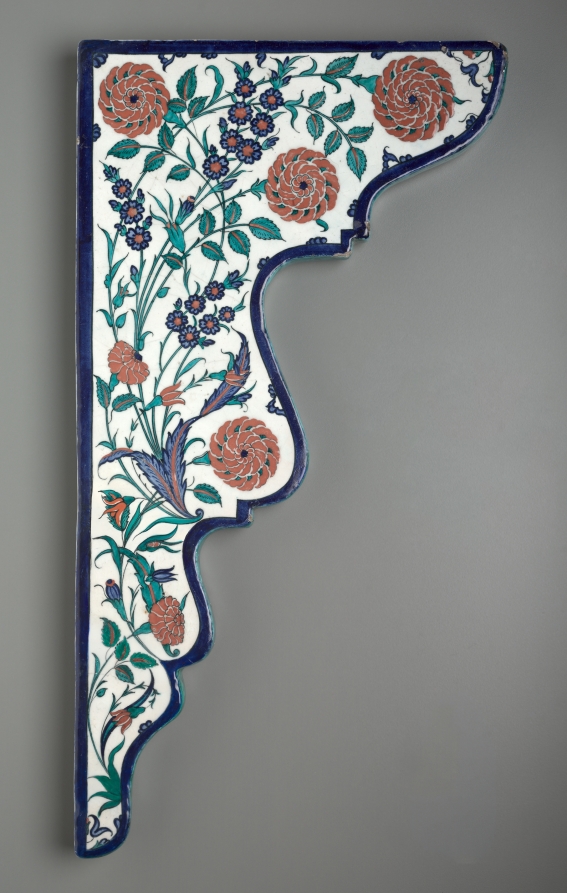
Tile Spandrel with Floral Sprays
Cleveland Museum of Art
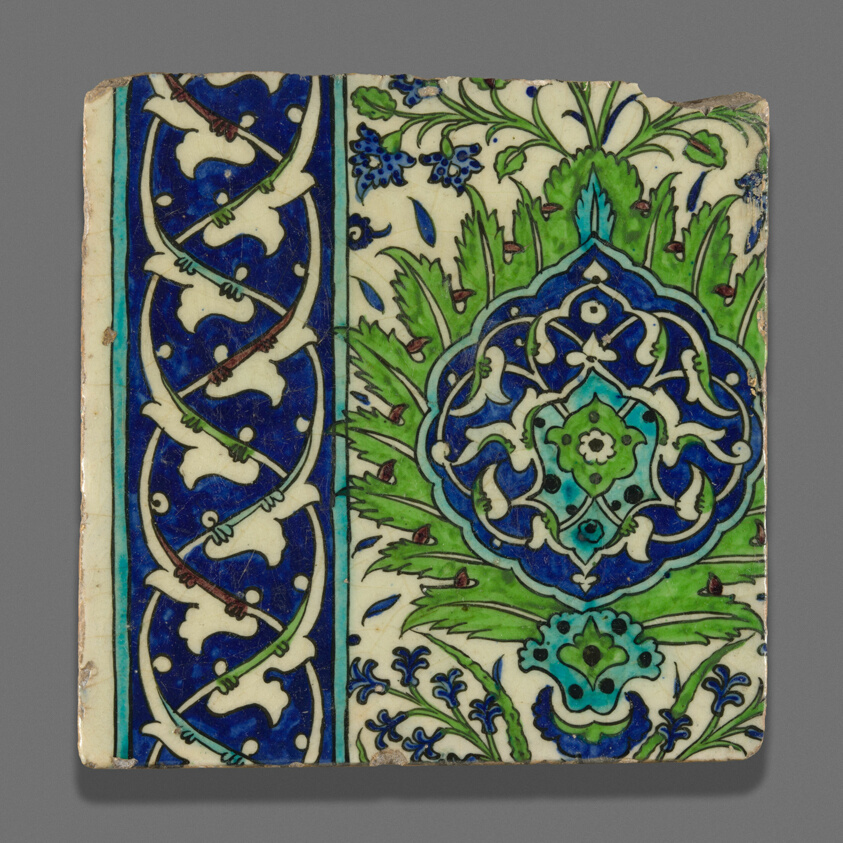
Tile with Floral Design
Art Institute of Chicago
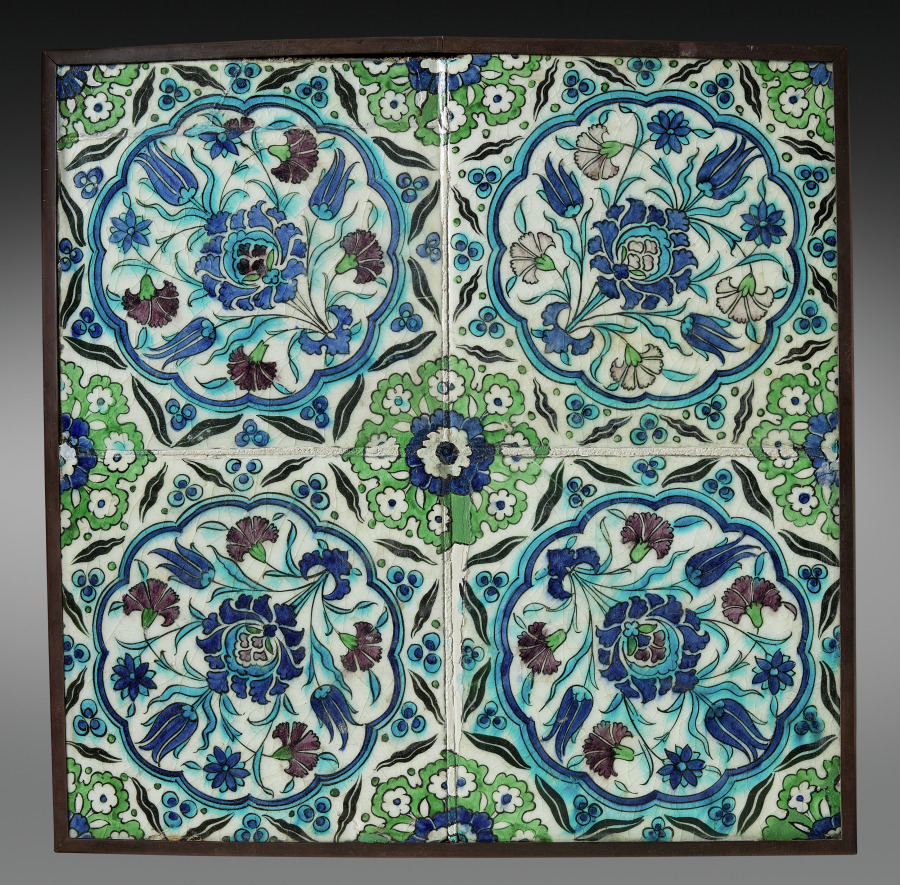
Wall Tiles
Cleveland Museum of Art
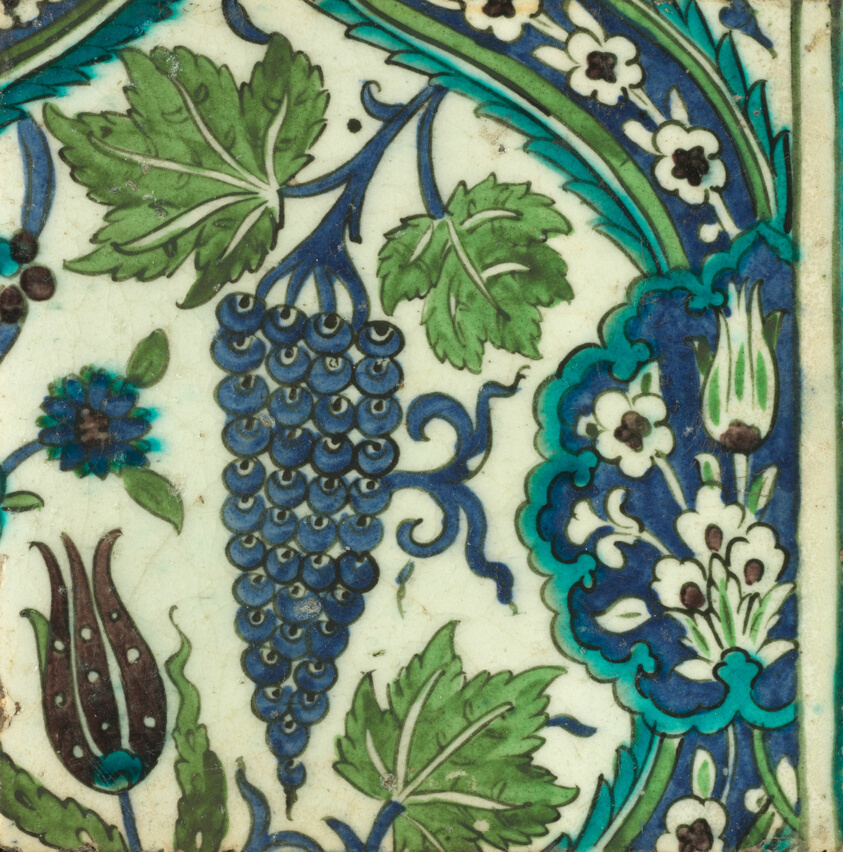
Tile with Grape Cluster
Art Institute of Chicago
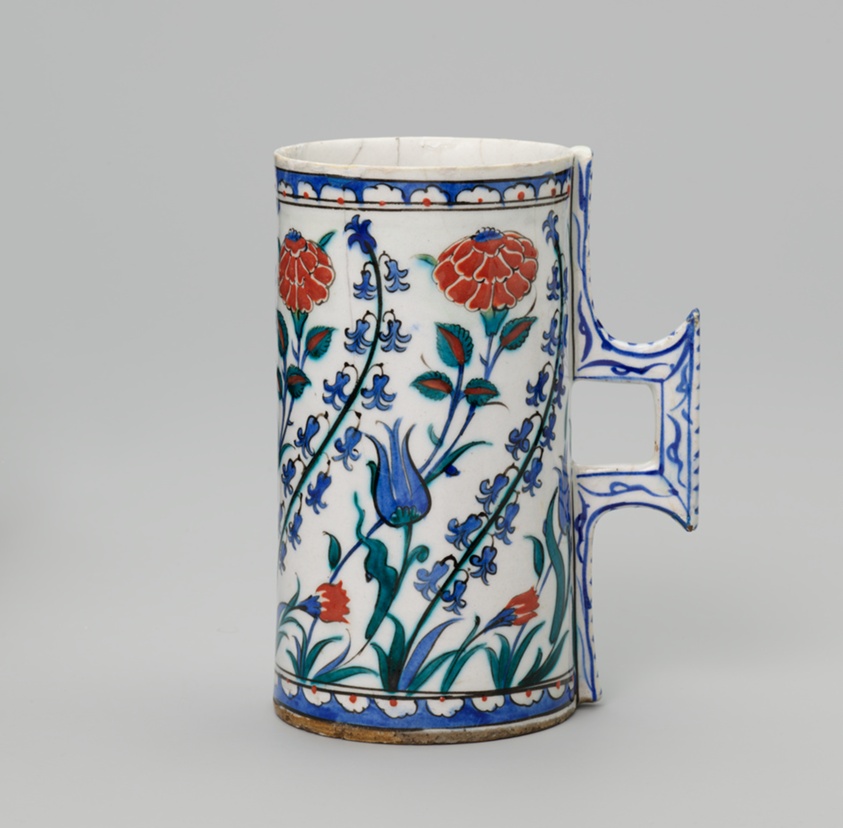
Tankard (Hanap) with Tulips, Hyacinths, Roses, and Carnations
Art Institute of Chicago

Plate
Minneapolis Institute of Art
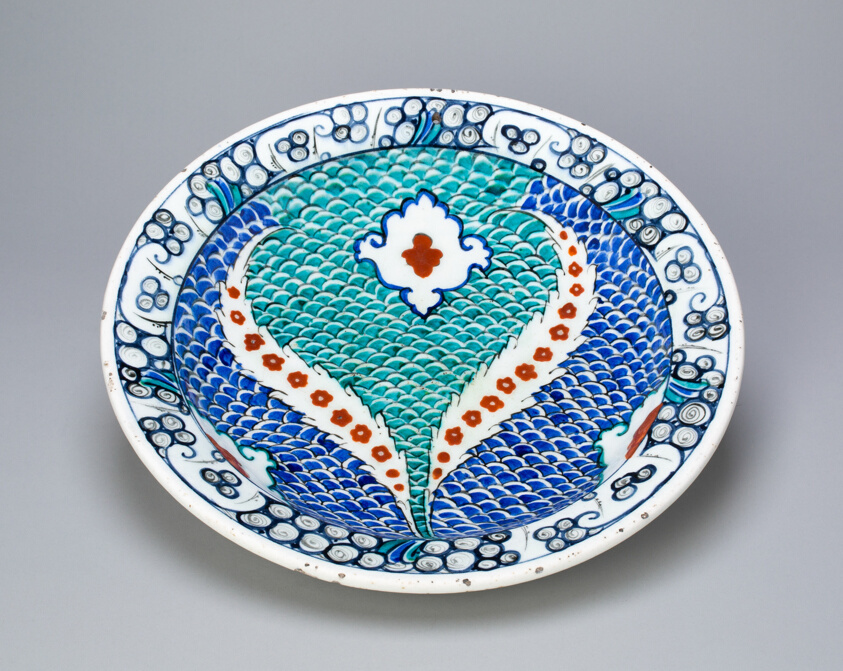
Serving Dish (Tabaq) with Vegetal and Fish-Scale Patterns
Art Institute of Chicago
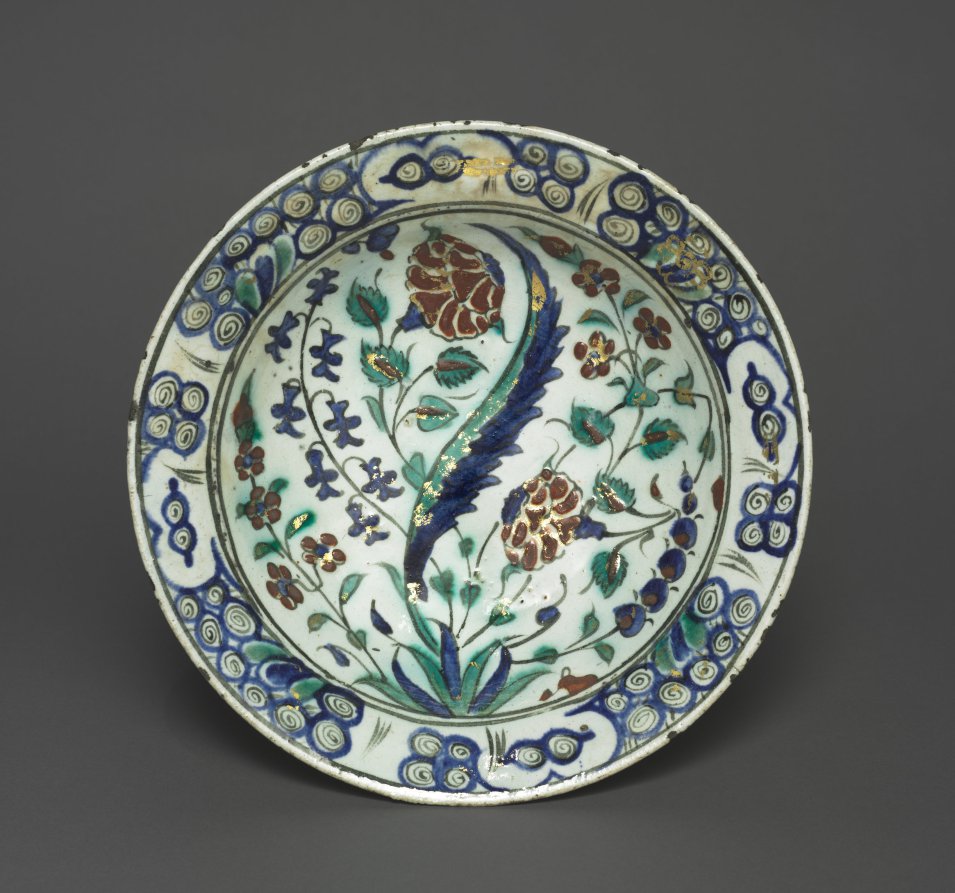
Gilded Dish with Flowers and Leaves
Cleveland Museum of Art
Wall Tile
Cleveland Museum of Art
Large Dish with Artichokes
Cleveland Museum of Art
Wall Tile
Cleveland Museum of Art
Wall Tile
Cleveland Museum of Art