Art Institute of Chicago
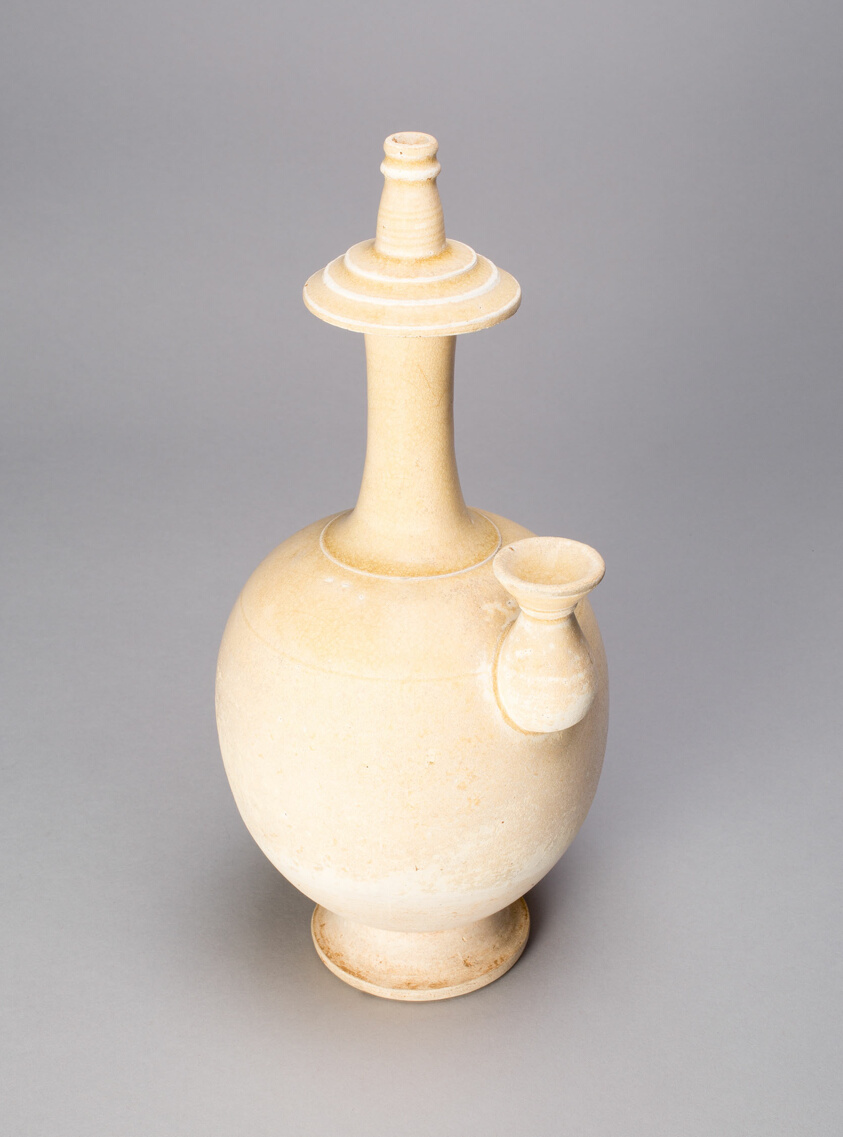
Buddhist Water Sprinkler (Kundika)
ChinaLinkedCulture matchlcp-777a05c2acea
- Date
- Tang dynasty (618–907), 7th century
- Medium
- Slip-coated stoneware with creme glaze
- Culture
- China
- Department
- Arts of Asia
- Institution
- Art Institute of Chicago
- Object ID
- 73254
From the Art Institute of Chicago record
This type of vase with pouring spout and tubelike mouth at the shoulder has served several roles in Buddhist ritual: to purify a sacred space, to invoke a deity, or to anoint a worshipper. Created in bronze as well as several types of stoneware, these vessels originated in India and spread throughout East and Southeast Asia. In Chinese Buddhist art, the kundika appears primarily as an attribute of the bodhisattva Guanyin (Sanskrit: Avalokitesvara). This ceramic example may have been made primarily for burial.
The authoritative record is held by Art Institute of Chicago. LinkedCulture surfaces this object and its connections; it does not alter institutional metadata.
Get printable QR codesHide QR codes
Open QR codes for this object page and the museum record. They stay collapsed until needed.
Provenance & credit
As published by the source institution. Coverage varies — not every institution's open-data feed includes ownership history.
- Credit line
- Gift of Mr. Russell Tyson
Linked open data
Authority identifiers that link this record into the wider web of cultural data — stable references you can follow to the source.
- Object type
- AAT300193015
Related across collections
Semantically similar works from Art Institute of Chicago and other institutions.