Art Institute of Chicago
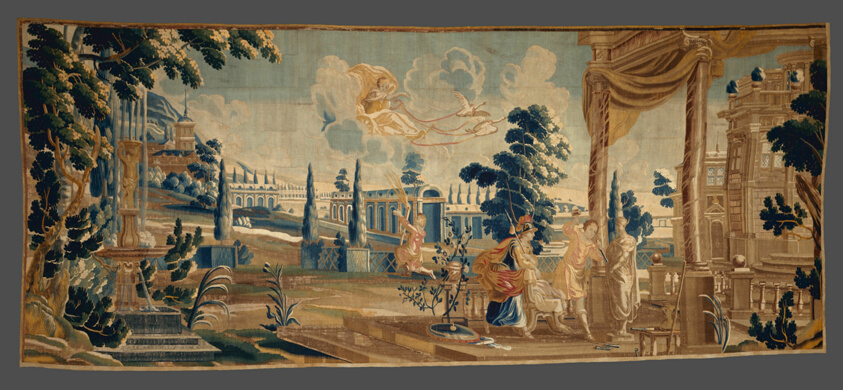
Pygmalion from Stories from Ovid
After a design probably by Daniel Janssens (1636–1682)LinkedCulture matchlcp-6288e61045e7
- Date
- c. 1675
- Medium
- Wool and silk, slit and double interlocking tapestry weave Warp: Count: 6 warps per cm; wool: S-ply of three Z-spun elements; diameters: 0.7–1.0 mm Weft: Count: varies from 16 to 32 wefts per cm; wool: pairs of S-ply of two Z-spun elements; diameters: 0.6–1.2 mm; silk: pairs of S-ply of two Z-twisted elements; diameters: 0.7–1.0 mm
- Culture
- Antwerp
- Department
- Textiles
- Institution
- Art Institute of Chicago
- Object ID
- 79537
From the Art Institute of Chicago record
Typical example of late- seventeenth-century tapestries depicting mythological scenes in wooded or parklike settings. From about 1660, these immensely popular light-hearted and slightly erotic mythological sets, usually depicting stories from Ovid's famous Metamorphoses were the lifeblood of the majority of Flemish and French workshops. The limited color range of these fashionable series and the absence of intricate large-sclae figures made them less costyly to execute than history sets. Antwerp and Oudenarde tapissiers in particular focused on this genre.
The authoritative record is held by Art Institute of Chicago. LinkedCulture surfaces this object and its connections; it does not alter institutional metadata.
Get printable QR codesHide QR codes
Open QR codes for this object page and the museum record. They stay collapsed until needed.
Provenance & credit
As published by the source institution. Coverage varies — not every institution's open-data feed includes ownership history.
- Credit line
- Gift of Mrs. Arthur Cutten
- Provenance
- Mrs. Arthur Cutten, Chicago, by Mar. 2, 1983 [incoming receipt RX865, Mar. 2, 1953; copy in curatorial object file]; given to the Art Institute of Chicago, 1953.
Linked open data
Authority identifiers that link this record into the wider web of cultural data — stable references you can follow to the source.
- Object type
- AAT300014063
Part of a LinkedCulture topic
 18th-Century French Decorative Arts
These objects represent the luxury decorative traditions of 18th-century France, unified by their use of refined materials (tapestry weave, Savonnerie knotted pile, carved wood), classical themes (Ovid's Metamorphoses, S
48 objects from 5 institutions
Related across collections
Semantically similar works from Art Institute of Chicago and other institutions.