Art Institute of Chicago
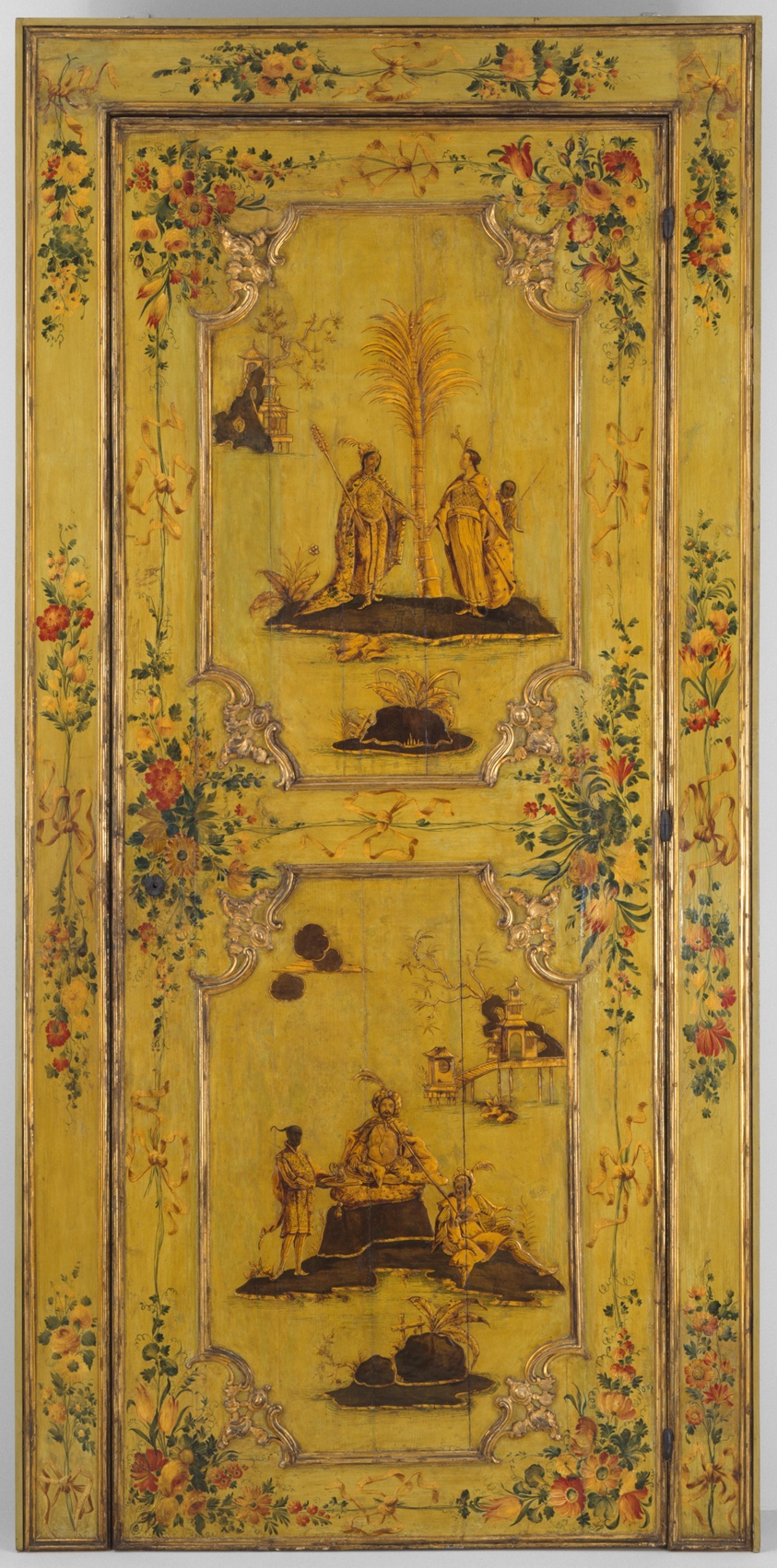
Door
Venice, ItalyLinkedCulture matchlcp-f0c4f96df681
- Date
- c. 1750
- Medium
- Wood, gessoed and lacquered with polychrome decoration and gilding
- Culture
- Venice
- Department
- Applied Arts of Europe
- Institution
- Art Institute of Chicago
- Object ID
- 79763
From the Art Institute of Chicago record
First sparked by the accounts of Marco Polo’s 13th-century voyage to China, the Italian vogue for chinoiserie (Chinese-inspired motifs) was later reinforced by the Venetian Republic’s extensive trade with the East. The city-state’s aristocrats ordered entire rooms to be decorated in Chinese style. One palace on the Grand Canal, the Ca’Rezzonico, now a museum of decorative arts, was lavishly decorated by the Rezzonico family after they purchased it in 1750. In addition to commissioning the painter Giovanni Battista Tiepolo and his son Giandomenico to create frescoes for the ceilings, the Rezzonicos followed contemporary fashion by decorating at least one room with Orientalist motifs. This door from the palace depicts two scenes that provide glimpses of Western perceptions of the East. In the upper panel, a noble couple meets in front of a palm tree; in the lower panel, a pipe-smoking potentate is being served tea. Both scenes are framed by bright sprays of flowers connected with flowing ribbons. The smooth, many layered surface of the lemon yellow door was achieved through lacquering, a technique borrowed from China but practiced in the West with an oil-based mixture rather than the resin-based one employed by Chinese craftsmen.
The authoritative record is held by Art Institute of Chicago. LinkedCulture surfaces this object and its connections; it does not alter institutional metadata.
Get printable QR codesHide QR codes
Open QR codes for this object page and the museum record. They stay collapsed until needed.
Provenance & credit
As published by the source institution. Coverage varies — not every institution's open-data feed includes ownership history.
- Credit line
- Bessie Bennett Endowment
- Provenance
- Ca' Rezzonico, Venice; sold by Count Lionel Hirschel de Minerbi [owned Ca' Rezzonico 1906-35] to Adolph Loewi by 1935; Art Institute of Chicago, 1953.
Linked open data
Authority identifiers that link this record into the wider web of cultural data — stable references you can follow to the source.
- Object type
- AAT300037336
Related across collections
Semantically similar works from Art Institute of Chicago and other institutions.