Art Institute of Chicago
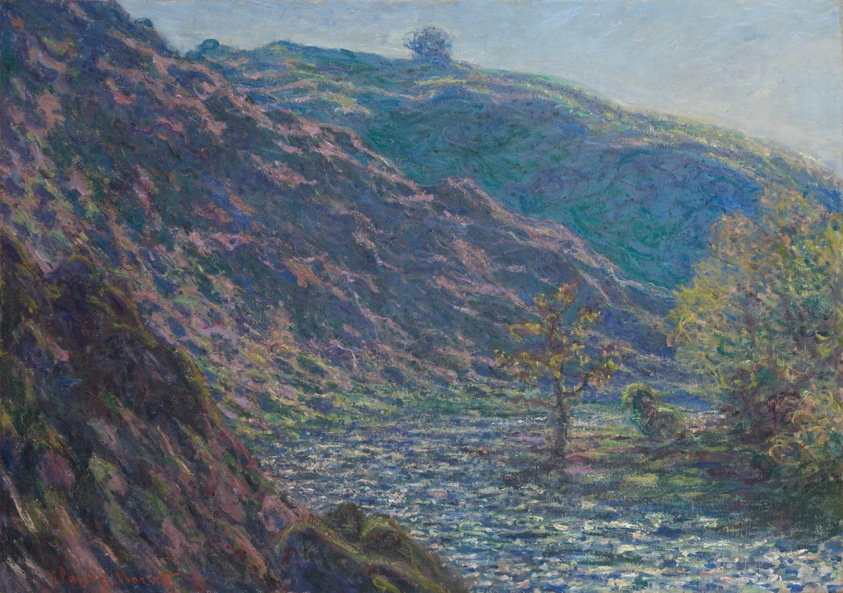
The Petite Creuse River
Claude Monet (French, 1840–1926)LinkedCulture matchlcp-8e614afd9c71
- Date
- 1889
- Medium
- Oil on canvas
- Culture
- France
- Department
- Painting and Sculpture of Europe
- Institution
- Art Institute of Chicago
- Object ID
- 81546
Claude Monet began this canvas—one of three of the Petite Creuse—in April 1889 but only returned to it later that spring, by which time the landscape had changed considerably. The oak tree, for example, was sprouting leaves, obscuring the view he had already established. Rather than rework or restart the canvas to depict the current season, Monet hired workers to defoliate the tree so that he could re-create its earlier appearance. Monet spent three months in the remote Creuse valley in central France beginning in early March 1889 after visiting the region for a few days with art critic Gustave Geffroy in February. Despite bouts of poor health and bad weather, he returned to Giverny having painted 24 canvases. These constituted the artist’s first planned and rigorously defined series of paintings.
The authoritative record is held by Art Institute of Chicago. LinkedCulture surfaces this object and its connections; it does not alter institutional metadata.
Get printable QR codesHide QR codes
Open QR codes for this object page and the museum record. They stay collapsed until needed.
Provenance & credit
As published by the source institution. Coverage varies — not every institution's open-data feed includes ownership history.
- Credit line
- Potter Palmer Collection
- Provenance
- Potter Palmer, (d. 1902) Chicago [per Wildenstein 1996; Tucker 1989, p. 55 suggests that the painting was purchased by Berthe Palmer, not Potter Palmer]; by descent to the Potter Family, Chicago; given to the Art Institute of Chicago, 1922.
Linked open data
Authority identifiers that link this record into the wider web of cultural data — stable references you can follow to the source.
- Object type
- AAT300033618
Related across collections
Semantically similar works from Art Institute of Chicago and other institutions.