Art Institute of Chicago
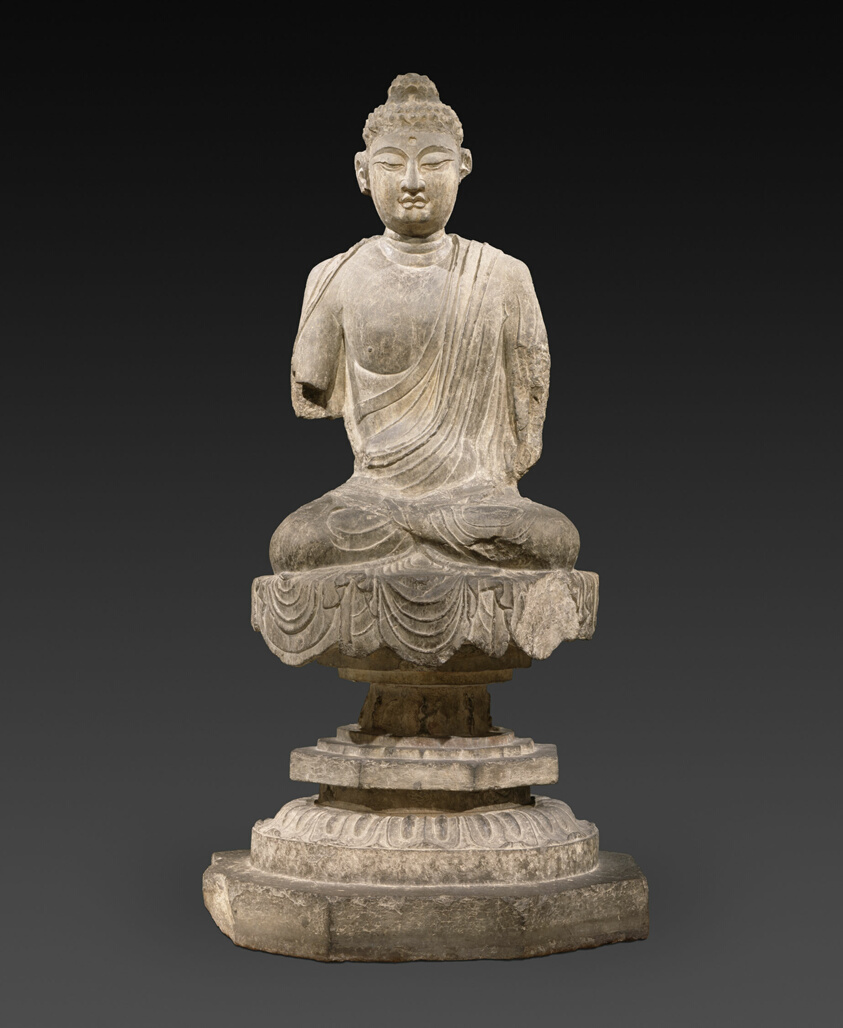
Buddha
ChinaLinkedCulture matchlcp-777a05c2acea
- Date
- Tang dynasty (A.D. 618–907), c. 725/50
- Medium
- Limestone with traces of polychromy
- Culture
- China
- Department
- Arts of Asia
- Institution
- Art Institute of Chicago
- Object ID
- 86380
From the Art Institute of Chicago record
Following its introduction from India centuries earlier, Buddhism flourished in China under the powerfully cosmopolitan Tang dynasty. Characteristic of Tang style in its robust, tapered physique, this monumental figure exhibits iconographic features distinctive to the Buddha: tightly curled hair covering a cranial mound symbolizes his enlightenment; and a forehead depression that originally held a stone or jewel represents wisdom. The articulated folds of the deity's flowing robe integrate Indian sensuality with a distinctly Tang blend of realism and linear elegance. Capping the deity's right shoulder, this garment discreetly modifies a fully bare-chested style described in Indian monastic texts. The stepped pedestal rises from a base encircled by lotus petals pure white flowers that rise from muddy water and thereby evoke Buddhist beliefs in purity and the search for enlightenment. Above, musicians encircling the tapered stem evoke an ideal, celestial realm. Together with two attendant bodhisattvas in the Art Institute collection (1930.84 and 1930.85), this sculpture came to the museum in 1930 with a note of its discovery in a temple known as Cangfosi in northern Hebei province. Neither archaeological nor written records have been located to confirm this reported site. The scale and stone medium of these figures suggest that they were commissioned for a cave temple or shrine—a chamber carved into the face of a mountain or cliff.
The authoritative record is held by Art Institute of Chicago. LinkedCulture surfaces this object and its connections; it does not alter institutional metadata.
Get printable QR codesHide QR codes
Open QR codes for this object page and the museum record. They stay collapsed until needed.
Provenance & credit
As published by the source institution. Coverage varies — not every institution's open-data feed includes ownership history.
- Credit line
- Lucy Maud Buckingham Collection
Linked open data
Authority identifiers that link this record into the wider web of cultural data — stable references you can follow to the source.
- Object type
- AAT300301253
Related across collections
Semantically similar works from Art Institute of Chicago and other institutions.