Art Institute of Chicago
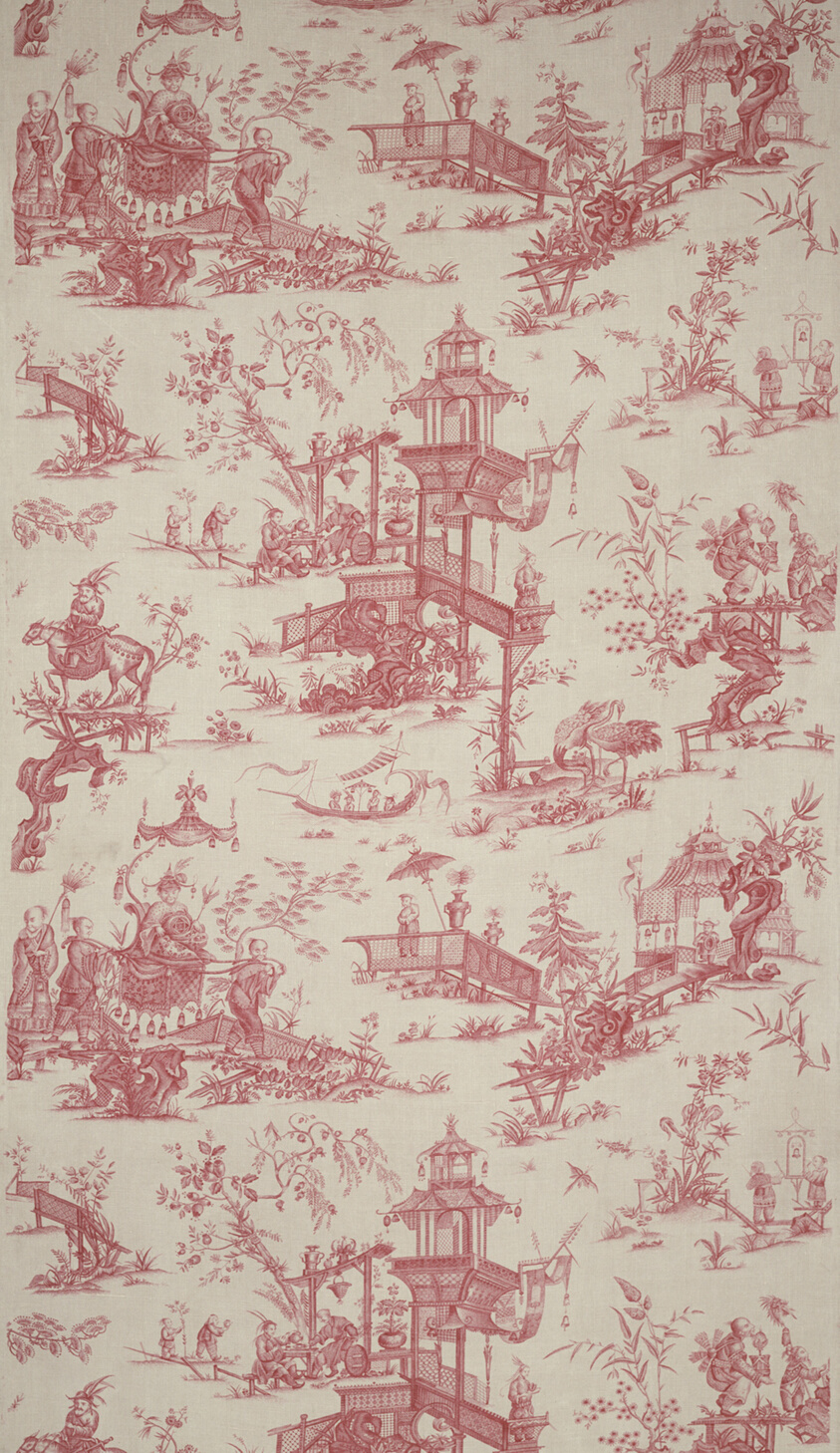
Panel (Furnishing Fabric)
Designed by Jean Baptiste Huet (French, 1745–1811) after Jean Baptiste Pillement (French, 1728-1808)LinkedCulture matchlcp-8376361cb962
- Date
- c. 1786
- Medium
- Linen, plain weave; copperplate printed
- Culture
- Jouy-en-Josas
- Department
- Textiles
- Institution
- Art Institute of Chicago
- Object ID
- 86421
Copperplate printing reached England via Ireland and then found its way to France, where one of the country’s most important printing centers was established at Jouy-en-Josas by Christopher-Philippe Oberkampf in 1760. Jean-Baptiste Huet trained as a painter and was chief designer at the Jouy-en-Josas Manufactory for twenty-eight years. His chinoiserie scene presents a theme that fascinated Europeans, particularly during the eighteenth century. Entire rooms in palaces and hotels were decorated with furniture, porcelain, metal, lacquerwork, and fabrics, all conceived as whimsical, highly westernized versions of Far Eastern forms, designs, and motifs. Many a European garden encompassed a latticed teahouse or pagoda not unlike those pictured here. Panels such as this, with their large-scale repeats, would have been used on chairs and sofas, as well as to cover vast expanses of wall.
The authoritative record is held by Art Institute of Chicago. LinkedCulture surfaces this object and its connections; it does not alter institutional metadata.
Get printable QR codesHide QR codes
Open QR codes for this object page and the museum record. They stay collapsed until needed.
Provenance & credit
As published by the source institution. Coverage varies — not every institution's open-data feed includes ownership history.
- Credit line
- Gift of Robert Allerton
Linked open data
Authority identifiers that link this record into the wider web of cultural data — stable references you can follow to the source.
- Object type
- AAT300014063
Related across collections
Semantically similar works from Art Institute of Chicago and other institutions.