Art Institute of Chicago
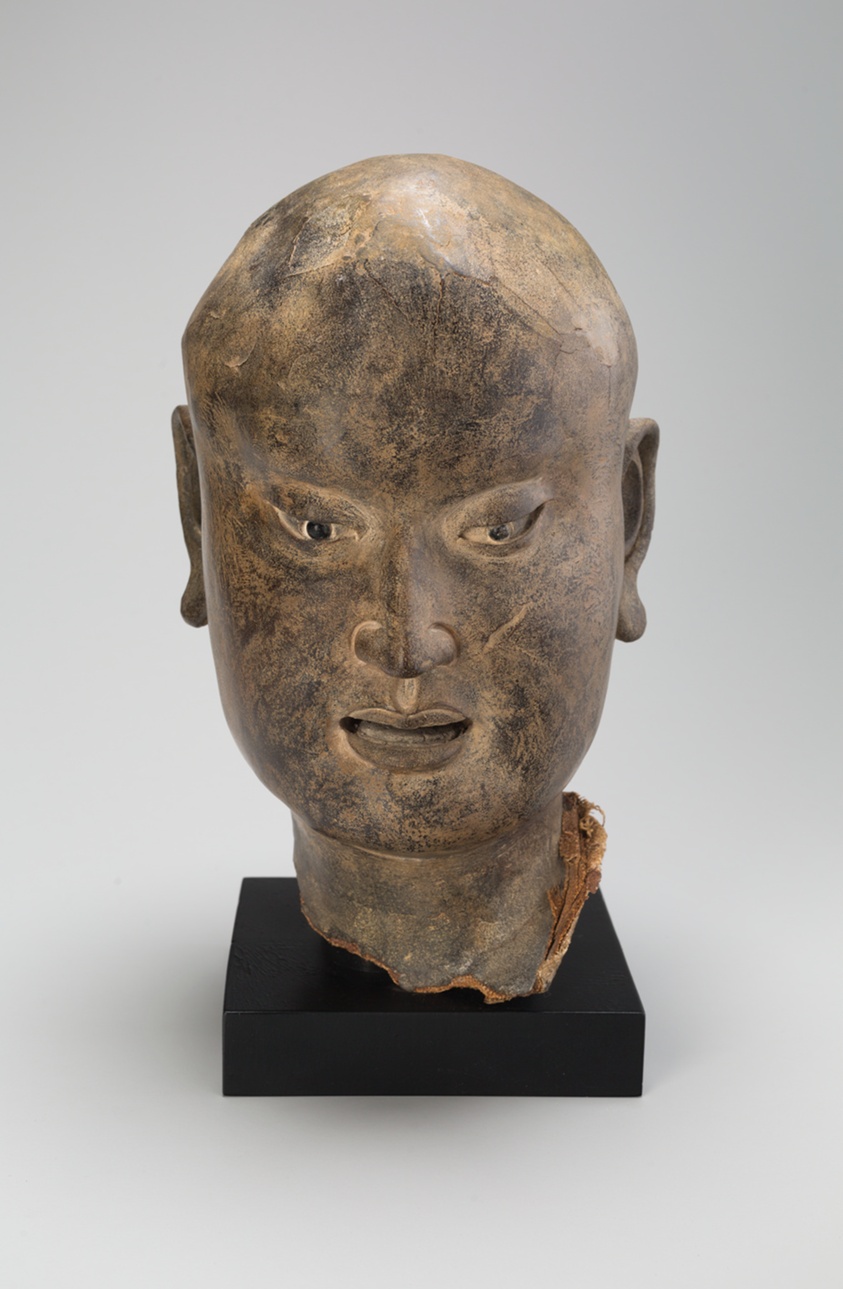
Head of a Luohan
ChinaLinkedCulture matchlcp-777a05c2acea
- Date
- Northern Song, Liao, or Jin dynasty, c. 11th century
- Medium
- Hollow dry lacquer
- Culture
- China
- Department
- Arts of Asia
- Institution
- Art Institute of Chicago
- Object ID
- 88724
From the Art Institute of Chicago record
In traditional Buddhist belief, the luohan is a disciple who has attained enlightenment through intense personal effort. Beginning in the ninth century, the worship of luohan and their depiction in art evolved primarily in the context of the Chan (Zen), or “meditation,” sect of Buddhism. This head was created in the delicate technique of hollow dry lacquer. The artisan first soaked layers of coarse cloth in lacquer (a thick sap tapped from a sumac tree) and applied these to a clay core formed over an armature of wood or other material. After allowing the work to dry, he applied a thick layer of lacquer paste to create the basic shape of the sculpture and a thinner coat into which he carefully modeled the eyes, high cheekbones, and other facial features. After removing the core and supporting armature, he set colored beads behind the eyes to represent irises and pupils. Finally, he painted the surface and perhaps applied gilding. Although these surface finishes have disintegrated over the centuries, the sensitively executed facial features preserve the insightful expression of the luohan.
The authoritative record is held by Art Institute of Chicago. LinkedCulture surfaces this object and its connections; it does not alter institutional metadata.
Get printable QR codesHide QR codes
Open QR codes for this object page and the museum record. They stay collapsed until needed.
Provenance & credit
As published by the source institution. Coverage varies — not every institution's open-data feed includes ownership history.
- Credit line
- Gift of the Orientals
Linked open data
Authority identifiers that link this record into the wider web of cultural data — stable references you can follow to the source.
- Object type
- AAT300301253
Related across collections
Semantically similar works from Art Institute of Chicago and other institutions.