Art Institute of Chicago
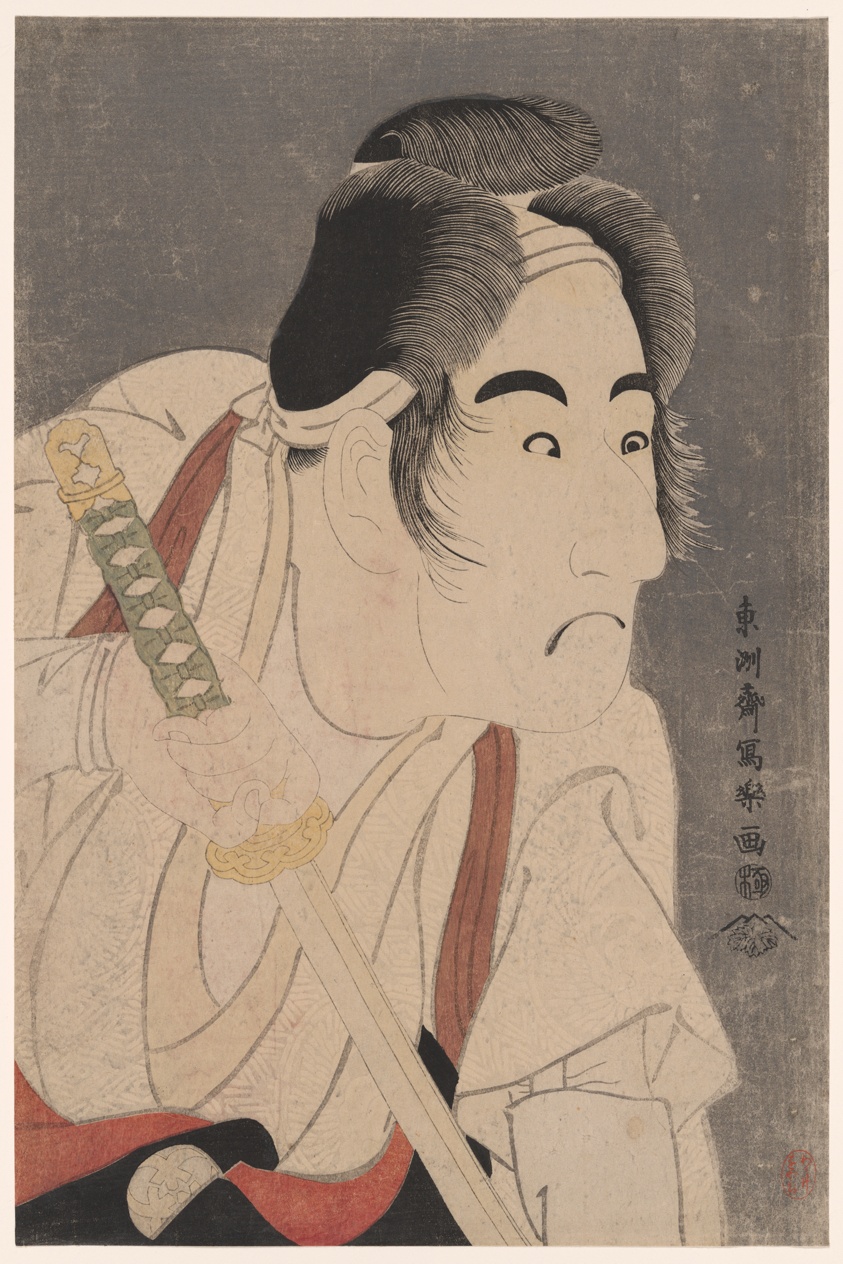
The actor Bando Mitsugoro II as Ishii Genzo
Toshusai Sharaku 東洲斎 写楽LinkedCulture matchlcp-571224483eef
- Date
- 1794
- Medium
- Color woodblock print; oban
- Culture
- Japan
- Department
- Arts of Asia
- Institution
- Art Institute of Chicago
- Object ID
- 89856
From the Art Institute of Chicago record
Almost nothing is known of the life of Tōshūsai Sharaku, whose entire oeuvre of bold portraits of Kabuki actors was produced during a ten-month period in 1794–95. Sharaku’s prints are frank and piercing, combining satire with decorative power. His aggressive style is made all the more dramatic by his use of a dark mica background, which throws the silhouette of the posturing actor into strong relief. Depicted here is the actor Bandō Mitsugorō portraying the character Ishii Genzō at the peak dramatic moment of the play The Iris Sōga of the Bunroku Era (Hanaayame Bunroku Sōga) . With a look of intense fury, Genzō draws his sword to aid his two brothers-in-law in avenging their father’s murder. The play is based on an event that occurred in 1701 that disrupted the civil order of the Tokugawa shogunate and scandalized the population of Edo. Commentary on contemporary issues was discouraged by the Japanese government, however, so the play was disguised as a literary recounting of a famous twelfth-century act of filial revenge that occurred in the Sōga family. Unlike the elite and highly stylized Noh theater, Kabuki was a popular form of drama that reflected and catered to the tastes and pleasures of the emerging merchant class.
The authoritative record is held by Art Institute of Chicago. LinkedCulture surfaces this object and its connections; it does not alter institutional metadata.
Get printable QR codesHide QR codes
Open QR codes for this object page and the museum record. They stay collapsed until needed.
Provenance & credit
As published by the source institution. Coverage varies — not every institution's open-data feed includes ownership history.
- Credit line
- Clarence Buckingham Collection
- Provenance
- Yamanaka & Company; sold to the Art Institute of Chicago, July 11, 1940.
Linked open data
Authority identifiers that link this record into the wider web of cultural data — stable references you can follow to the source.
- Object type
- AAT300041273
Related across collections
Semantically similar works from Art Institute of Chicago and other institutions.