Art Institute of Chicago
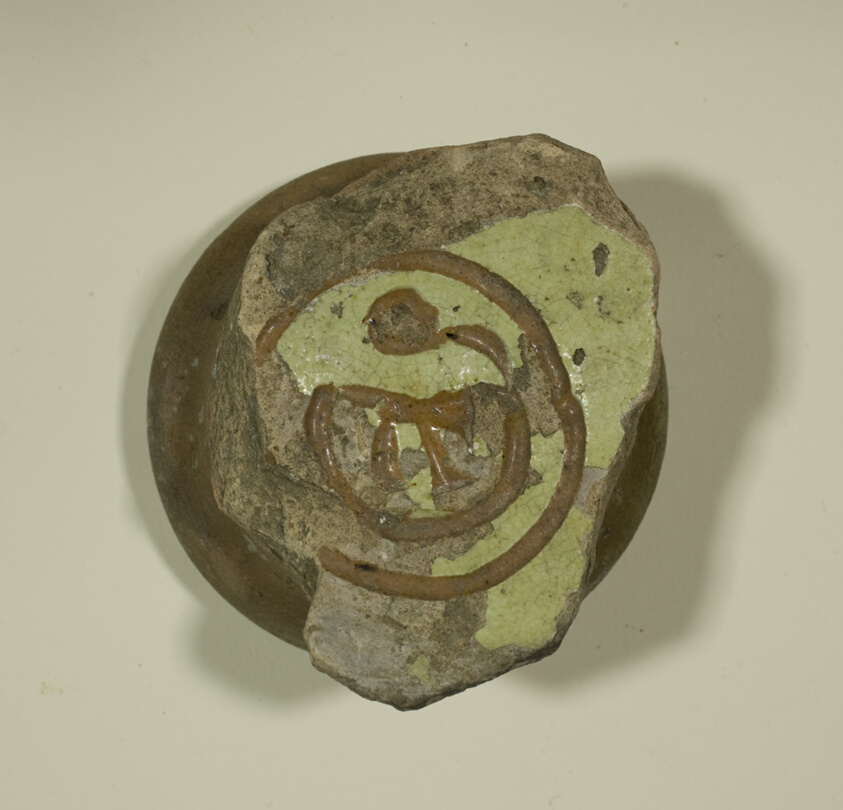
Fragment of a Bowl
ByzantineLinkedCulture matchlcp-06395b34ef5e
- Date
- 13th-14th century
- Medium
- Ceramic
- Culture
- Istanbul
- Department
- Arts of Greece, Rome, and Byzantium
- Institution
- Art Institute of Chicago
- Object ID
- 92538
From the Art Institute of Chicago record
Fragments of Byzantine pottery preserve a variety of geometric and abstract floral motifs, and even personalized monograms. Such decorations were often created by cutting through the white slip, or glaze, to reveal the red earthenware beneath, a technique known as a sgraffito. Color washes in a range of greens and browns were then placed over the incised decoration, a method first introduced in the 12th century. Later, Byzantine pottery such as this circulated throughout the eastern Mediterranean, increasingly competing with ceramics from Italy, the Islamic world, and China. These techniques and decorative motifs continued to be used in regions of Greece, Anatolia (now Turkey), and the Balkans even after the end of the Byzantine Empire in 1453.
The authoritative record is held by Art Institute of Chicago. LinkedCulture surfaces this object and its connections; it does not alter institutional metadata.
Get printable QR codesHide QR codes
Open QR codes for this object page and the museum record. They stay collapsed until needed.
Provenance & credit
As published by the source institution. Coverage varies — not every institution's open-data feed includes ownership history.
- Credit line
- Anonymous Fund
- Provenance
- David Talbot Rice (1903-1972), London; sold to the Art Institute of Chicago, 1932.
Linked open data
Authority identifiers that link this record into the wider web of cultural data — stable references you can follow to the source.
- Object type
- AAT300411641
Related across collections
Semantically similar works from Art Institute of Chicago and other institutions.