Art Institute of Chicago
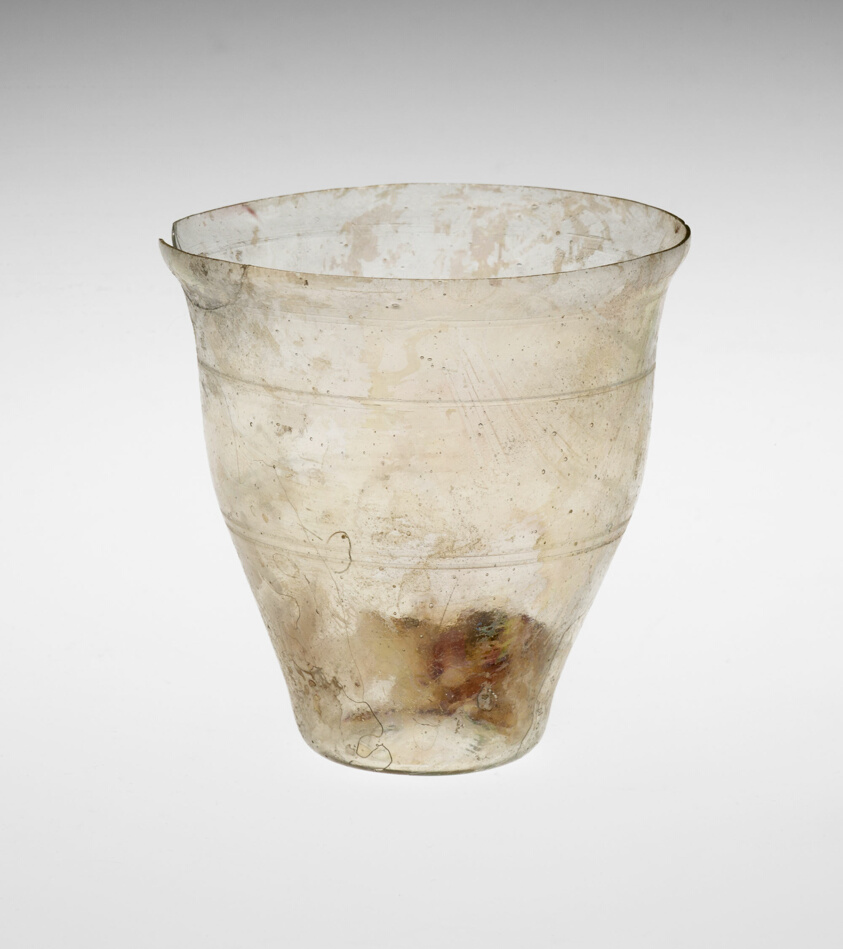
Beaker or Cup
RomanLinkedCulture matchlcp-e70b76de214d
- Date
- Probably 1st-early 2nd century
- Medium
- Glass, blown technique
- Culture
- Roman Empire
- Department
- Arts of Greece, Rome, and Byzantium
- Institution
- Art Institute of Chicago
- Object ID
- 96603
From the Art Institute of Chicago record
Initially affordable only among the wealthy, glass was used in ancient Rome as containers for oils, perfume, and tablewares. The variety of glass-making techniques reveals the changing tastes and fashions over the centuries. During the 1st century A.D., cast glass was a novel form that was a luxury for the Roman household, but by the end of the century, the innovation of blown glass - the technique used to create this vessel - allowed for less labor-intensive and less expensive production and meant people of lesser means could afford it. Blown glass became so popular it nearly supplanted ceramic and even bronze wares in the home. Colorless glass, like this beaker is made from, was particularly sought after because of its resemblance to rock crystal, a highly valued quartz stone that required special skills to cut decoration into its surface. Minerals are added to create different colors of glass, but clear glass must be decolorized, a process that was perfected in Rome.
The authoritative record is held by Art Institute of Chicago. LinkedCulture surfaces this object and its connections; it does not alter institutional metadata.
Get printable QR codesHide QR codes
Open QR codes for this object page and the museum record. They stay collapsed until needed.
Provenance & credit
As published by the source institution. Coverage varies — not every institution's open-data feed includes ownership history.
- Credit line
- Gift of Theodore W. and Frances S. Robinson
- Provenance
- Theodore W. and Frances S. Robinson, Chicago, by 1931; given to the Art Institute of Chicago, 1949.
Linked open data
Authority identifiers that link this record into the wider web of cultural data — stable references you can follow to the source.
- Object type
- AAT300193015
Related across collections
Semantically similar works from Art Institute of Chicago and other institutions.