Art Institute of Chicago
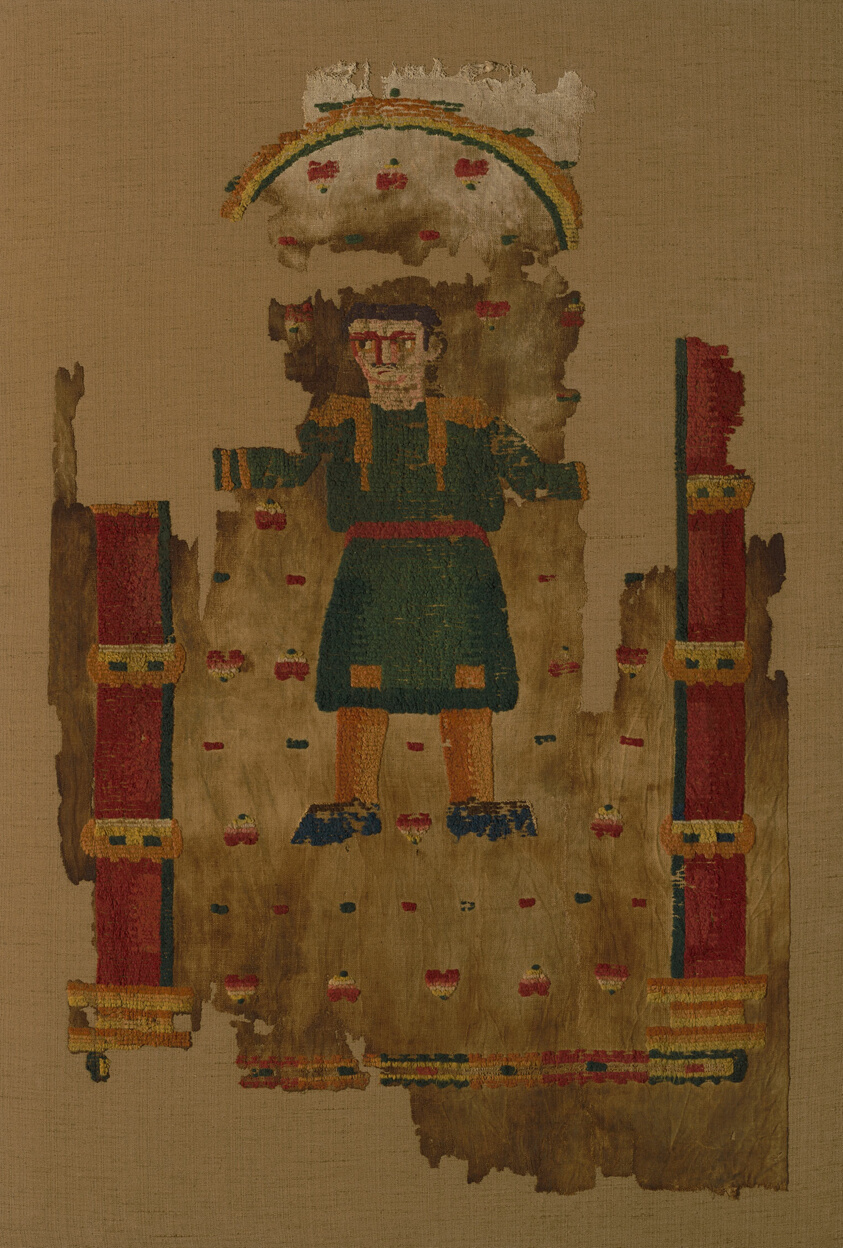
Fragment of a Hanging
Egypt
- Date
- 5th-6th century
- Medium
- Linen and wool, plain weave with weft uncut pile and embroidered linen pile formed by variations of back and stem stitches
- Culture
- Egypt
- Department
- Textiles
- Institution
- Art Institute of Chicago
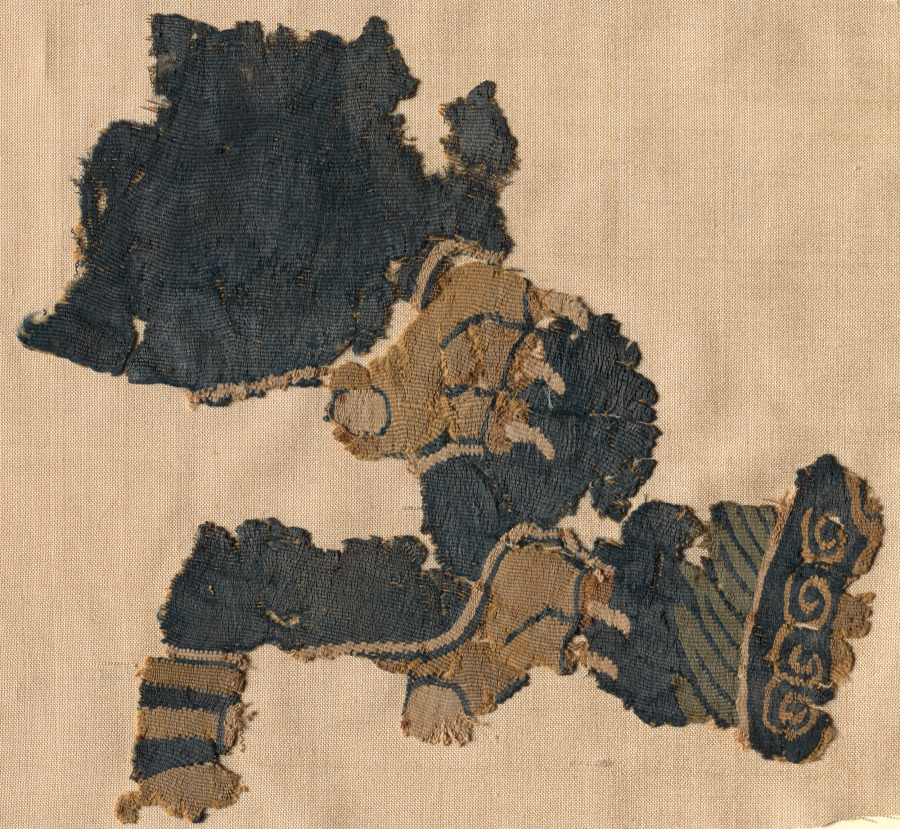
Because many textiles made by early Egyptians were preserved in arid tombs, a substantial number of these fabrics have survived in remarkably good condition. This striking portion of a wall hanging depicts a figure standing beneath a colonnaded, arched opening. With raised arms, which perhaps once held candelabrum, he wears a traditional tunic with clavic bands (the narrow strips extending down from the shoulders, on the front and back, to the waist or hem). This woven piece is distinguished by its large size, imposing composition, and brilliant, unfaded shades of red, green, blue, brown, and yellow. The figure’s commanding frontality, solemn expression, and animated side glance, together with the composition’s bold lines and vivid colors, relate this fragment to hauntingly realistic portrait icons. Also suggestive of icons is the three-dimensional appearance of the warrior’s face and legs and the columns—an effect much easier to achieve in painting than in weaving. Woven of indigenous materials, this hanging is composed of linen warps and wool and linen wefts that create an uncut pile against a plain-weave foundation, a fabric surface less common in Byzantine textiles than the tapestry weave.
The authoritative record is held by Art Institute of Chicago. LinkedCulture surfaces this object and its connections; it does not alter institutional metadata.
Linked open data
Authority identifiers that link this record into the wider web of cultural data — stable references you can follow to the source.
- Object type
- AAT300014063
Related across collections
Semantically similar works from Art Institute of Chicago and other institutions.
Fragment from a Hanging
Cleveland Museum of Art
Fragment of a Large Hanging
Cleveland Museum of Art
Fragment of a Large Hanging
Cleveland Museum of Art
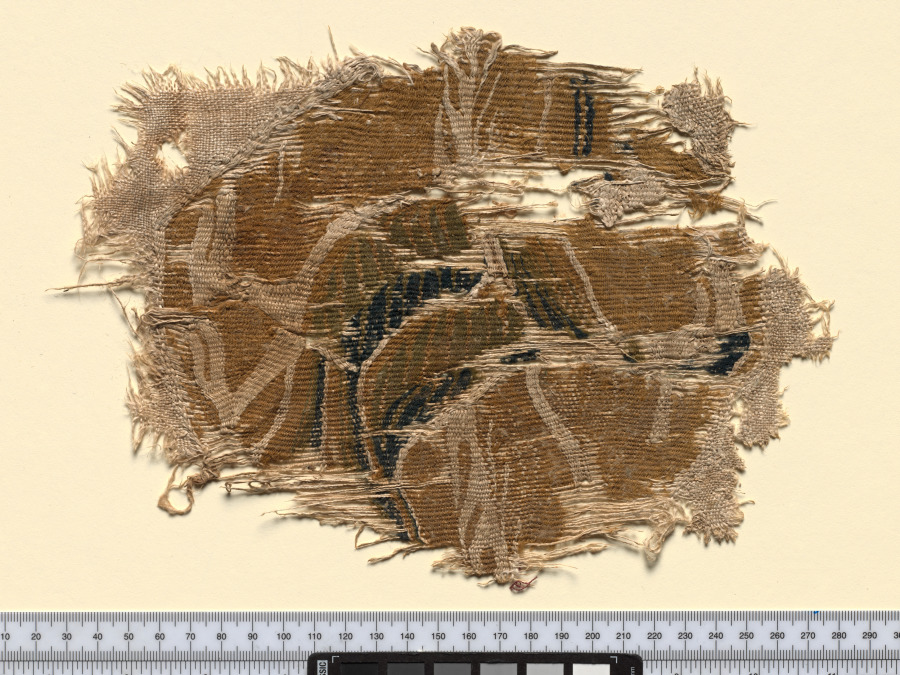
Fragments from a Hanging (?)
Cleveland Museum of Art
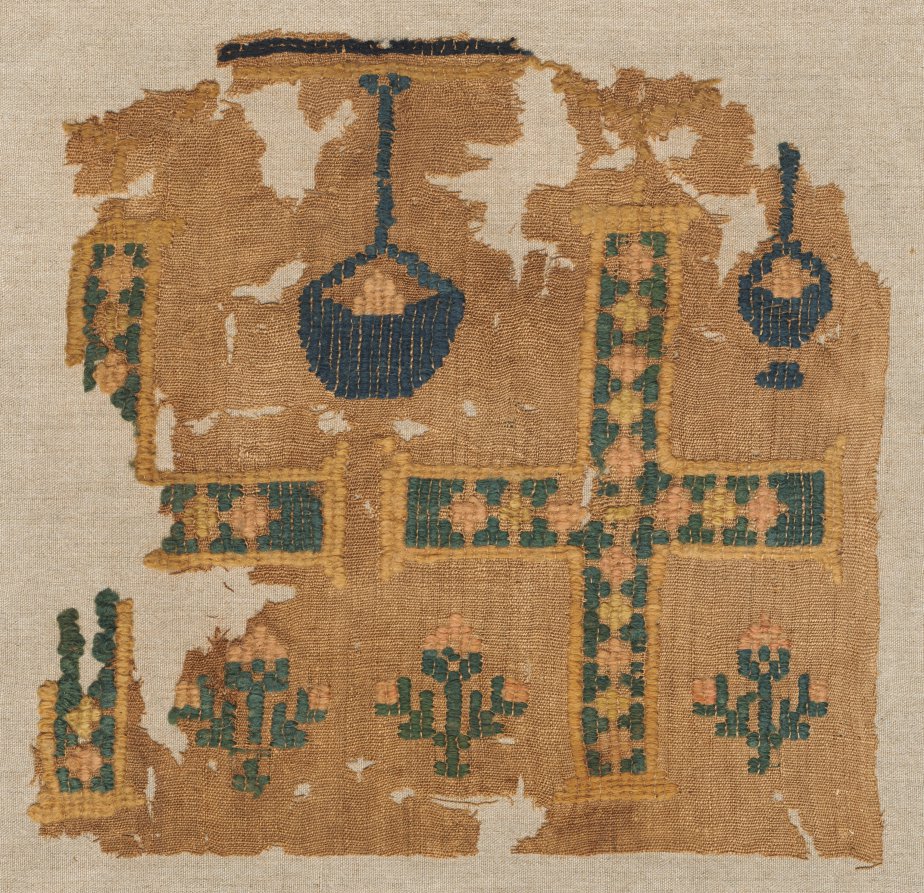
Fragment of a Large Hanging
Cleveland Museum of Art
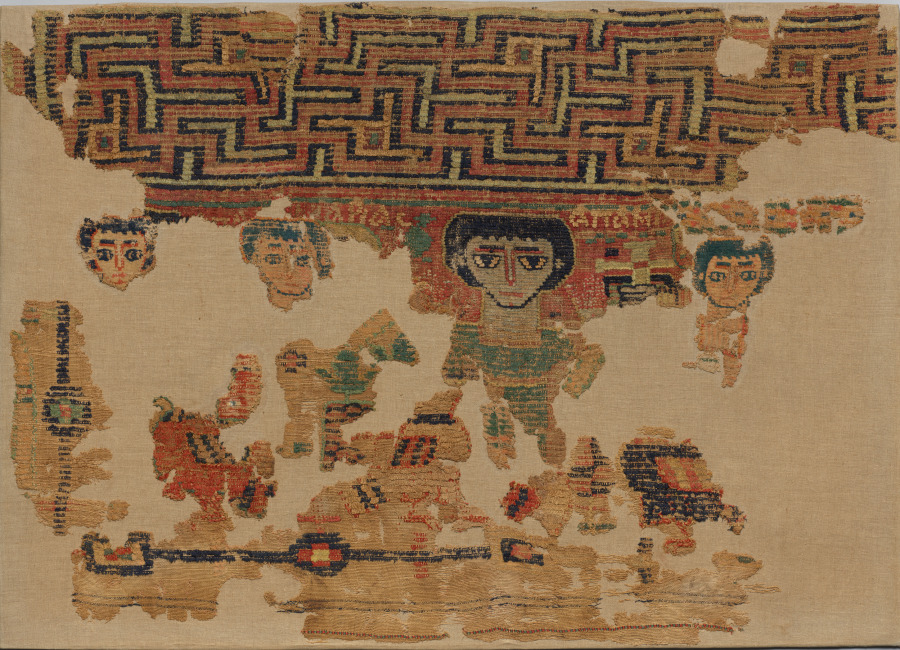
Fragment of a Large Hanging
Cleveland Museum of Art
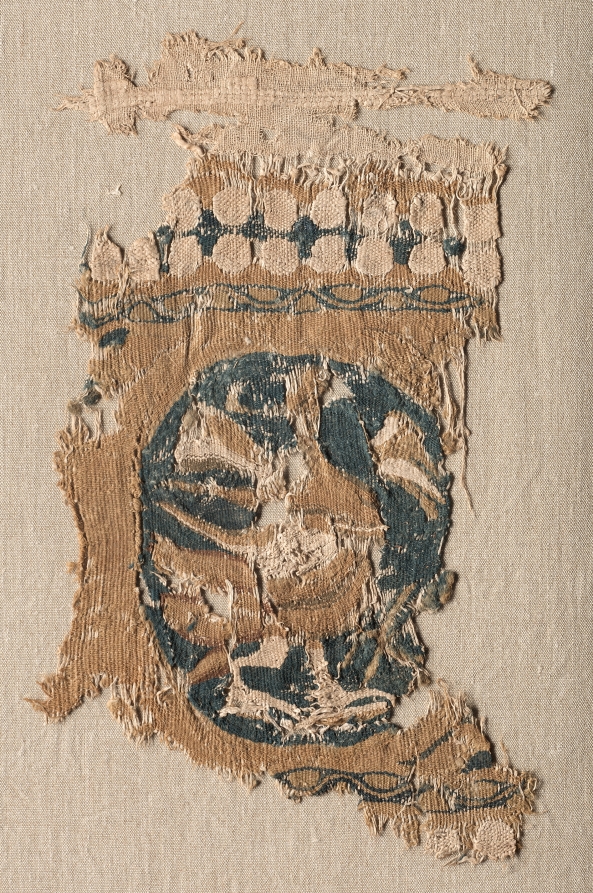
Fragment from a Hanging (?) with Roundel and Border
Cleveland Museum of Art
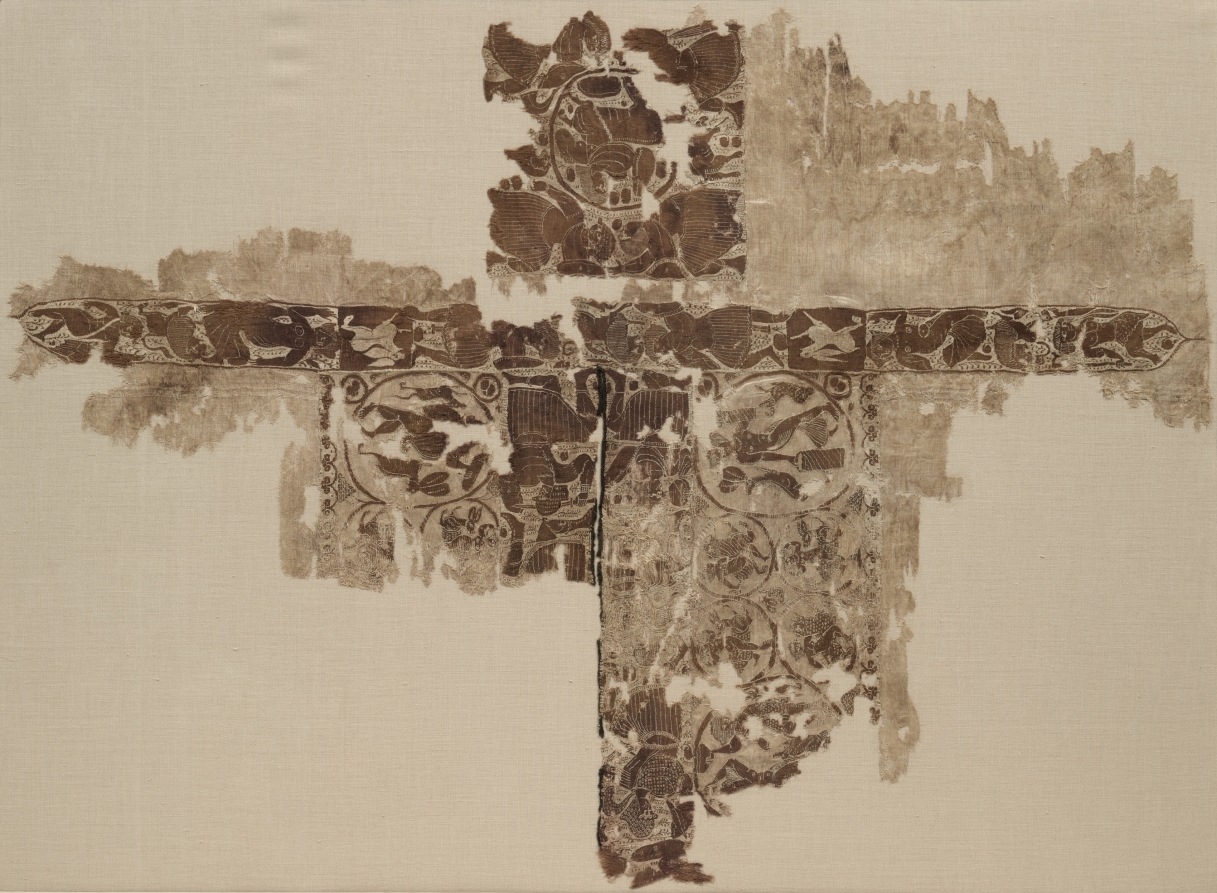
Fragment of a Tunic
Cleveland Museum of Art
Fragment, Part of an Ornament from a Garment
Cleveland Museum of Art
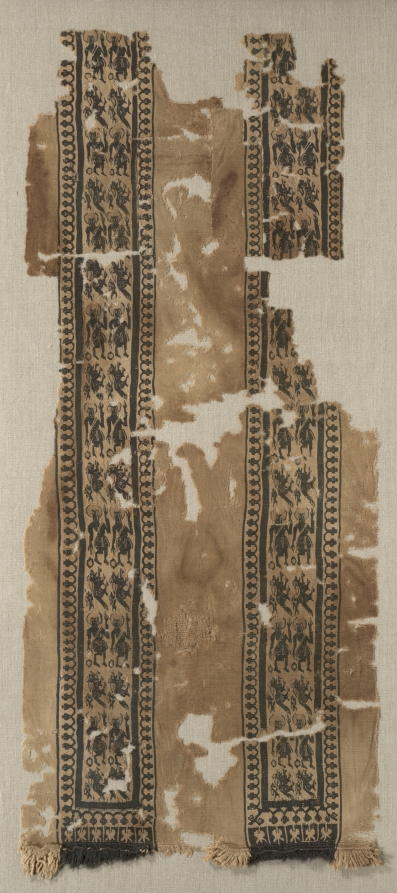
Fragment of a Tunic
Cleveland Museum of Art
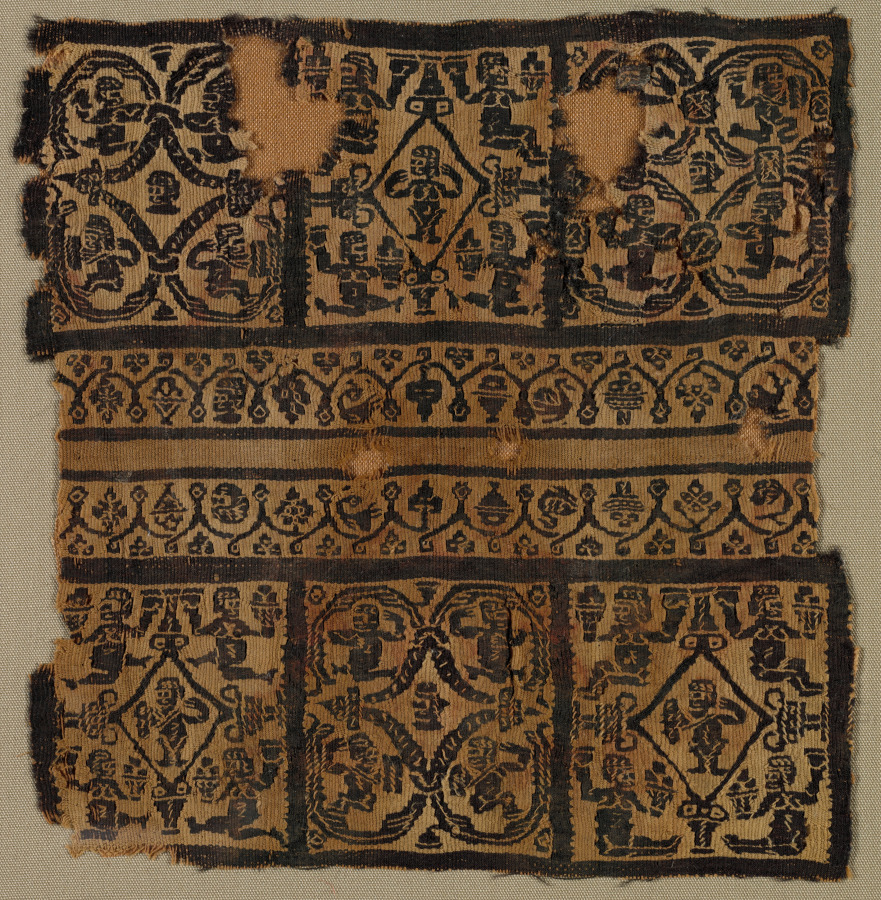
Fragment, Sleeve Ornament from a Tunic
Cleveland Museum of Art
Fragment, probably from a large hanging
Cleveland Museum of Art