Cleveland Museum of Art
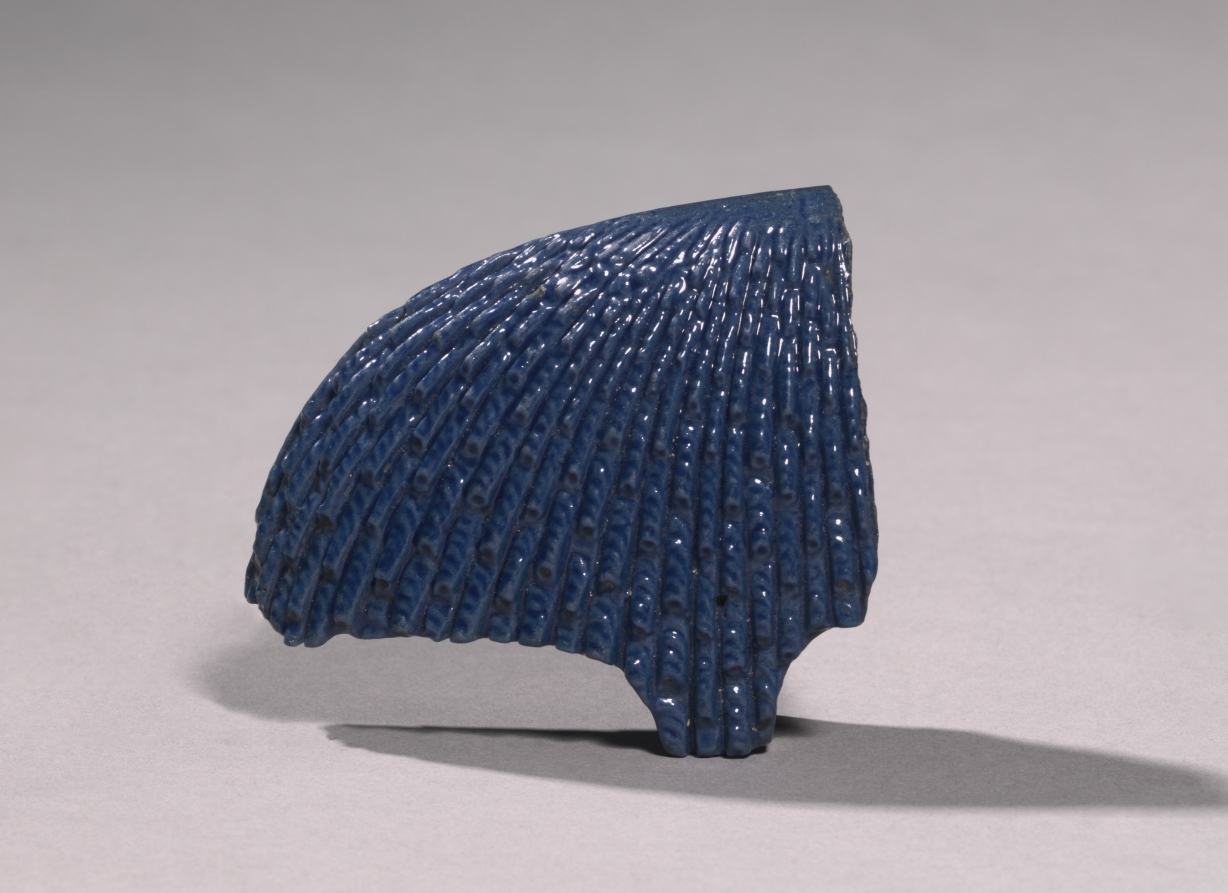
Fragment of an Inlay Headdress
- Date
- c. 1353–1295 BCE
- Medium
- lavender blue faience with deep blue overglaze
- Culture
- Egypt, New Kingdom (1540–1069 BCE), Dynasty 18
- Department
- Egyptian and Ancient Near Eastern Art
- Institution
- Cleveland Museum of Art
- Object ID
- 101363
From the Cleveland Museum of Art record
This fragment is part of the curled headdress of an inlay figure, probably of a queen, assembled of various materials fit together like the pieces of a jigsaw puzzle. The front part of the headdress (directly over the forehead) is to the left, followed by the ear tab and part of the cutout above the ear. The luster of the faience is marvelously preserved. Blue, primarily associated with lapis lazuli, was an appropriate color for kings' and gods' hair and was part of the apparatus signaling them as otherworldly beings. It has been suggested that this fragment was part of a headdress that belonged to a queen. The fine, carved details of this headdress attest to the great skill of its maker and the luster of the blue lapis lazuli faience would have been appropriate for Egyptian royalty.
The authoritative record is held by Cleveland Museum of Art. LinkedCulture surfaces this object and its connections; it does not alter institutional metadata.
Get printable QR codesHide QR codes
Open QR codes for this object page and the museum record. They stay collapsed until needed.
Provenance & credit
As published by the source institution. Coverage varies — not every institution's open-data feed includes ownership history.
- Credit line
- Gift of the John Huntington Art and Polytechnic Trust
- Provenance
- Said to come from el-Amarna. Purchased from P. Kytikas, Cairo, through Howard Carter
Part of a LinkedCulture topic
 Ancient Egyptian Glass Inlays
These objects are decorative glass and faience inlays from ancient Egypt, primarily from the Ptolemaic Dynasty and Roman Period, used for ornamentation in jewelry, architecture, and other decorative applications.
12 objects from 3 institutions
Related across collections
Semantically similar works from Cleveland Museum of Art and other institutions.