Cleveland Museum of Art
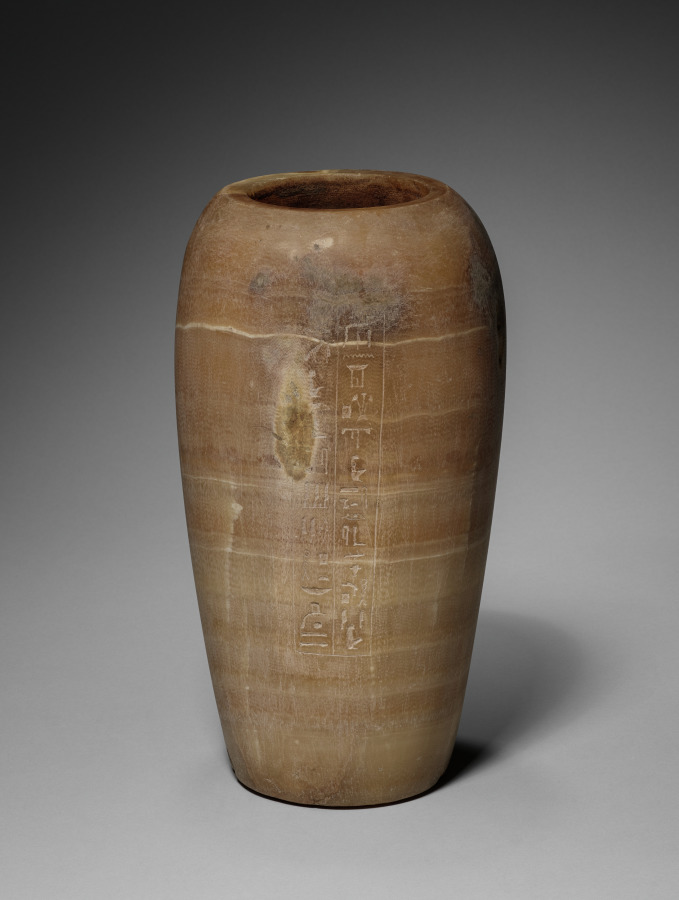
Canopic Jar with Baboon's Head
- Date
- 664–525 BCE
- Medium
- travertine
- Culture
- Egypt, Late period (715–332 BCE), Dynasty 26
- Department
- Egyptian and Ancient Near Eastern Art
- Institution
- Cleveland Museum of Art
- Object ID
- 102374
From the Cleveland Museum of Art record
In the process of mummification, the liver, lungs, stomach, and intestines were removed, separately embalmed, and stored in specialized jars known as canopic jars (after a sailor in Greek mythology, who died at the town of Canopus in the Nile Delta and was worshipped there in the form of a human-headed jar). Each organ was identified with one of four funerary deities collectively known as the Sons of Horus: the liver with Imsety (man's head), the lungs with Hapy (baboon's head), the stomach with Duamutef (jackal's head), and the intestines with Qebehsenuef (falcon's head). It was their duty to protect the deceased and restore to him his body parts in the hereafter.
The authoritative record is held by Cleveland Museum of Art. LinkedCulture surfaces this object and its connections; it does not alter institutional metadata.
Get printable QR codesHide QR codes
Open QR codes for this object page and the museum record. They stay collapsed until needed.
Provenance & credit
As published by the source institution. Coverage varies — not every institution's open-data feed includes ownership history.
- Credit line
- The Charles W. Harkness Endowment Fund
- Provenance
- Formerly in the collection of William Amhurst Tyssen-Amherst, 1st Baron Amherst of Hackney, Didlington Hall, Norfolk; Amherst Sale, lot 297. Purchased through Howard Carter
Related across collections
Semantically similar works from Cleveland Museum of Art and other institutions.