Cleveland Museum of Art
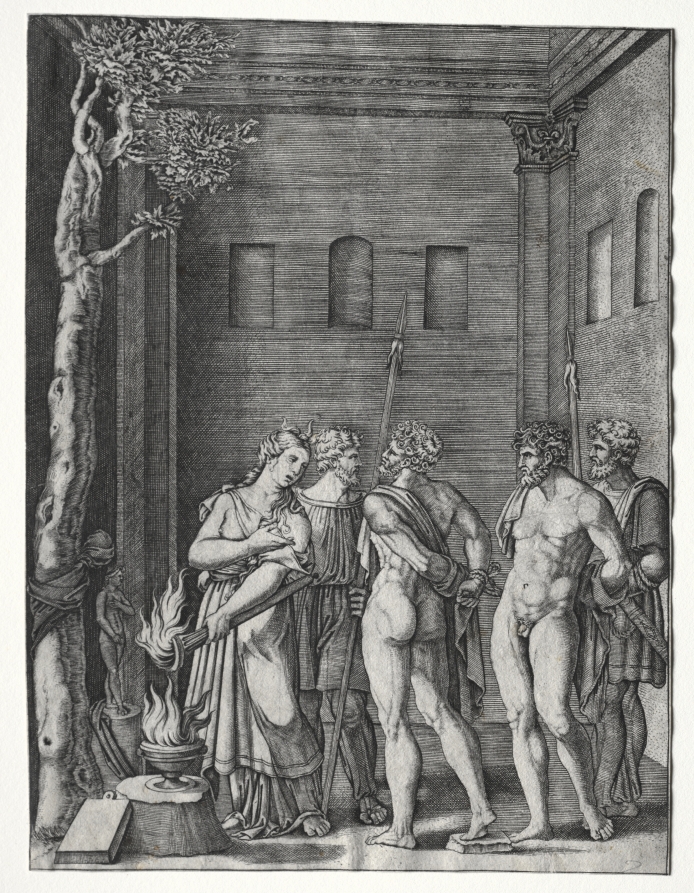
Orestes and Pylades brought to Iphigenia for Sacrifice
Agostino VenezianoLinkedCulture matchlcp-67654a35c494
- Date
- 1514/1536
- Medium
- engraving
- Culture
- Italy, 16th century
- Department
- Prints
- Institution
- Cleveland Museum of Art
- Object ID
- 104327
From the Cleveland Museum of Art record
This scene comes from Greek mythology. According to one version of the story, Orestes (son of Agamemnon, king of Mycenae) and his companion, Pylades, were sent on a mission to retrieve a sculpture of the goddess Artemis. They were captured, however, and brought to the temple to be sacrificed. Luckily, the temple's high priestess, Iphigenia, turns out to be Orestes's sister, who he believed was sacrificed long before. Overjoyed by their reunion, Iphigenia saves Orestes and Pylades and helps them obtain the statue. Agostino Musi was born in Venice and was a pupil of Giulio Campagnola (about 1482–after 1514) before going to Rome, where he worked under Marcantonio until 1520.
The authoritative record is held by Cleveland Museum of Art. LinkedCulture surfaces this object and its connections; it does not alter institutional metadata.
Get printable QR codesHide QR codes
Open QR codes for this object page and the museum record. They stay collapsed until needed.
Provenance & credit
As published by the source institution. Coverage varies — not every institution's open-data feed includes ownership history.
- Credit line
- Gift of Leonard C. Hanna Jr.
- Provenance
- Charles Marochetti (1805-1867), Paris and London, script (Lugt 392), verso, lower right, in pen and brown ink ; Leonard C. Hanna, Jr., Cleveland, OH
Related across collections
Semantically similar works from Cleveland Museum of Art and other institutions.