Cleveland Museum of Art
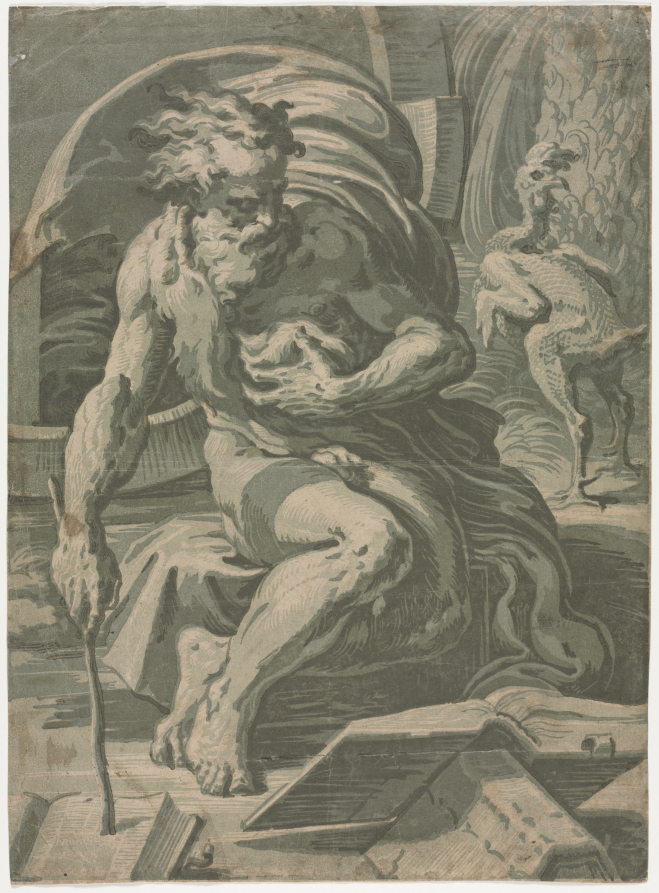
Diogenes
Ugo da CarpiLinkedCulture matchlcp-159a740a8ebb
- Date
- c. 1524–27
- Medium
- chiaroscuro woodcut (in four shades of green)
- Culture
- Italy, 16th century
- Department
- Prints
- Institution
- Cleveland Museum of Art
- Object ID
- 104694
From the Cleveland Museum of Art record
Diogenes was a Greek philosopher who lived during the 300s BC. The bird in the background alludes to his cynical response to Plato, who had described man as a featherless biped. Diogenes plucked a rooster and brought it to Plato’s school, exclaiming, “Here is Plato’s man!” Ugo da Carpi was influential in the development of the chiaroscuro woodcut in Italy. The term chiaroscuro combines the Italian words chiaro (light) and scuro (dark). Invented to emulate drawings with light and dark pigments on tinted paper, the printing technique uses multiple woodblocks to layer different tones of color. This example, considered a masterpiece of Renaissance printmaking, uses four shades of green to render tonal values; the paper provides the lightest color in the composition. In his Lives of the Artists (1550), Giorgio Vasari described Diogenes twice, praising it as Ugo da Carpi's most accomplished and beautiful print.
The authoritative record is held by Cleveland Museum of Art. LinkedCulture surfaces this object and its connections; it does not alter institutional metadata.
Get printable QR codesHide QR codes
Open QR codes for this object page and the museum record. They stay collapsed until needed.
Provenance & credit
As published by the source institution. Coverage varies — not every institution's open-data feed includes ownership history.
- Credit line
- The Charles W. Harkness Endowment Fund
- Provenance
- ?-1923: (Goodspeed's Bookshop, Boston, MA) | November 16, 1923: The Cleveland Museum of Art, Cleveland, OH
Related across collections
Semantically similar works from Cleveland Museum of Art and other institutions.