Cleveland Museum of Art
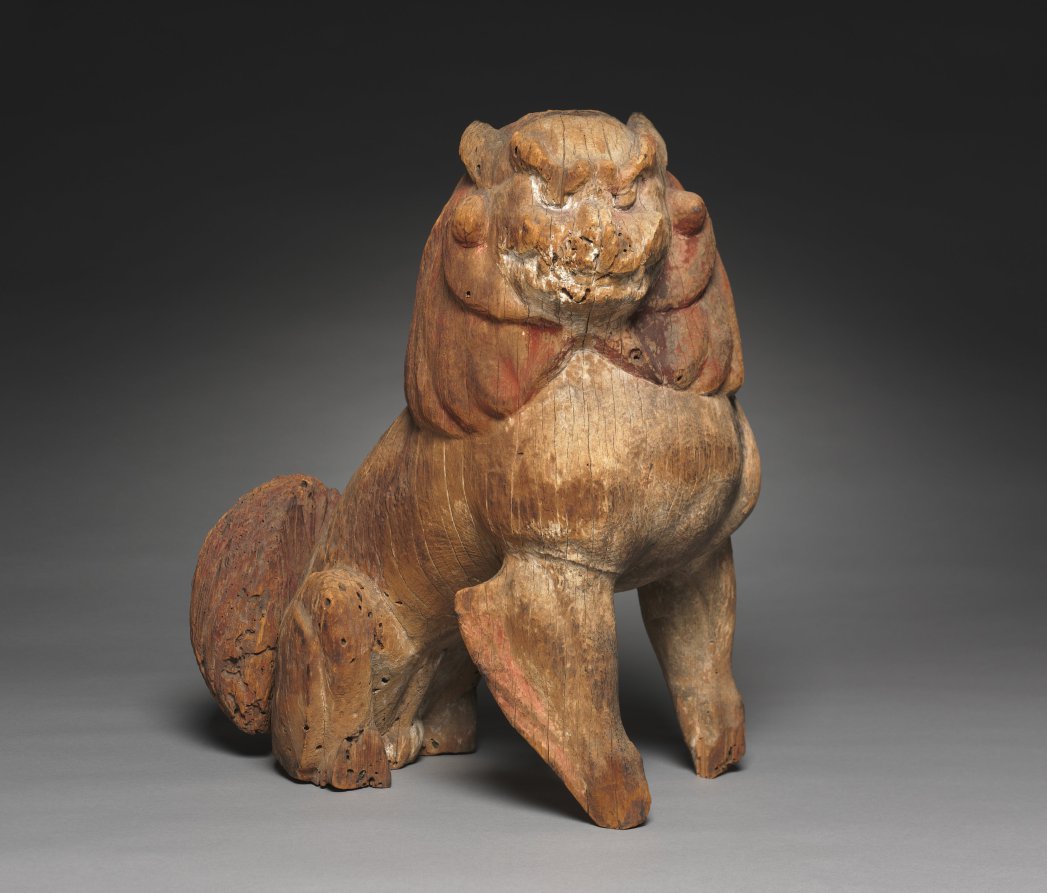
Guardian Animal: Komainu
- Date
- 1300s
- Medium
- Wood with traces of color
- Culture
- Japan, Kamakura period (1185–1333)
- Department
- Japanese Art
- Institution
- Cleveland Museum of Art
- Object ID
- 106262
From the Cleveland Museum of Art record
Placed at the entrance to shrines and temples in Japan, guardian figures ward off evil spirits. These guardians used to be painted red and white and are distinguishable by their facial expressions: the open-mouthed animal is a karashishi , or “Chinese lion,” while the close-mouthed beast, which once had a single horn protruding from its head, is called a komainu, or “Korean dog.” The mouths correspond to infinity, the syllables ah (open) and um (closed), or the alpha and omega. This pairing was widespread in ancient times in Chinese territories and likely found its way to Japan via kingdoms in Korea.
The authoritative record is held by Cleveland Museum of Art. LinkedCulture surfaces this object and its connections; it does not alter institutional metadata.
Get printable QR codesHide QR codes
Open QR codes for this object page and the museum record. They stay collapsed until needed.
Provenance & credit
As published by the source institution. Coverage varies — not every institution's open-data feed includes ownership history.
- Credit line
- Dudley P. Allen Fund
- Provenance
- ?-1924: Kuroda Takuma 黒田太久馬 [1867-?], Tokyo, Japan, sold to the Cleveland Museum of Art | 1924-: The Cleveland Museum of Art, Cleveland, OH, 1924-present
Related across collections
Semantically similar works from Cleveland Museum of Art and other institutions.