Cleveland Museum of Art
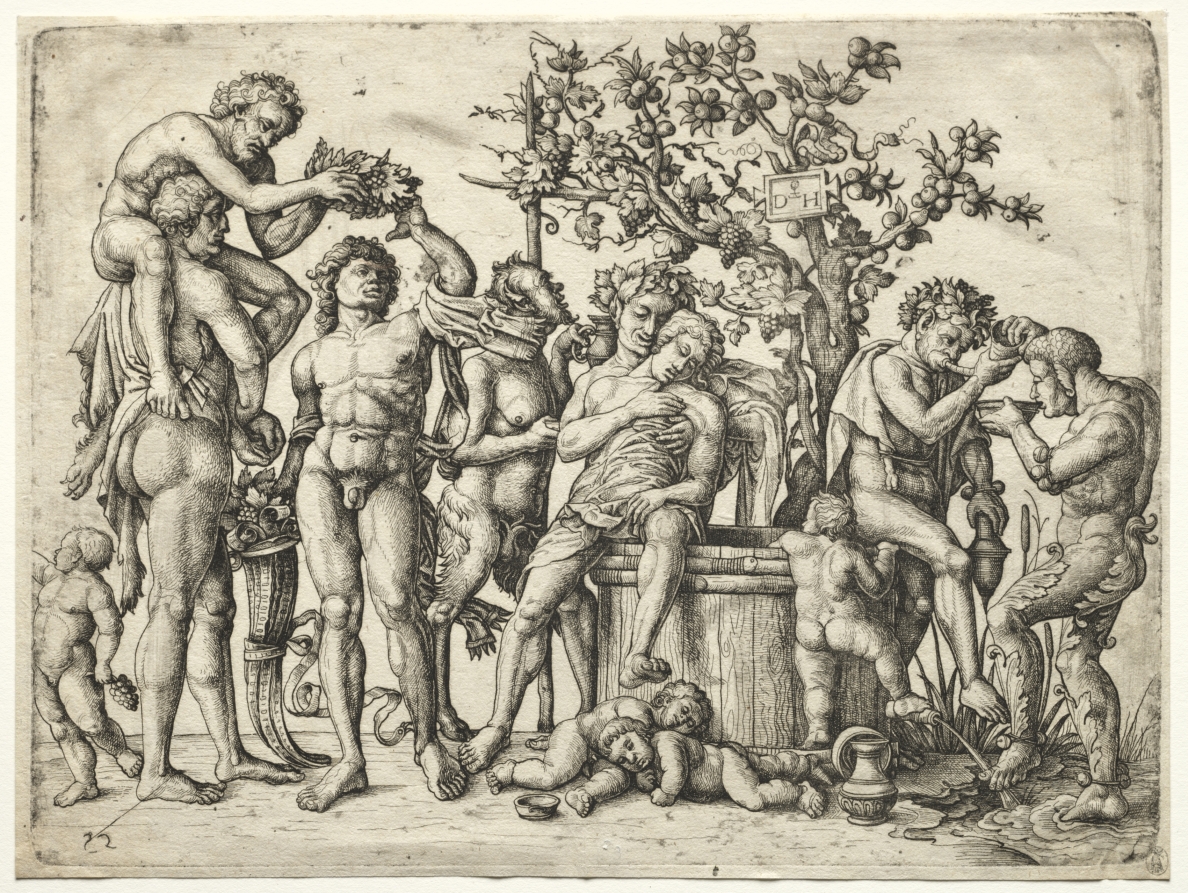
The Bacchanal
Daniel HopferLinkedCulture matchlcp-75c550160e6e
- Date
- c.1490–1536
- Medium
- etching
- Culture
- Germany
- Department
- Prints
- Institution
- Cleveland Museum of Art
- Object ID
- 107998
From the Cleveland Museum of Art record
Andrea Mantegna was among the first artists in Italy to produce engravings. His scene of a bacchanalia, a wine-fueled festival of ancient Rome, is composed as if on a shallow stage, attesting to Mantegna’s interest in relief-carved Roman sarcophagi (stone coffins). Standing with his horn of plenty, Bacchus is in control of his senses. The mortals around him falter from too much drink. When Mantegna began making engravings in the 1470s, he was among the first to use the technique to reproduce drawings. Many of Mantegna’s engravings show printing imperfections, the result of a shallowly carved printing plate and ink that did not adhere evenly to the paper. The later copy looks quite different. Daniel Hopfer employed the nimbler technique of etching and had access to higher-quality inks and papers. The ancient Greek philosopher Plato, who was still widely read in the sixteenth century, wrote that wine could enhance creativity and even unlock divine ecstasy.
The authoritative record is held by Cleveland Museum of Art. LinkedCulture surfaces this object and its connections; it does not alter institutional metadata.
Get printable QR codesHide QR codes
Open QR codes for this object page and the museum record. They stay collapsed until needed.
Provenance & credit
As published by the source institution. Coverage varies — not every institution's open-data feed includes ownership history.
- Credit line
- Dudley P. Allen Fund
- Provenance
- Friedrich August II, King of Saxony (1797-1854), Dresden (stamped twice, verso and recto, L. 971) | Unidentified collector's mark. | ?–1925: (M. Knoedler & Co., Inc., New York, NY, sold to The Cleveland Museum of Art, Cleveland, OH) | May 8, 1925–: The Cleveland Museum of Art, Cleveland, OH
Related across collections
Semantically similar works from Cleveland Museum of Art and other institutions.