Cleveland Museum of Art
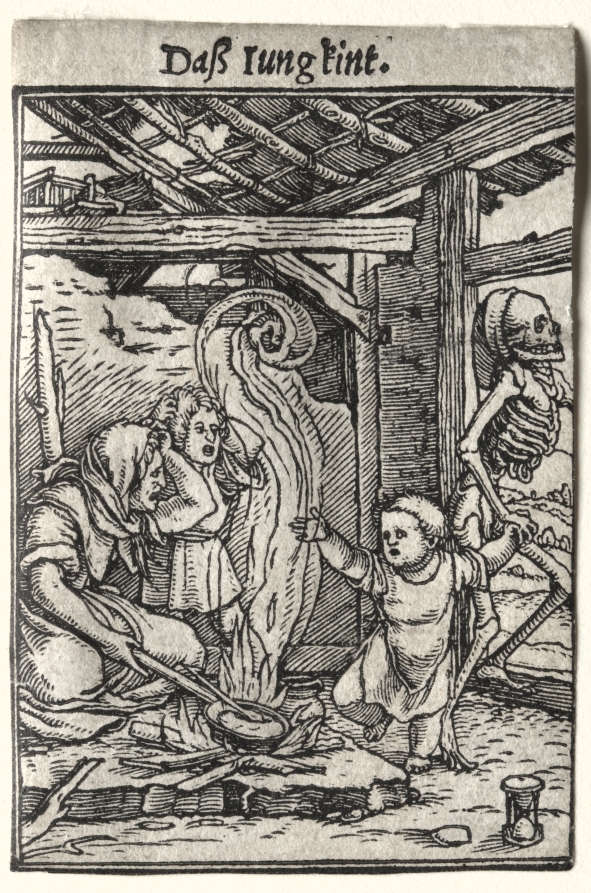
Dance of Death: The Child
Hans Holbein the YoungerLinkedCulture matchlcp-7fbf92db9cbe
- Date
- c. 1526
- Medium
- woodcut
- Culture
- Germany
- Department
- Prints
- Institution
- Cleveland Museum of Art
- Object ID
- 110605
What the image shows
A child and an adult interact near a fire in a rustic setting.
Generated by LinkedCulture from the photograph alone, without the museum’s catalogue text (Qwen/Qwen2.5-VL-7B-Instruct), and not yet reviewed by a person. It describes the picture, not the object’s history, and it is not part of the museum’s record.
From the Cleveland Museum of Art record
Dance of Death is the most celebrated series of woodcuts designed by Holbein. The forty-one blocks were cut by Hans Lützelburger in the years immediately before his death in 1526, though the set was not published until 1538. Dance of Death originated as a drama in the middle of the 14th century. Following widespread epidemics such as the black plague, these plays took place in a cemetery or churchyard. Actors, dressed in pale costumes painted to resemble skeletons, personified Death and summoned a group of people from all social classes in a dancelike procession. In a period when the life span was short, the purpose of the Dance of Death was to remind the populace to prepare for the Last Judgement.
The authoritative record is held by Cleveland Museum of Art. LinkedCulture surfaces this object and its connections; it does not alter institutional metadata.
Get printable QR codesHide QR codes
Open QR codes for this object page and the museum record. They stay collapsed until needed.
Provenance & credit
As published by the source institution. Coverage varies — not every institution's open-data feed includes ownership history.
- Credit line
- Gift of The Print Club of Cleveland
Related across collections
Semantically similar works from Cleveland Museum of Art and other institutions.