Cleveland Museum of Art
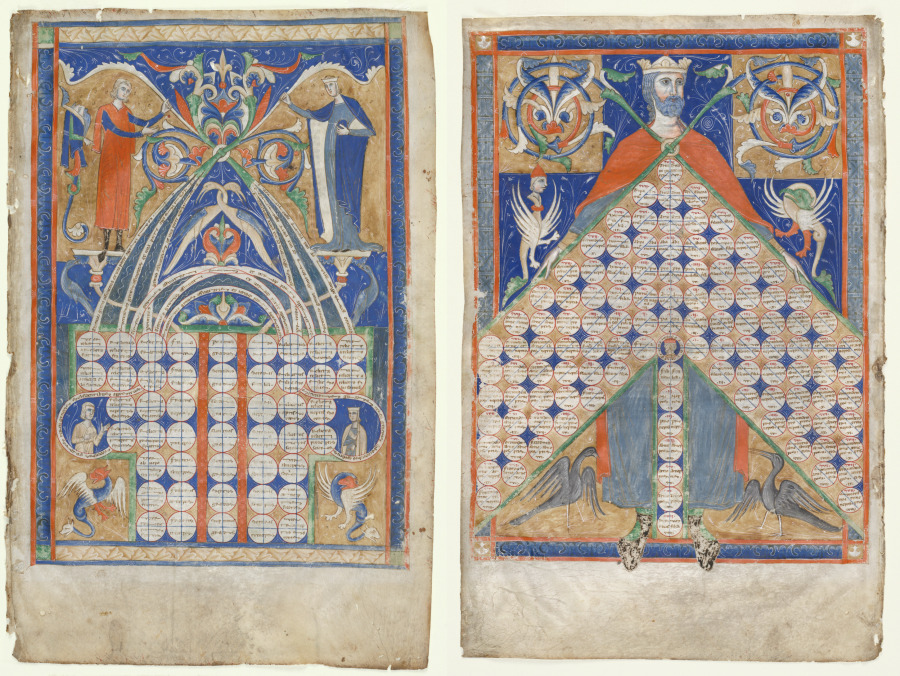
Leaves from Gratian's Decretum: Table of Affinity and Table of Consanguinity
- Date
- c. 1270–1300
- Medium
- tempera and gold on parchment
- Culture
- Italy, probably Naples, 13th century
- Department
- Medieval Art
- Institution
- Cleveland Museum of Art
These leaves were excised from a copy of the handbook of canon law known simply as the Decretum written by Gratian, an Italian Camaldolese monk, in Bologna around 1130-40. The Decretum was widely copied and consulted throughout the Middle Ages. These tables were used to determine relationships created by marriage. During the Middle Ages such relationships of "affinity" could be impediments to subsequent marriages if one partner were to die. In the direct line, for example, a man may not marry his mother-in-law or his daughter-in-law, while in the collateral line a man may not marry his uncle's wife or his wife's first cousin or niece. Like Tables of Consanguinity, Tables of Affinity were used by church officials to approve or deny marriages.
The authoritative record is held by Cleveland Museum of Art. LinkedCulture surfaces this object and its connections; it does not alter institutional metadata.
Get printable QR codesHide QR codes
Open QR codes for this object page and the museum record. They stay collapsed until needed.
Related across collections
Semantically similar works from Cleveland Museum of Art and other institutions.