Cleveland Museum of Art
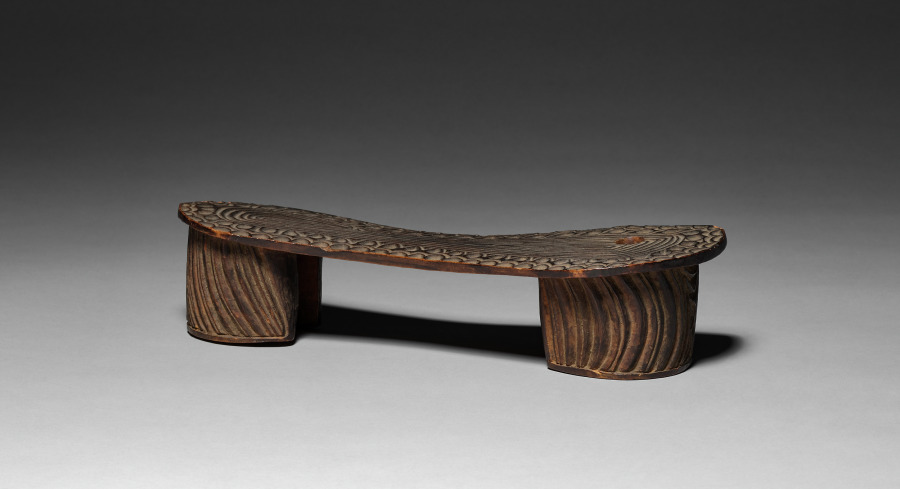
Base for a sandal (mtalawanda / mtawanda) or Clog (kiatu cha mti)
- Date
- c 1800s
- Medium
- Wood
- Culture
- Africa, Central Africa, Democratic Republic of Congo, unidentified carver
- Department
- African Art
- Institution
- Cleveland Museum of Art
Common in the Indian Ocean region, wooden sandals changed meaning across place and time. This pair’s base elevates the foot as the toes grip an antelope-shaped peg ( msuruaki ). Crisp geometric sole designs suggest they were rarely worn. East African elites and merchants once had exclusive rights to wooden shoes, wearing elaborate ones only for portraits. Formerly enslaved people living along the coast wore simpler ones from the 1840s onward, adopting elite footwear to assert their liberation. However, slave traders like the Zanzibari “Tippu Tip” (c. 1832–1905) likely brought mitalawanda to Central Africa; stylistic elements of this pair hail from that region. This distinctive footwear traveled from Southeast Asia and the Middle East to Africa, first to the Swahili Coast and then further inland to parts of Central Africa. The deity Krishna wears similar shoes ( paduka ) in an eighteenth-century Indian miniature painting (2003.344).
The authoritative record is held by Cleveland Museum of Art. LinkedCulture surfaces this object and its connections; it does not alter institutional metadata.
Get printable QR codesHide QR codes
Open QR codes for this object page and the museum record. They stay collapsed until needed.
Related across collections
Semantically similar works from Cleveland Museum of Art and other institutions.