Cleveland Museum of Art
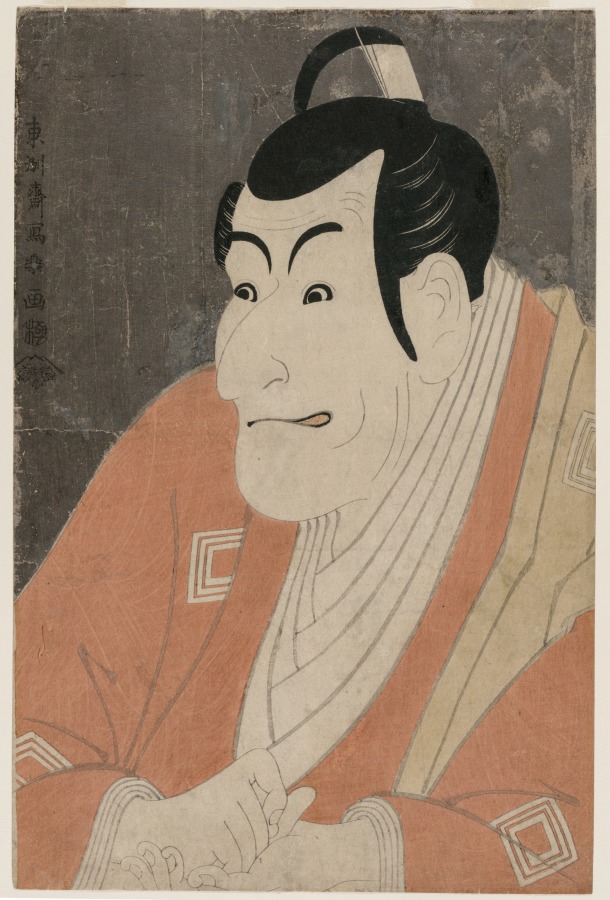
Ichikawa Ebizō IV (Danjurō) as Takemura Sadanoshin in The Loving Wife's Parti-Colored Reins
Tōshūsai SharakuLinkedCulture matchlcp-7fa8c144a9a1
- Date
- 1794
- Medium
- color woodblock print
- Culture
- Japan, Edo period (1615–1868)
- Department
- Japanese Art
- Institution
- Cleveland Museum of Art
- Object ID
- 111675
From the Cleveland Museum of Art record
Ichikawa Ebizō IV’s (1741–1806) character, an actor called Takemura Sadanoshin, is permitted to perform opposite his daughter so he can see and hear her for the last time before her banishment for a forbidden love affair. This design belongs to a category of Japanese prints called “actor images” ( yakusha - e or 役者絵). They were collected by fans of popular Kabuki actors. Kabuki is a kind of entertainment that got its start in the early Edo period, evolving from dance performances with simple storylines to long plays with complex plots, elaborate sets, and full musical accompaniments. Performers wear showy costumes and heavy makeup and strike poses called mie at critical moments in the narrative. Dialogue is spoken in a stylized way that resembles singing. A member of the famous Ichikawa acting family, Ebizo IV is recognized here by his family crest of three nested boxes, visible on his robes.
The authoritative record is held by Cleveland Museum of Art. LinkedCulture surfaces this object and its connections; it does not alter institutional metadata.
Get printable QR codesHide QR codes
Open QR codes for this object page and the museum record. They stay collapsed until needed.
Provenance & credit
As published by the source institution. Coverage varies — not every institution's open-data feed includes ownership history.
- Credit line
- Bequest of Edward L. Whittemore
- Provenance
- (Yamanaka & Co., New York, NY, sold to Edward Loder Whittemore) | ?–1930: Edward Loder Whittemore [1862–1930], Cleveland, OH, bequest to the Cleveland Museum of Art | 1930–: The Cleveland Museum of Art, Cleveland, OH
Related across collections
Semantically similar works from Cleveland Museum of Art and other institutions.