Cleveland Museum of Art
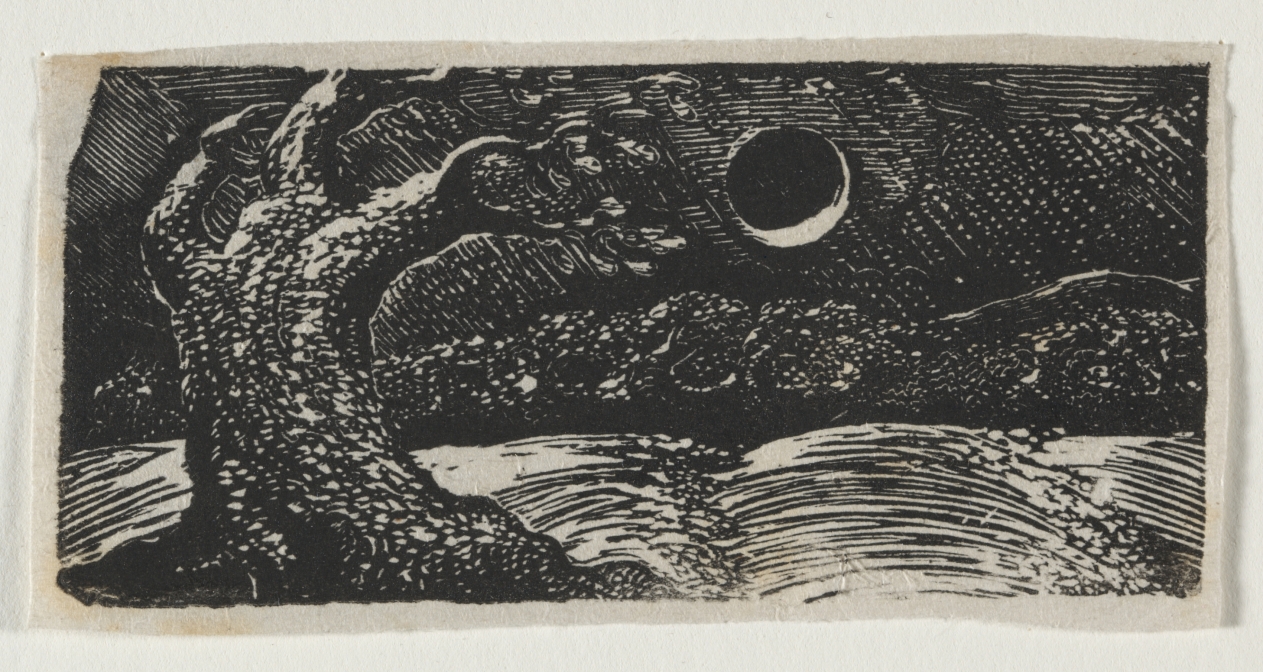
The Pastorals of Virgil, Eclogue I: The Blasted Tree
William BlakeLinkedCulture matchlcp-98f873ebf582
- Date
- 1821
- Medium
- wood engraving
- Culture
- England, 19th century
- Department
- Prints
- Institution
- Cleveland Museum of Art
- Object ID
- 114515
From the Cleveland Museum of Art record
William Blake conceived and engraved 17 designs for Dr. Robert John Thornton’s The Pastorals of Virgil , a popular schoolbook used in teaching Latin. The publication included translations of poems by ancient Roman author Virgil that focus on a rural setting as both a subject matter and as the background for discussions of various issues, from love to politics. Blake’s illustrations reveal his emphasis on the natural world. As his only wood engravings, they also show how the process entails cutting away from the woodblock to create lighter sections, in essence working in white over a black background. Here, several areas—such as the textures of the trees—emphasize that point.
The authoritative record is held by Cleveland Museum of Art. LinkedCulture surfaces this object and its connections; it does not alter institutional metadata.
Get printable QR codesHide QR codes
Open QR codes for this object page and the museum record. They stay collapsed until needed.
Provenance & credit
As published by the source institution. Coverage varies — not every institution's open-data feed includes ownership history.
- Credit line
- Gift of The Print Club of Cleveland
Related across collections
Semantically similar works from Cleveland Museum of Art and other institutions.