Cleveland Museum of Art
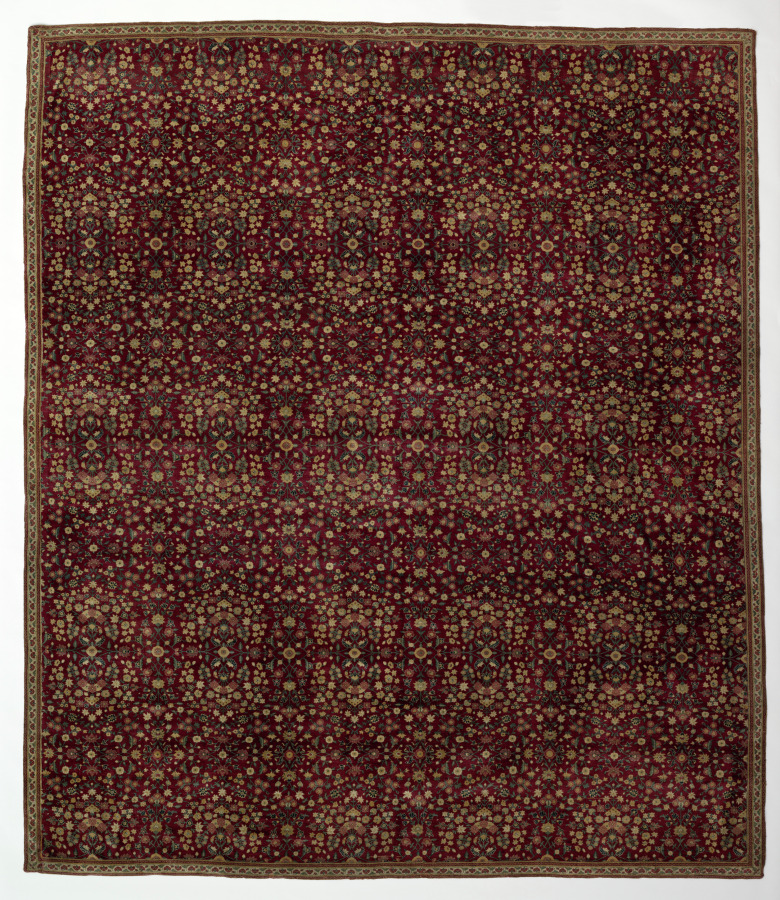
Woolen carpet with millefleurs decoration
- Date
- early 1600s
- Medium
- Pashmina (wool): asymmetrical knot
- Culture
- India, Kashmir
- Department
- Textiles
- Institution
- Cleveland Museum of Art
Pashmina, a very fine fiber made from the fleece of Himalayan goats, was a material highly valued at the Mughal courts. Luxury rugs functioned in several ways, including as insulators for palatial and ceremonial spaces and as framing devices for important figures. In a biography of the Mughal emperor Akbar (reigned 1556–1605), called the Ain-i-Akbari , the court historian Abu’l Fazl (1551–1602) poetically wrote that such textiles created “a beautiful flowerbed.” The description is apt, as this carpet features an impressively symmetrical floral design known as millefleurs , or “thousand flowers” in French. Viewing several of these carpets and other hangings at once would have been visually impressive for court attendees. The border contrasts with the central design, putting red flowers against a white background.
The authoritative record is held by Cleveland Museum of Art. LinkedCulture surfaces this object and its connections; it does not alter institutional metadata.
Related across collections
Semantically similar works from Cleveland Museum of Art and other institutions.

Shawl
Minneapolis Institute of Art
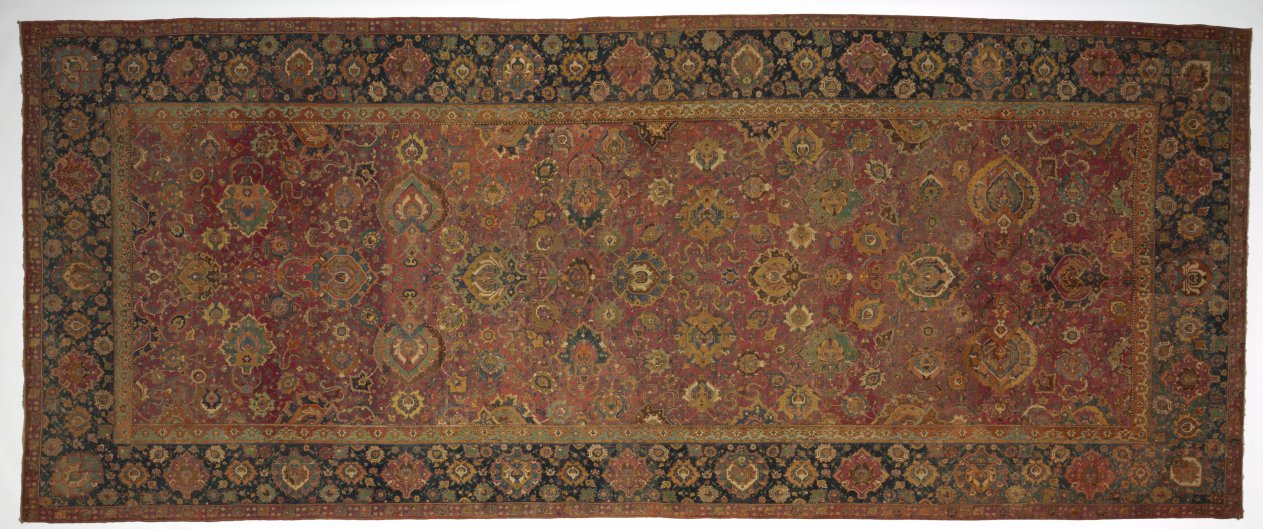
Carpet
Cleveland Museum of Art
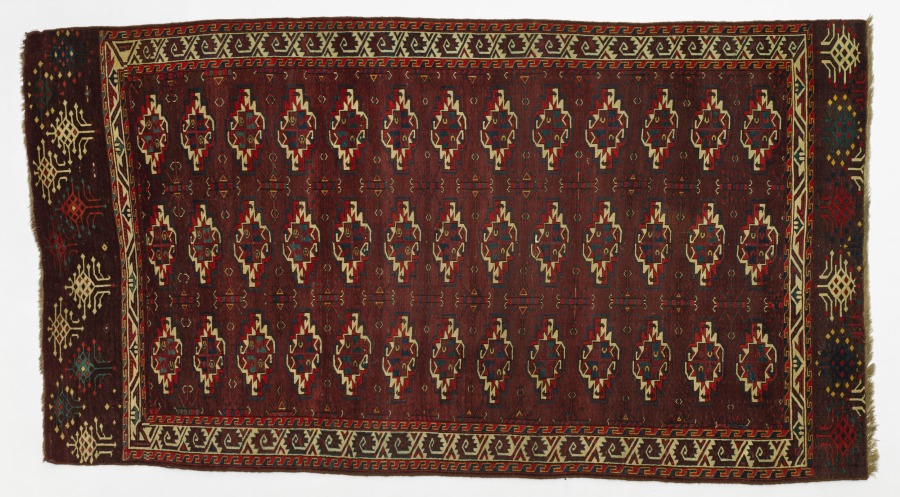
Turkmen Main Carpet
Cleveland Museum of Art

Carpet
Minneapolis Institute of Art
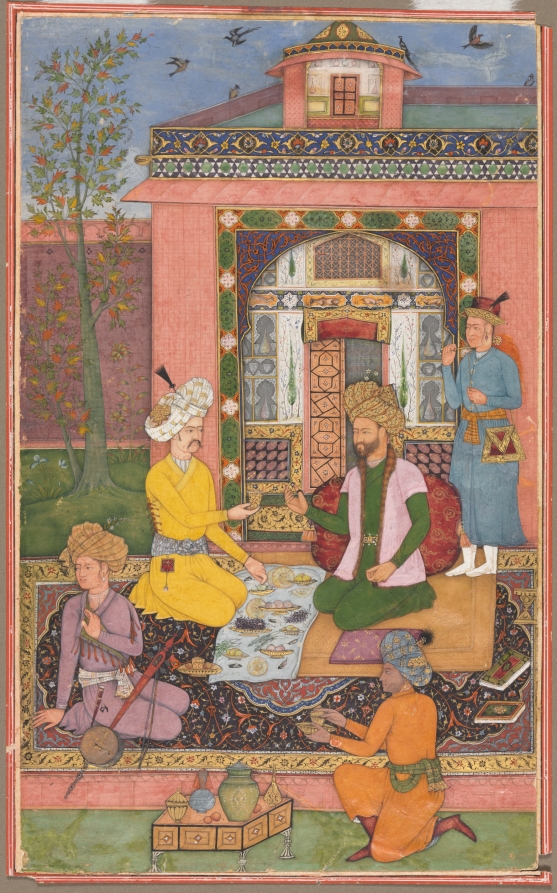
A Royal Picnic on a Terrace
Cleveland Museum of Art

Carpet
Minneapolis Institute of Art
Princess and attendant in trompe l’oeil window
Cleveland Museum of Art
"Swan House" Carpet
Art Institute of Chicago
Royal Carpet with Silk and Metal Thread
Cleveland Museum of Art
Spread with floral medallion pattern
Cleveland Museum of Art
Page from the Mirror of Holiness (Mir’at al-quds)
Cleveland Museum of Art
Wall cover with flora, peacocks, and portrait medallions
Cleveland Museum of Art