Cleveland Museum of Art
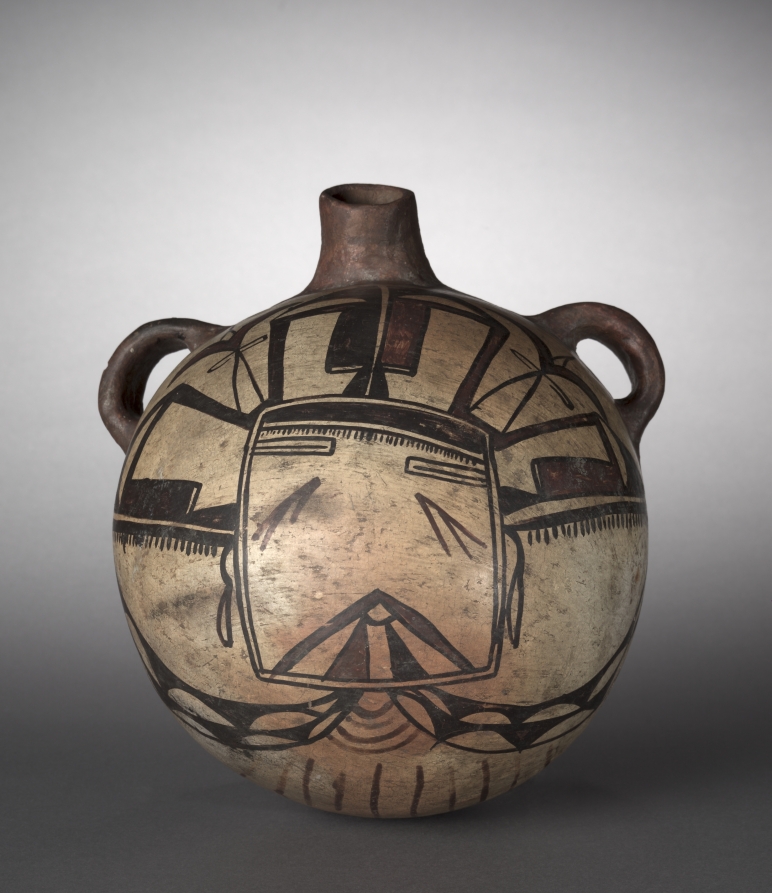
Canteen with a Katsina-like Face
- Date
- 1890
- Medium
- ceramic, slip
- Culture
- Native North America, Southwest, Arizona, Pueblo, Hopi
- Department
- Art of the Americas
- Institution
- Cleveland Museum of Art
Since the 1500s, Hopi women made big-bellied canteens, based on Spanish prototypes, and used them to carry water. By the late 1800s, canteens became popular with Euro-American tourists, who increasingly flocked to the Southwest in search of encounters with “exotic” Native American cultures. Thus, Hopi artists embellished their wares to improve their appeal. This example is painted with a face similar to a Katsina’s, a spirit being central to Pueblo religion—but it is a fanciful rendition, not an actual Katsina. Could the maker have been taking control of her culture and its consumption by outsiders?
The authoritative record is held by Cleveland Museum of Art. LinkedCulture surfaces this object and its connections; it does not alter institutional metadata.
Related across collections
Semantically similar works from Cleveland Museum of Art and other institutions.
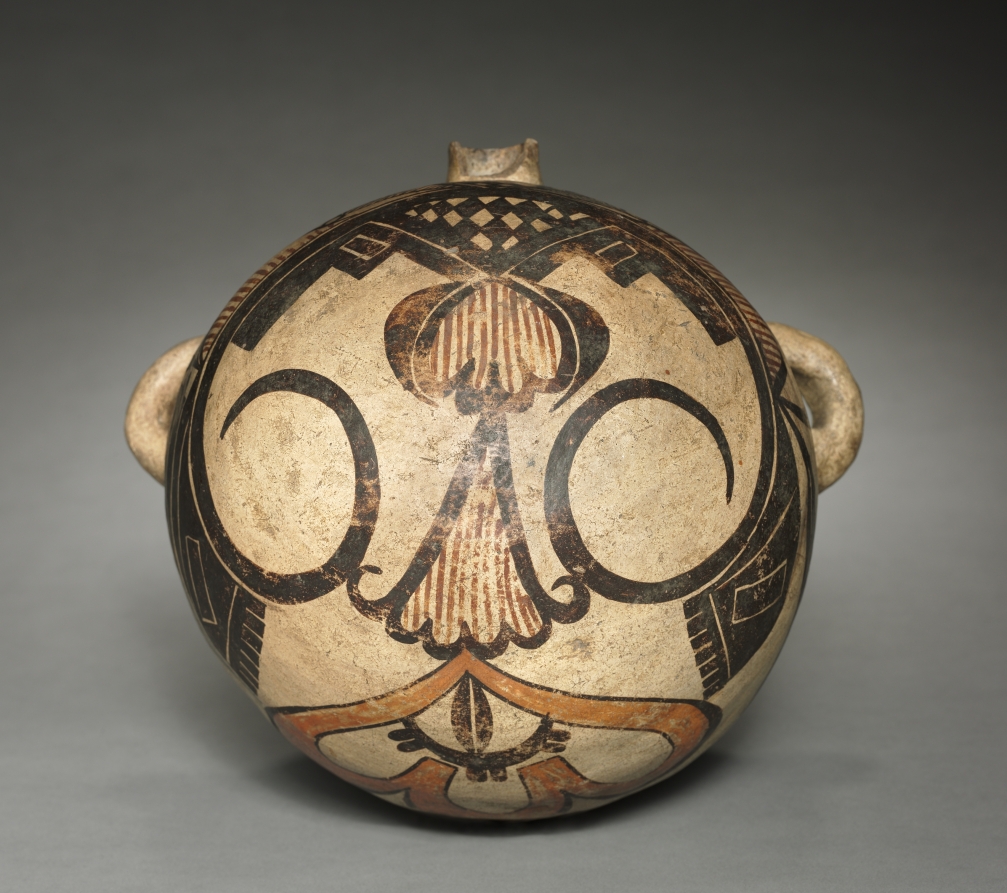
Canteen
Cleveland Museum of Art

Manta
Minneapolis Institute of Art
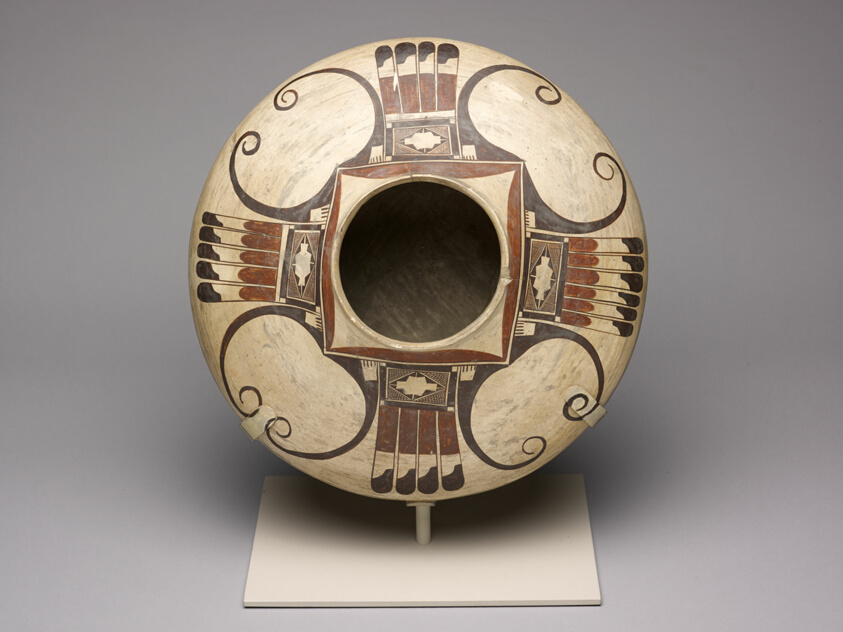
Seed Jar with Sikyátki Motifs
Art Institute of Chicago

Canteen in the form of a jaguar
Minneapolis Institute of Art
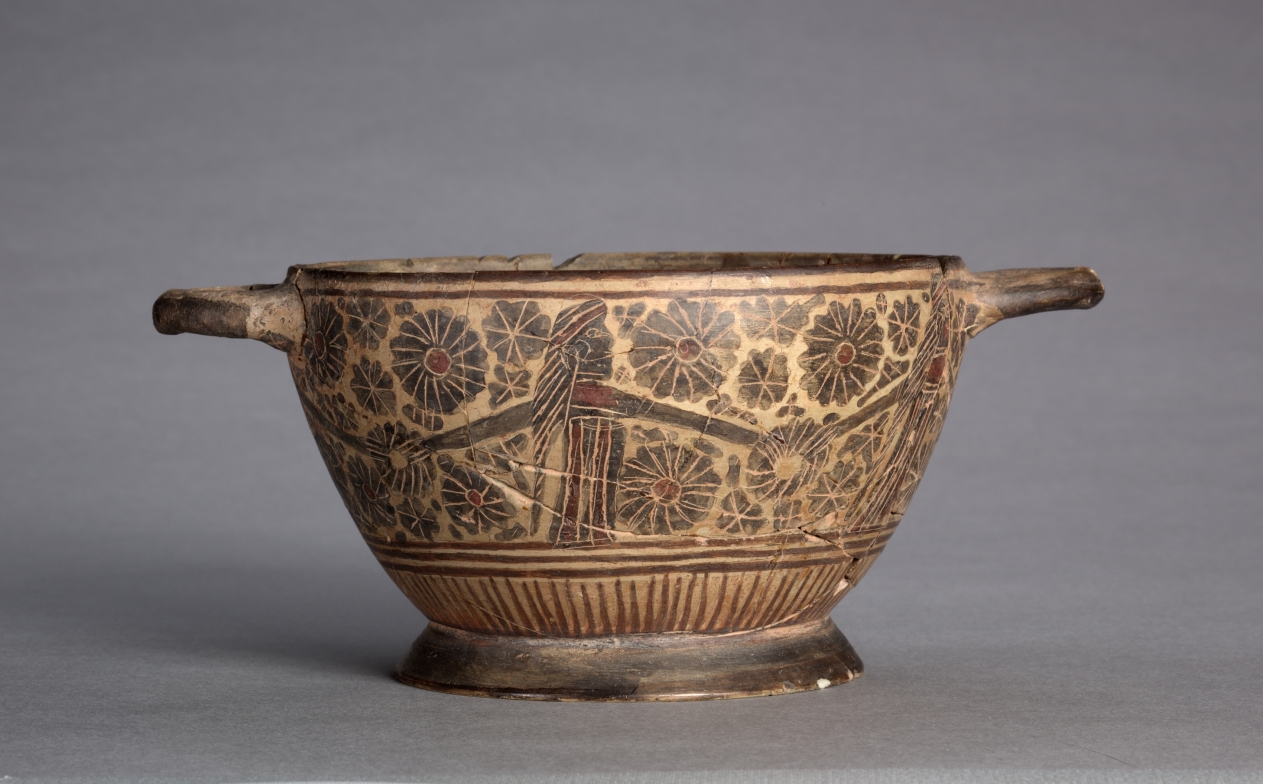
Black-Figure Kotyle (Drinking Cup): Chain of Women
Cleveland Museum of Art

Sash (faja)
Minneapolis Institute of Art
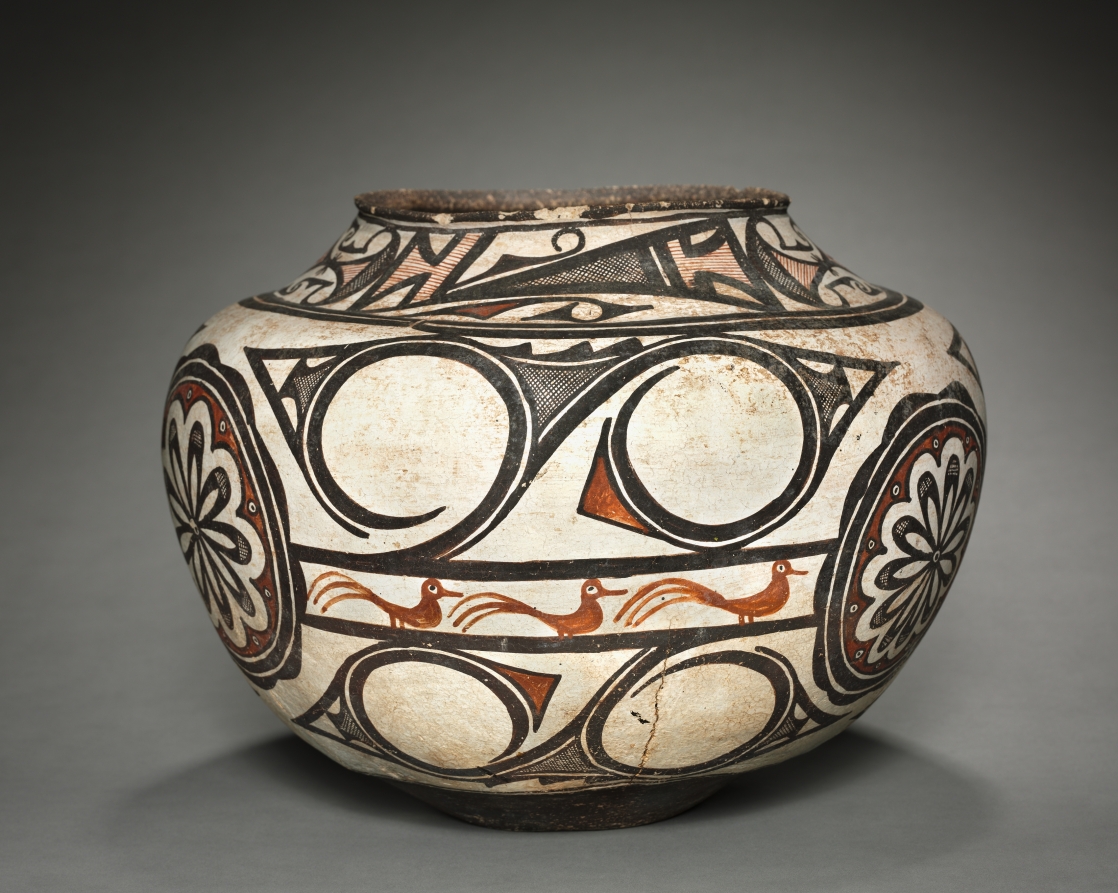
Water Jar (Olla) with Rosettes
Cleveland Museum of Art
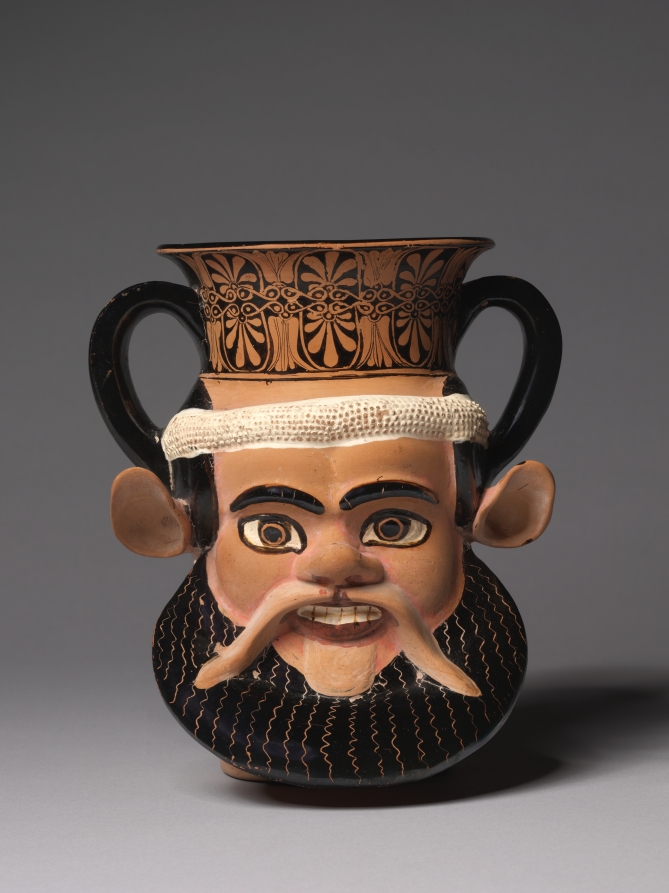
Red-Figure Janiform Kantharos (Two-Sided Head-Shaped Drinking Cup): Satyr and African
Cleveland Museum of Art

Woman's blouse (Huipil)
Minneapolis Institute of Art

Apulian Red-Figure Kantharos
Getty Museum

Bowl
Minneapolis Institute of Art
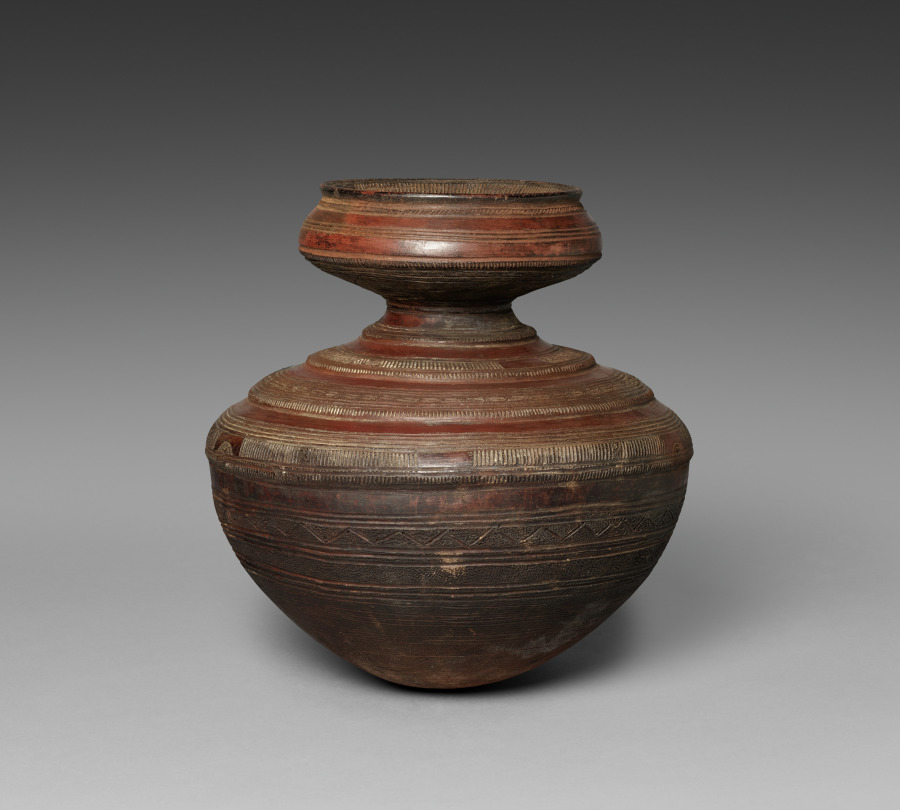
Water Transport Jar
Cleveland Museum of Art