Cleveland Museum of Art
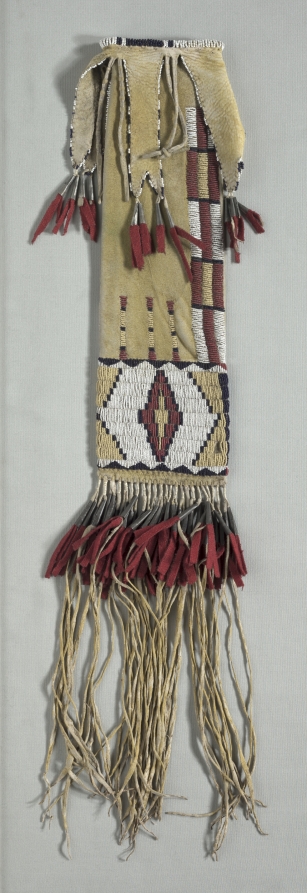
Pipe or Tobacco Bag
- Date
- c. 1870
- Medium
- Native-tanned hide, yellow pigment, glass beads, red trade cloth, tin cones, sinew thread
- Culture
- Native North America, Plains, Tsitsistas (Cheyenne)
- Department
- Textiles
- Institution
- Cleveland Museum of Art
- Object ID
- 117311
From the Cleveland Museum of Art record
The shape of this bag indicates it was made to hold tobacco and one of the pipes that played a paramount role in the lives of Plains nations. Smoking is a means of prayer—the smoke carries thanks and entreaties into the other-than-human realm—and pipes were lit to seek protection and guidance on new endeavors, during alliance and dispute negotiations, to mark life’s milestones, and in many other situations. By the late 1800s, when this example was made, such bags were a standard element of prestigious men’s formal dress regalia. Glass and metal beads were imported from Europe.
The authoritative record is held by Cleveland Museum of Art. LinkedCulture surfaces this object and its connections; it does not alter institutional metadata.
Get printable QR codesHide QR codes
Open QR codes for this object page and the museum record. They stay collapsed until needed.
Provenance & credit
As published by the source institution. Coverage varies — not every institution's open-data feed includes ownership history.
- Credit line
- Gift of Amelia Elizabeth White
Related across collections
Semantically similar works from Cleveland Museum of Art and other institutions.