Cleveland Museum of Art
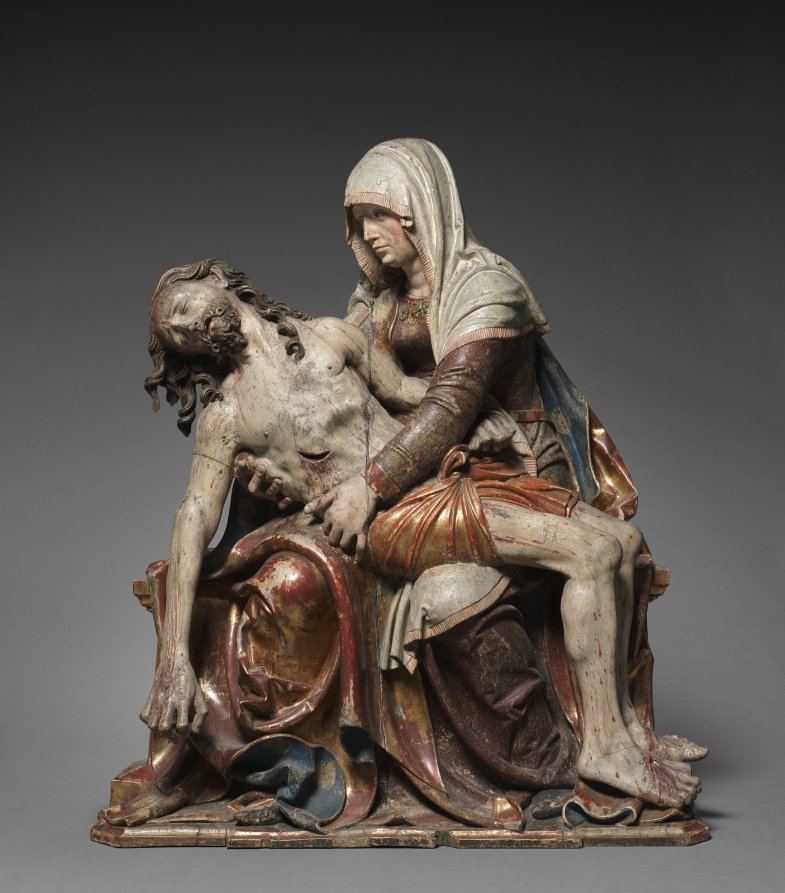
Vesperbild (Pietà)
Master of RabendenLinkedCulture matchlcp-fa90f07dd1af
- Date
- c. 1515–20
- Medium
- lindenwood, polychromed and gilded
- Culture
- Germany, Upper Bavaria, 16th century
- Department
- Medieval Art
- Institution
- Cleveland Museum of Art
- Object ID
- 117644
From the Cleveland Museum of Art record
Depicting the Virgin cradling Christ’s dead body, works like this one were known in German as vesperbilds , owing to their incorporation into the liturgy of the evening prayer (vespers) on Good Friday. The word pietà —from the Latin pietas , meaning "piety" or "compassion"—was also used to describe such works. Like other devotional image types that emerged in southern Germany in the later medieval period, vesperbilds encouraged viewers to contemplate Christ’s suffering and empathize with the Virgin’s sorrows more directly and emotively than ever before. This anonymous German artist is named after one of his most important works, the high altar of the church of Rabenden in the Chiemgau, the foothills of the Alps. The sculpture was likely placed in a secondary chapel in a Bavarian church. This sculpture sensitively depicts the Virgin cradling the body of Christ. This devotional image was likely placed near the altar in a German chapel. Imagine standing in a small, quiet chapel looking up at these lifelike figures with flickering candles casting dappled light onto their surface.
The authoritative record is held by Cleveland Museum of Art. LinkedCulture surfaces this object and its connections; it does not alter institutional metadata.
Get printable QR codesHide QR codes
Open QR codes for this object page and the museum record. They stay collapsed until needed.
Provenance & credit
As published by the source institution. Coverage varies — not every institution's open-data feed includes ownership history.
- Credit line
- Purchase from the J. H. Wade Fund
- Provenance
- Georg Schuster Collection, Munich, Germany; (Julius Böhler, Munich, Germany).
Related across collections
Semantically similar works from Cleveland Museum of Art and other institutions.