Cleveland Museum of Art
Plaque
- Date
- c. 500–200 BCE
- Medium
- hammered and cut gold
- Culture
- Peru, North Coast, Chongoyape(?), Chavín style (900-200 BCE)
- Department
- Art of the Americas
- Institution
- Cleveland Museum of Art
- Object ID
- 117824
From the Cleveland Museum of Art record
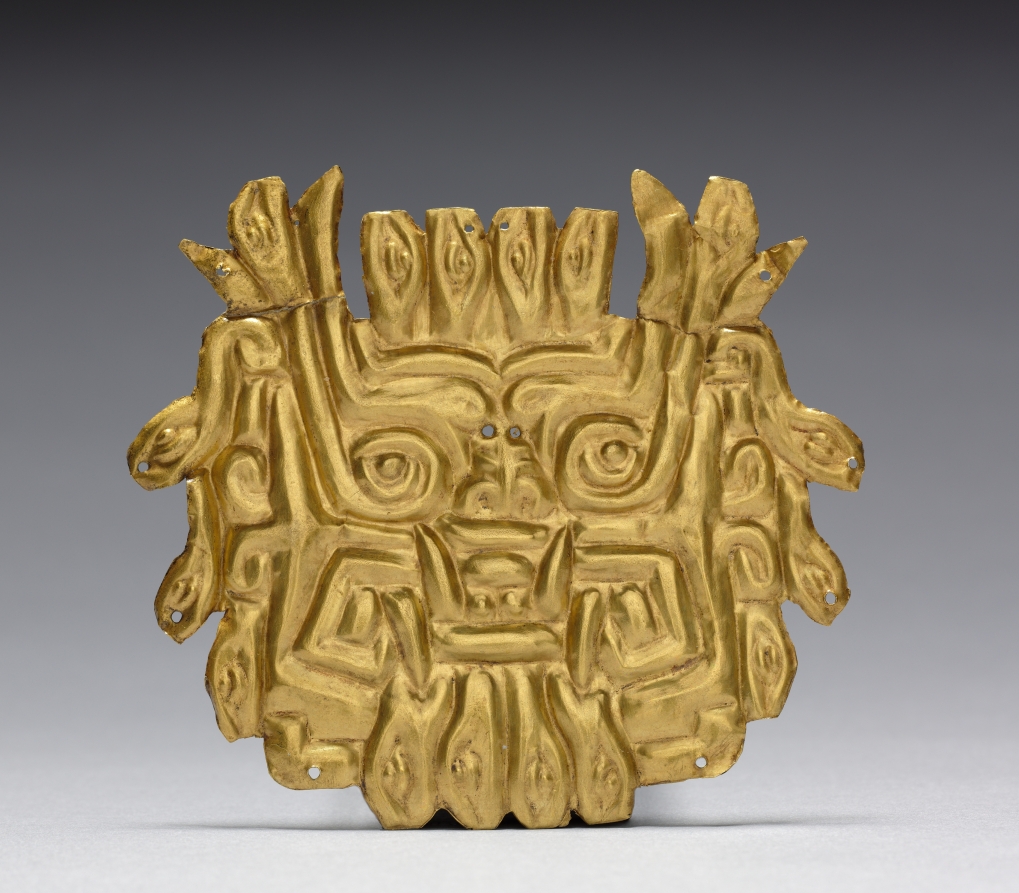
These plaques showing a powerful Chavín deity may come from a group of gold objects found in a lavish tomb in the 1920s. One is shaped as the deity’s fanged head, its fur transformed into sixteen serpents that edge the plaque. On the other, the deity’s visually elusive body also appears: the clawed hands over the chest may clutch a horizontal staff, an emblem of authority; across the waist is a belt that sprouts serpents; and beneath are the legs and feet, which stand atop fanged masks. Hammered gold ornaments have been produced in the Andes since 1500 BCE.
The authoritative record is held by Cleveland Museum of Art. LinkedCulture surfaces this object and its connections; it does not alter institutional metadata.
Get printable QR codesHide QR codes
Open QR codes for this object page and the museum record. They stay collapsed until needed.
Provenance & credit
As published by the source institution. Coverage varies — not every institution's open-data feed includes ownership history.
- Credit line
- Dudley P. Allen Fund
- Provenance
- ?-1938: Baron Walram von Schoeler, New York, NY, sold to the Cleveland Museum of Art | 1938-: The Cleveland Museum of Art, Cleveland, OH
Part of a LinkedCulture topic
 Pre-Columbian Body Adornment
These objects are personal ornaments and jewelry worn by ancient Mesoamerican and Andean cultures, including ear ornaments, nose ornaments, plaques, and costume decorations made from precious metals, stone, shell, and ce
359 objects from 4 institutions
Related across collections
Semantically similar works from Cleveland Museum of Art and other institutions.