Cleveland Museum of Art
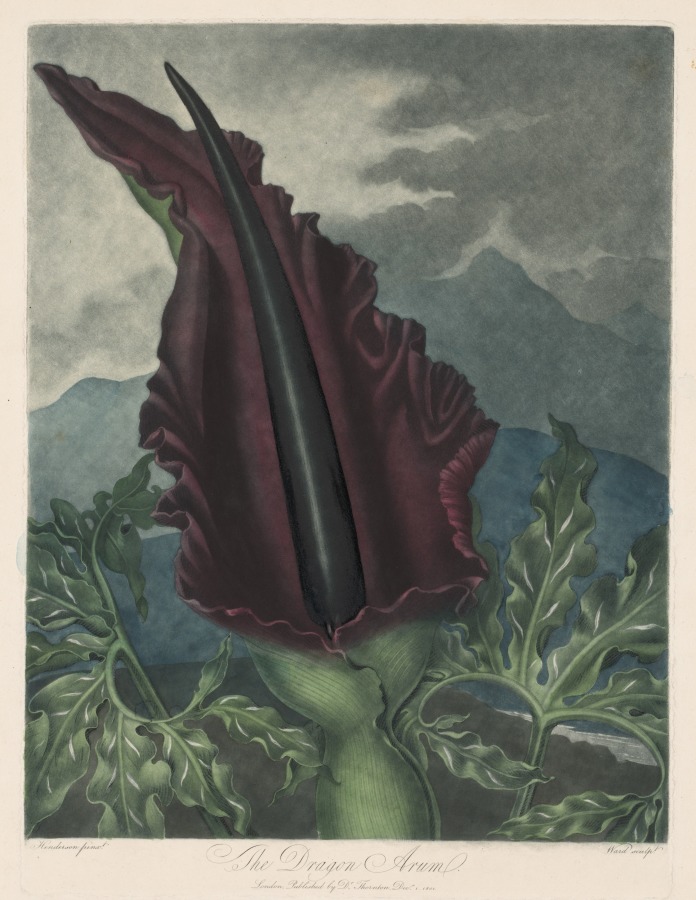
The Dragon Arum, Black Calla or Solomon's Lily
Robert John ThorntonLinkedCulture matchlcp-f4371757e89b
- Date
- 1799–1807
- Medium
- mezzotint
- Culture
- England, late 18th-early 19th Century
- Department
- Prints
- Institution
- Cleveland Museum of Art
- Object ID
- 118187
From the Cleveland Museum of Art record
In the 18th century, new engraving and etching techniques offered a variety of tonal effects that enhanced botanical prints. While mezzotint (in which the plate is roughened and then the engraver works from dark to light creating different values) and stipple (dots create values) make it possible to create the rich tonal scale and velvety texture of oil paint, aquatint imitates the delicacy and transparency of watercolor and ink wash.
The authoritative record is held by Cleveland Museum of Art. LinkedCulture surfaces this object and its connections; it does not alter institutional metadata.
Get printable QR codesHide QR codes
Open QR codes for this object page and the museum record. They stay collapsed until needed.
Provenance & credit
As published by the source institution. Coverage varies — not every institution's open-data feed includes ownership history.
- Credit line
- Gift of The Print Club of Cleveland, for the Donald Gray Memorial Collection
Related across collections
Semantically similar works from Cleveland Museum of Art and other institutions.