Cleveland Museum of Art
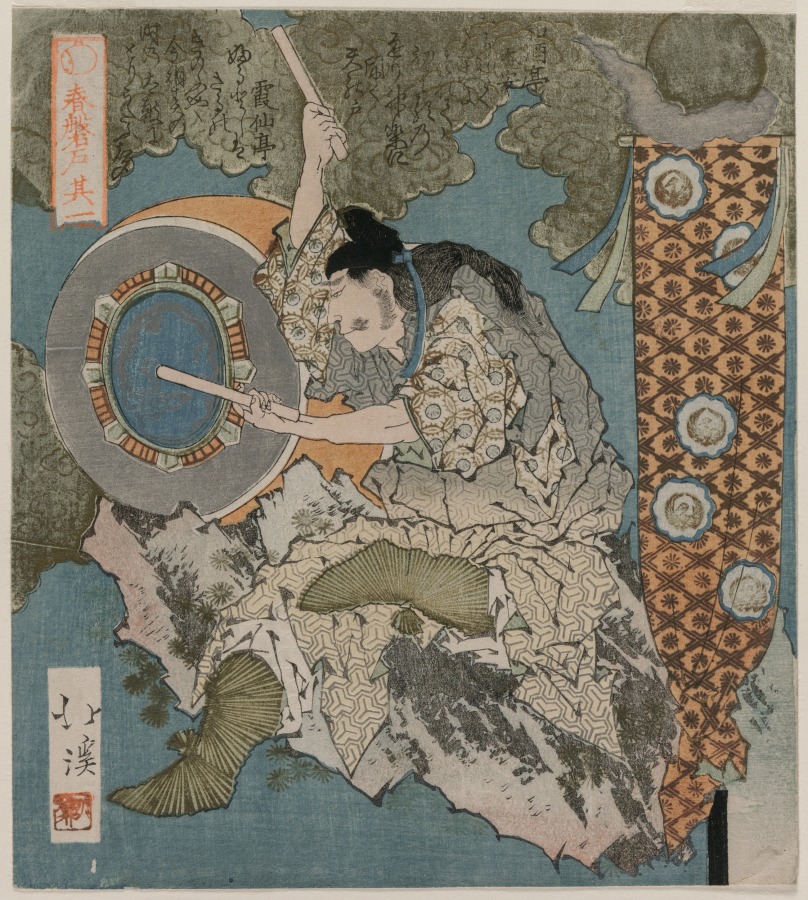
The Cave Door of Spring
Totoya HokkeiLinkedCulture matchlcp-934781257dd4
- Date
- 1825
- Medium
- pentaptych of woodblock prints; ink and color on paper
- Culture
- Japan, Edo period (1615–1868)
- Department
- Japanese Art
- Institution
- Cleveland Museum of Art
- Object ID
- 120230
From the Cleveland Museum of Art record
These prints form a composition inspired by a story about the deity Amaterasu. She was once so offended by her brother that she retreated into a cave, leaving the earth in darkness. Several attempts to lure her out with cocks crowing, music-making, and a goddess dancing failed, but a mirror hung from a nearby tree made Amaterasu curious, bringing her to the entrance of the cave. A stone was quickly placed at the entrance to block her way back into the cave, and light was restored to the world. The scene across the prints is unified by embossed clouds enriched with gold, silver, and copper.
The authoritative record is held by Cleveland Museum of Art. LinkedCulture surfaces this object and its connections; it does not alter institutional metadata.
Get printable QR codesHide QR codes
Open QR codes for this object page and the museum record. They stay collapsed until needed.
Provenance & credit
As published by the source institution. Coverage varies — not every institution's open-data feed includes ownership history.
- Credit line
- Bequest of James Parmelee
Related across collections
Semantically similar works from Cleveland Museum of Art and other institutions.