Cleveland Museum of Art
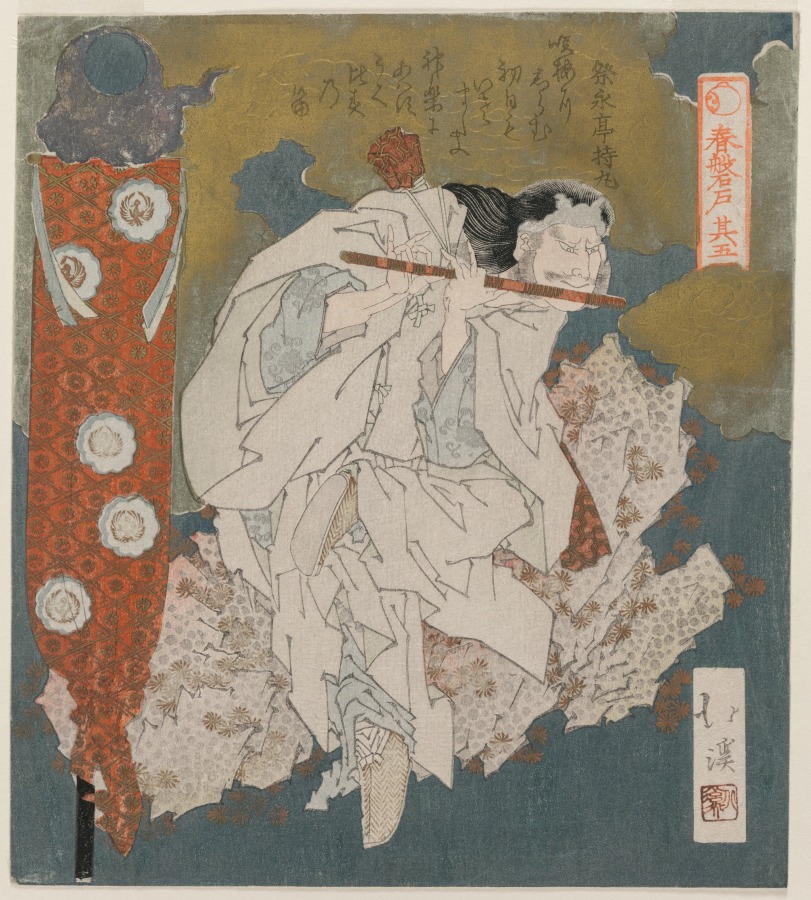
Flautist from The Cave Door of Spring
Totoya HokkeiLinkedCulture matchlcp-934781257dd4
- Date
- 1825
- Medium
- fifth from a pentaptych of woodblock prints; ink and color on paper
- Culture
- Japan, Edo period (1615–1868)
- Department
- Japanese Art
- Institution
- Cleveland Museum of Art
- Object ID
- 120235
From the Cleveland Museum of Art record
These elegant surimono prints come from a set of five images inspired by the legend of the Shinto Supreme Sun Goddess, Amaterasu. She was once so offended by her brother that she retreated into a cave, leaving the earth in darkness. Several attempts to lure her out with cocks crowing, music-making, and a goddess dancing failed, but a mirror hung from a nearby tree made Amaterasu curious, bringing her to the entrance of the cave. A stone was quickly placed at the entrance to block her way back into the cave, and light was restored to the world. Each print is set against a blue evening sky with embossed clouds enriched with gold, silver, and copper.
The authoritative record is held by Cleveland Museum of Art. LinkedCulture surfaces this object and its connections; it does not alter institutional metadata.
Get printable QR codesHide QR codes
Open QR codes for this object page and the museum record. They stay collapsed until needed.
Provenance & credit
As published by the source institution. Coverage varies — not every institution's open-data feed includes ownership history.
- Credit line
- Bequest of James Parmelee
Related across collections
Semantically similar works from Cleveland Museum of Art and other institutions.