Cleveland Museum of Art
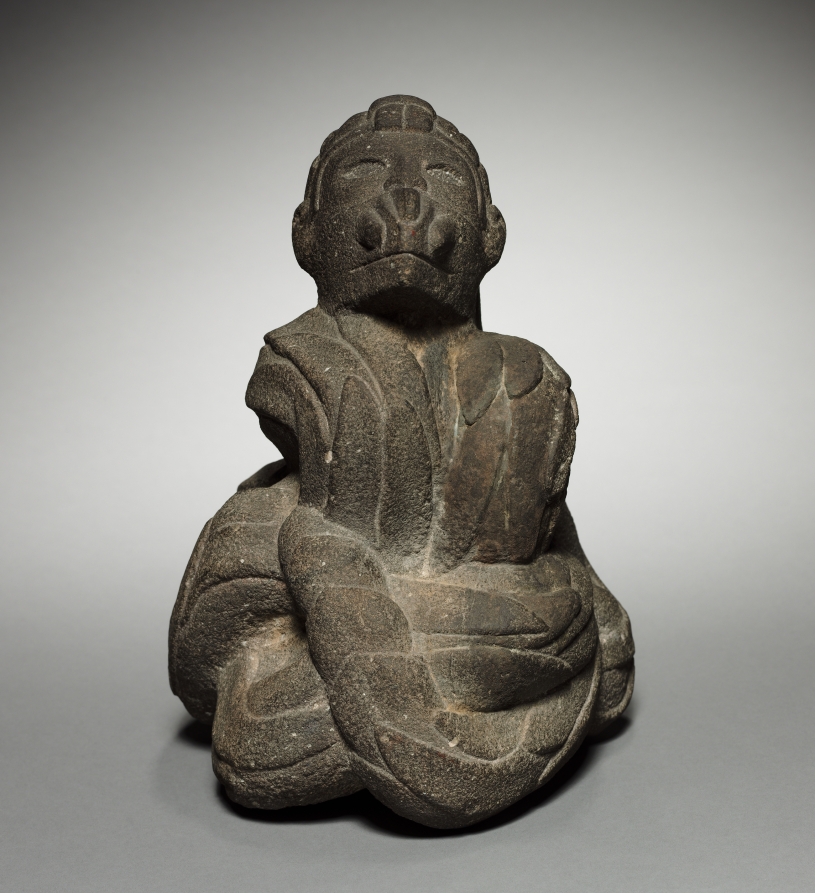
Feathered Serpent (Quetzalcoatl)
- Date
- 1325–1521
- Medium
- stone
- Culture
- Central Mexico, Aztec or modern, Post-Classic Period or modern
- Department
- Art of the Americas
- Institution
- Cleveland Museum of Art
The museum bought this sculpture in 1941, when study of ancient American arts was in its infancy. It has many odd features, a few perhaps revealing an attempt to make the subject—the Aztec deity Quetzalcoatl (Feathered Serpent)—palatable to modern viewers. But it cannot absolutely be declared fake because some real Aztec sculptures are unusual. Analysis of the surface so far provides no help. Especially odd is the arrangement of the coils into bulges that suggest the pectorals, knees, and buttocks of a human body, as though the sculpture represents a human in a serpent costume. Real Aztec sculpture usually portrays the serpent's dangerous body more realistically. Also, the mouth mask—the insignia of a wind deity related to Quetzalcoatl and, thus, perhaps appropriate—is much larger in genuine sculptures. This suggests that, because the mask and its authentic proportion are strange to our eyes, a forger scaled it down. Other uncommon features include the incomplete carving of the ears, the fact that the human head does not emerge from a serpent's mouth, and more.
The authoritative record is held by Cleveland Museum of Art. LinkedCulture surfaces this object and its connections; it does not alter institutional metadata.
Related across collections
Semantically similar works from Cleveland Museum of Art and other institutions.
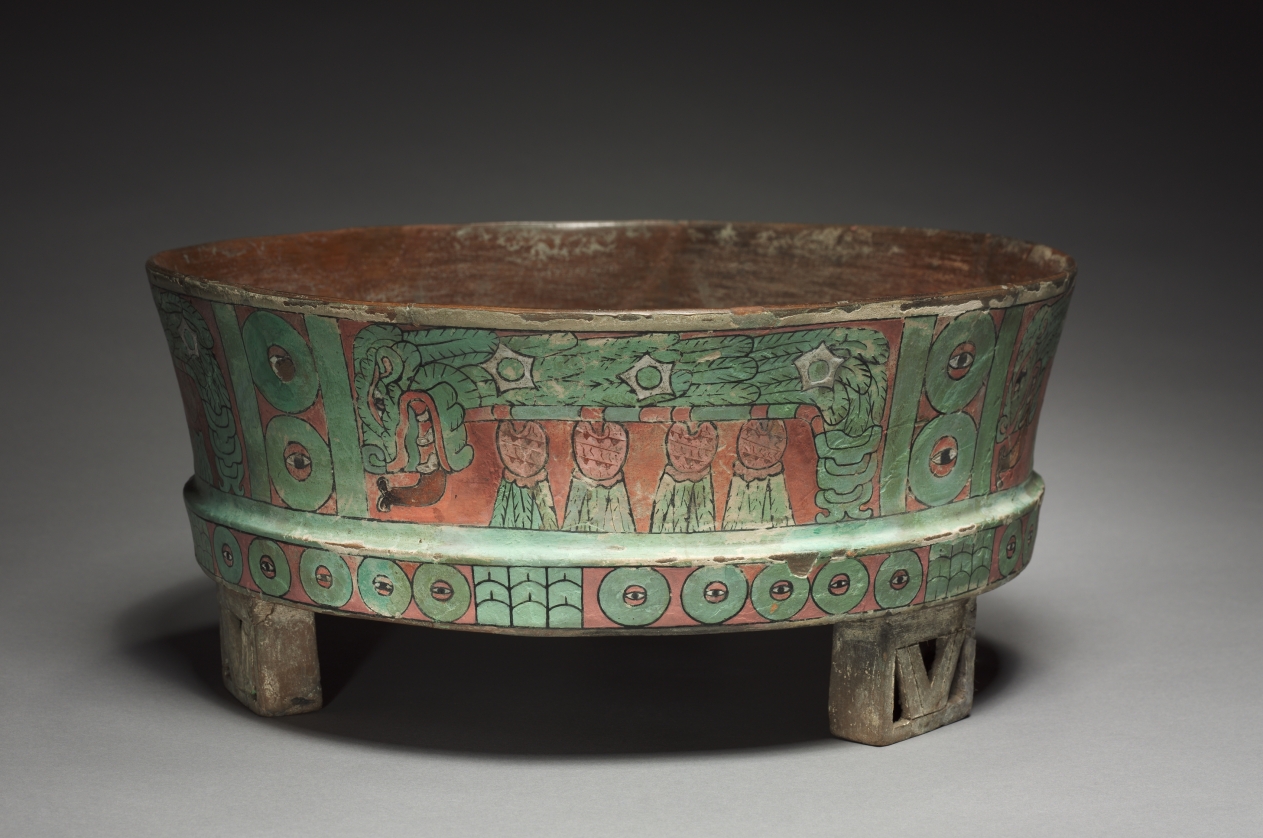
Basin with Feathered Serpent
Cleveland Museum of Art
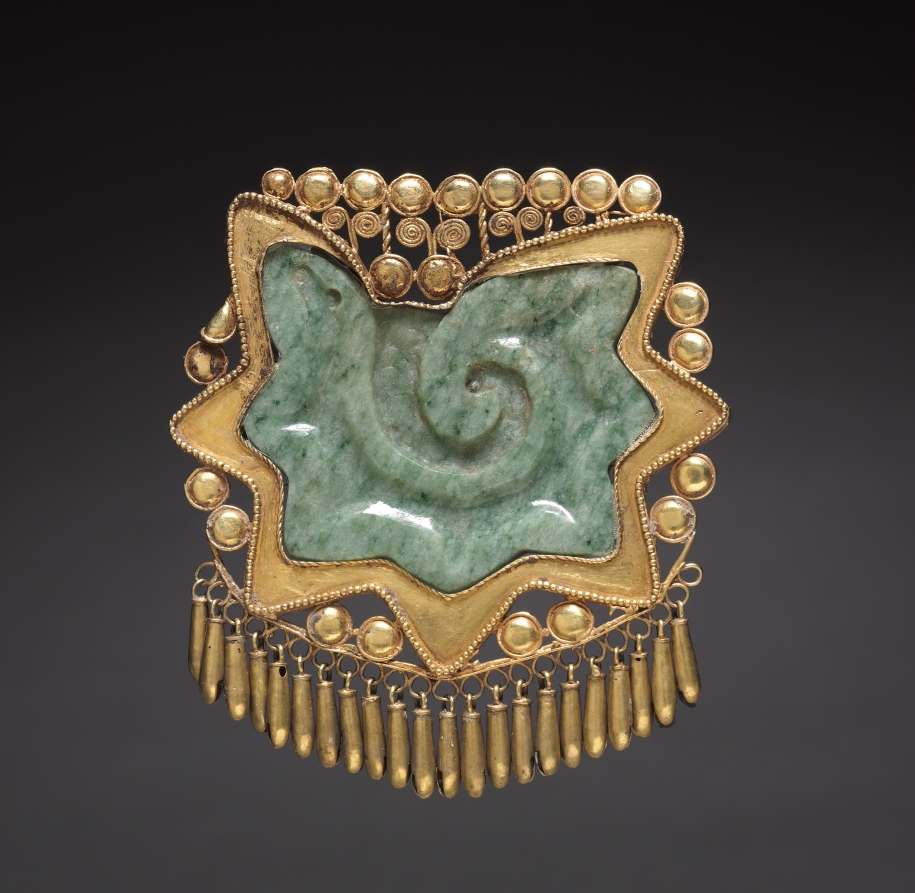
Pectoral Ornament
Cleveland Museum of Art
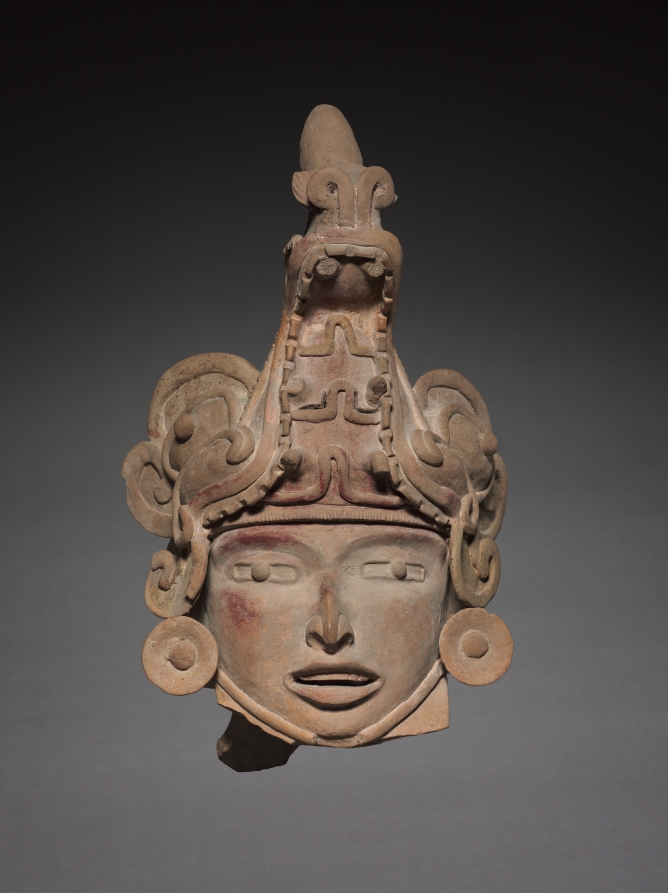
Head with Animal Helmet
Cleveland Museum of Art
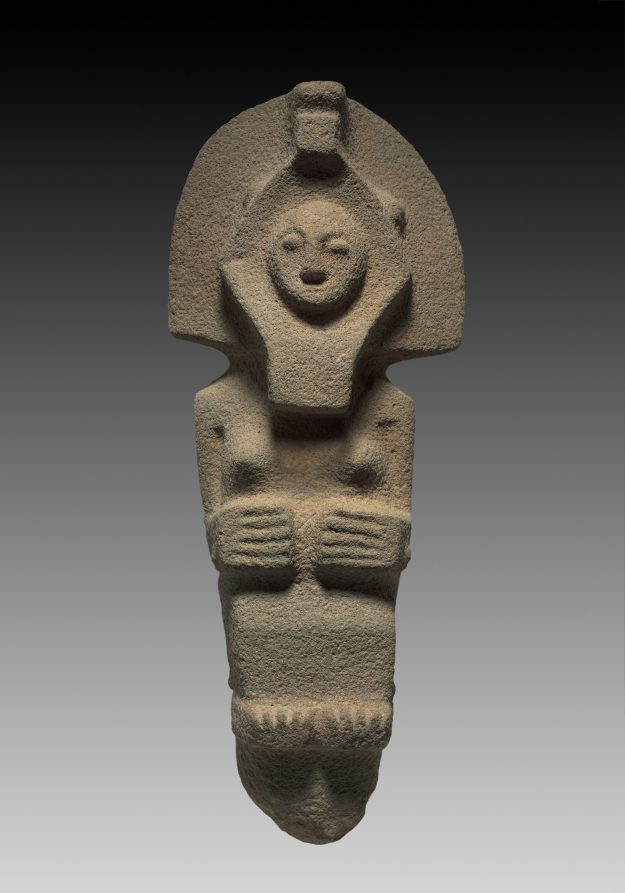
Standing Female Figure
Cleveland Museum of Art
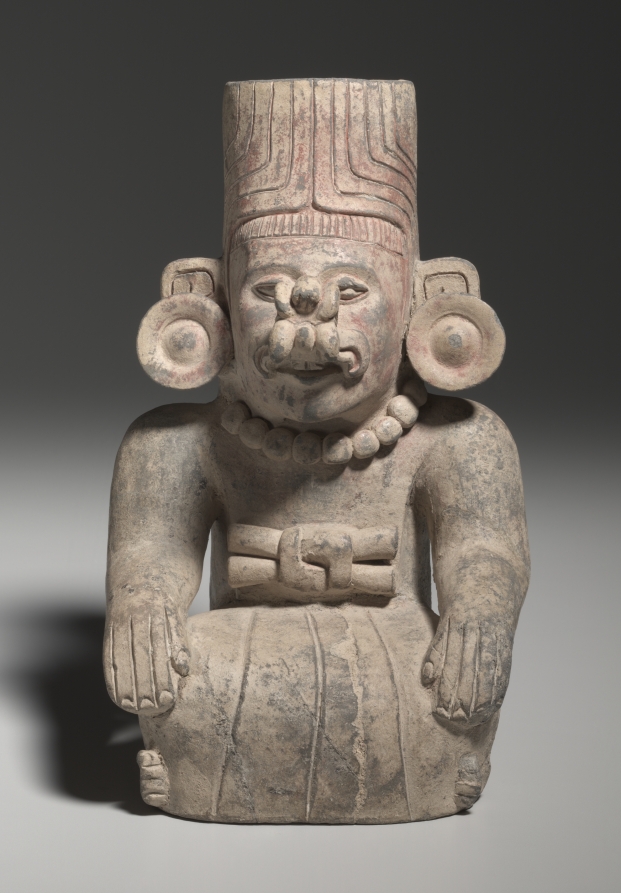
Urn Figure
Cleveland Museum of Art
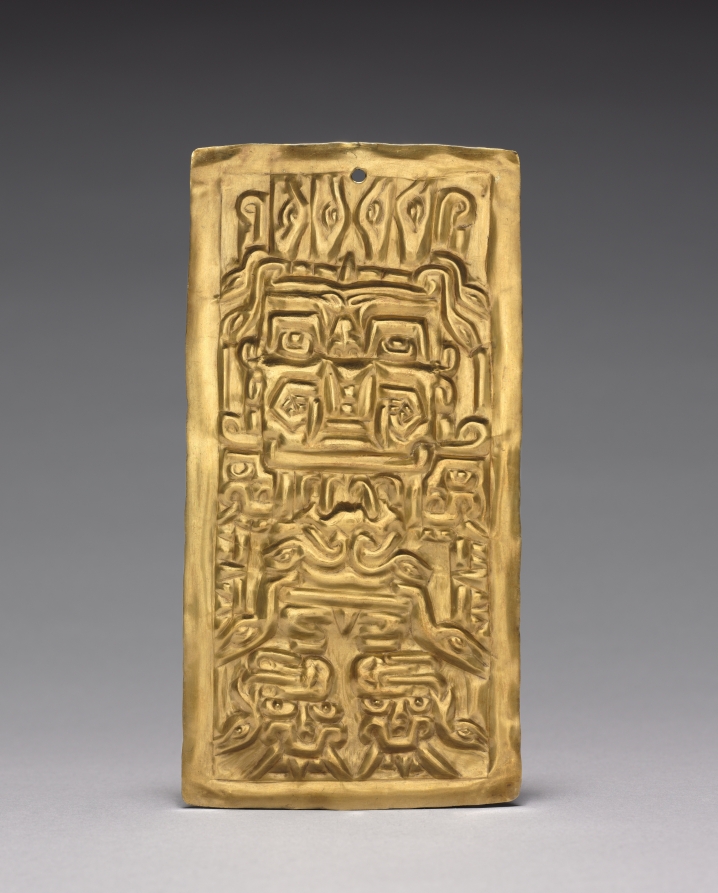
Plaque
Cleveland Museum of Art
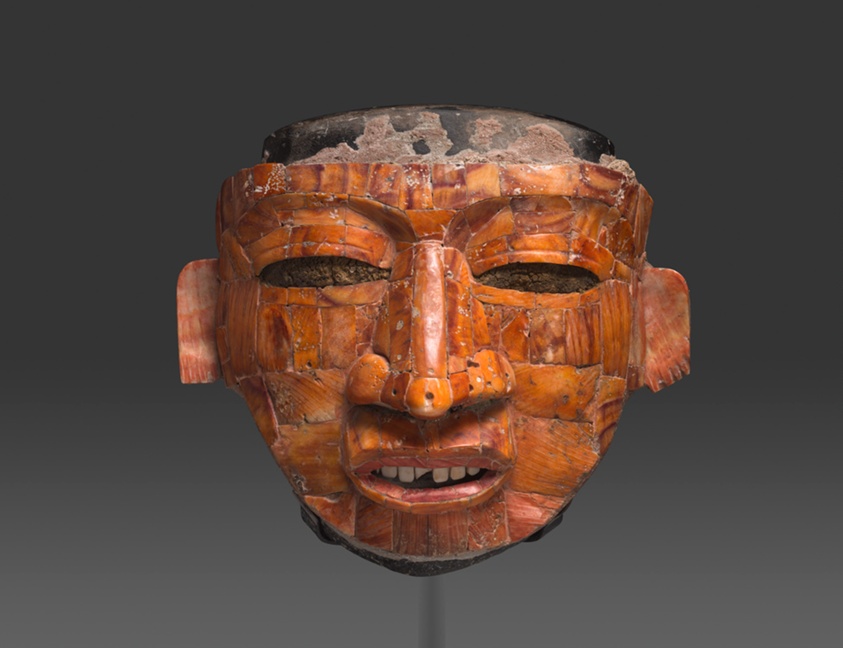
Face
Art Institute of Chicago
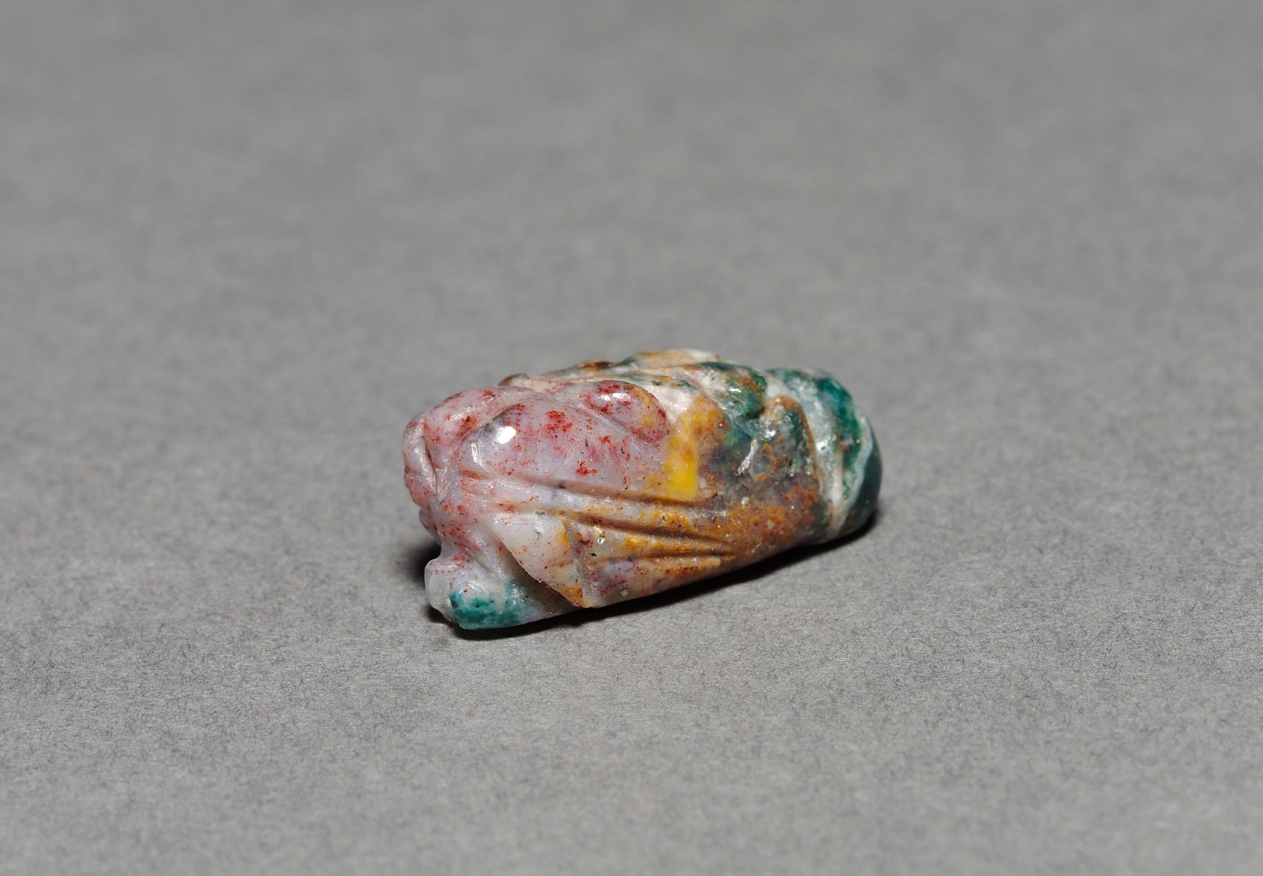
Serpent Labret
Cleveland Museum of Art
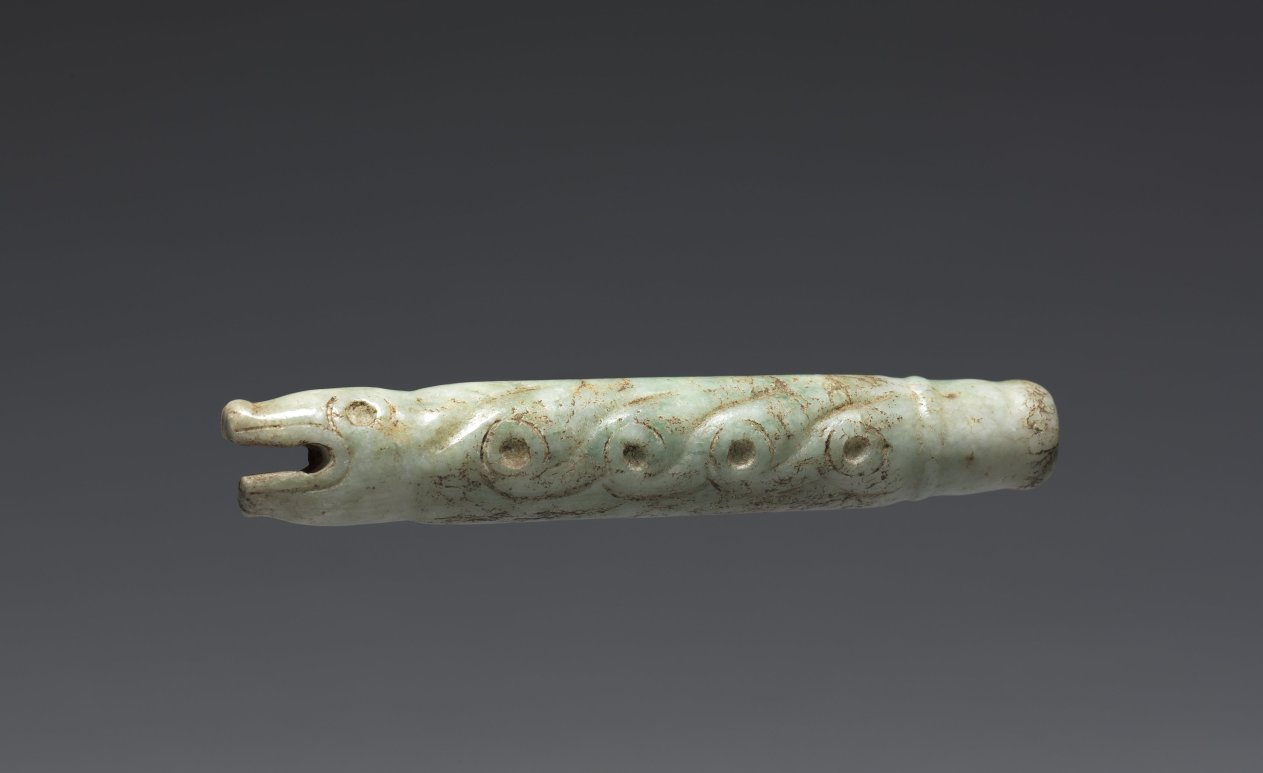
Serpent-form Fan Handle(?)
Cleveland Museum of Art
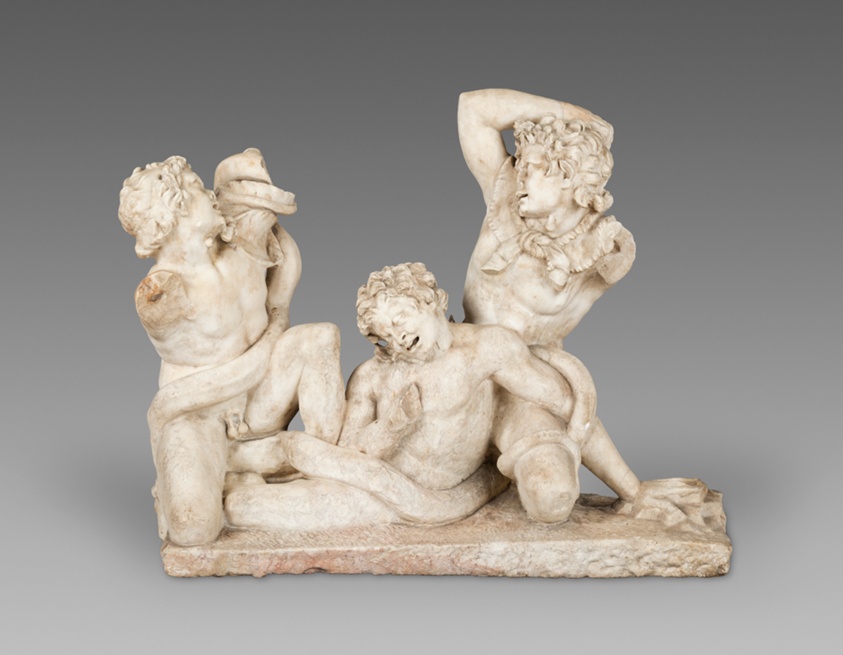
Statuary Group of Three Satyrs Fighting a Serpent
Art Institute of Chicago
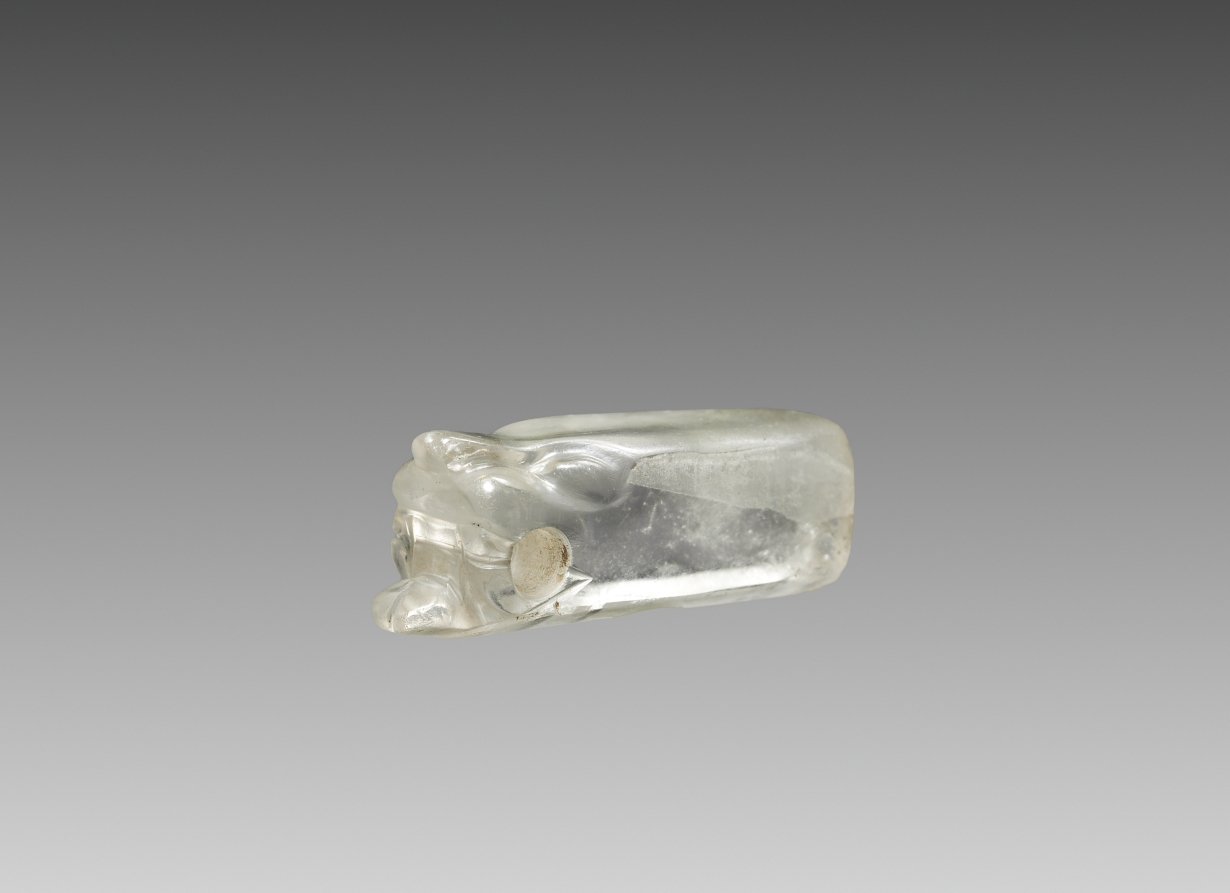
Serpent Labret
Cleveland Museum of Art
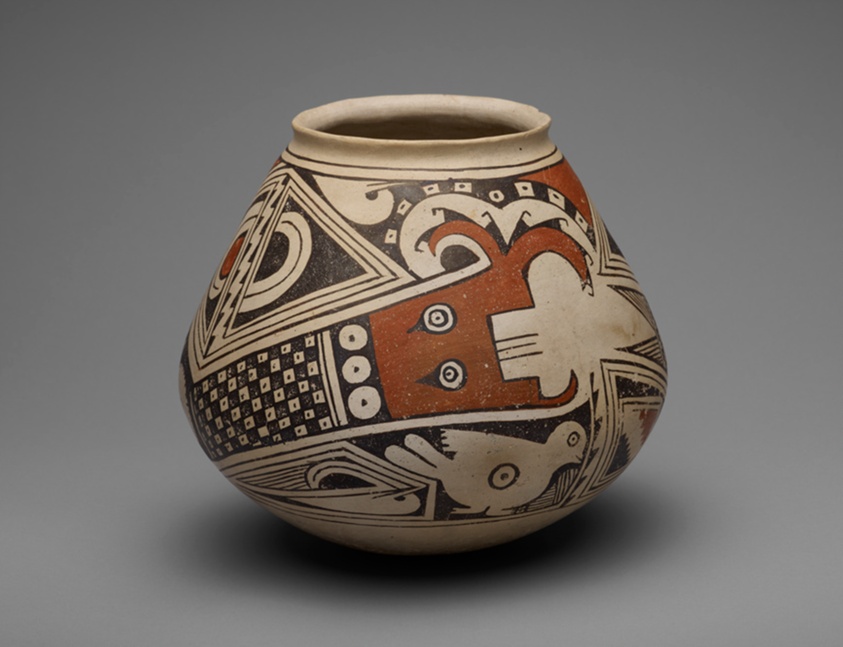
Jar with Two Plumed or Horned Serpents with Birds and P-shaped Motifs
Art Institute of Chicago