Cleveland Museum of Art
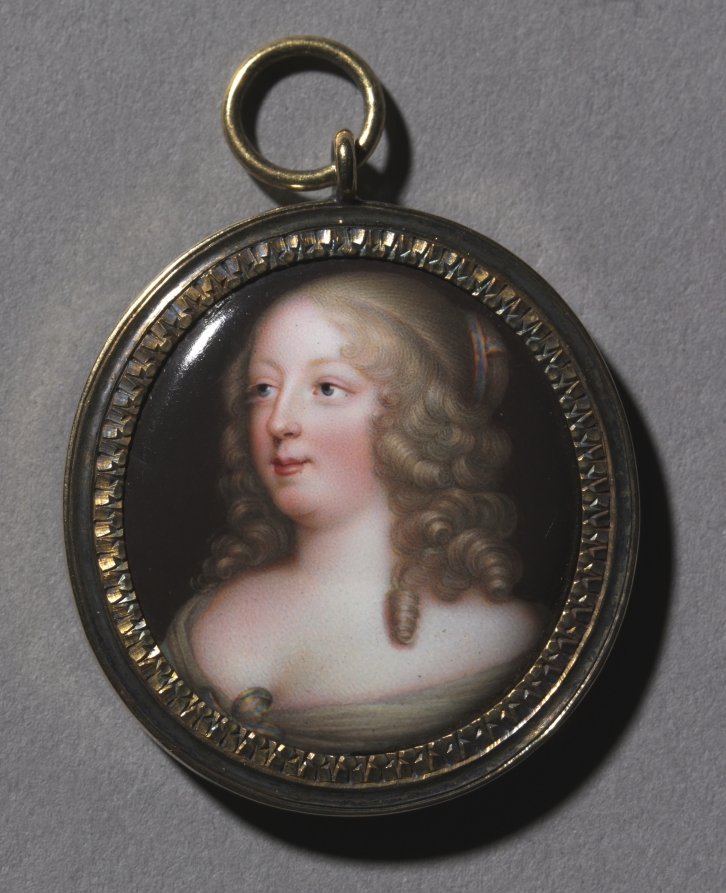
Portrait of a Woman
Jean PetitotLinkedCulture matchlcp-87ec68dcf020
- Date
- c. 1670
- Medium
- enamel in a silver gilt frame
- Culture
- France, 17th century
- Department
- European Painting and Sculpture
- Institution
- Cleveland Museum of Art
- Object ID
- 121282
From the Cleveland Museum of Art record
Unlike fragile portrait miniatures painted in watercolor on vellum or ivory, which are prone to cracking, fading, and flaking, enamels are resilient, impervious to the effects of light, and retain their striking original colors over time. Partly for this reason enamel was considered ideal for reproducing famous paintings and treasured portraits in a reduced and luminous form. The complicated and labor-intensive process of enameling required the artist to fire numerous layers of colored metal oxide at different temperatures, which made it difficult to produce a faithful portrait likeness, though masters of the medium were able create portraits of remarkable subtlety imbued with the sitter's personality. The heyday of enamel painting was the late 1600s and early 1700s. Among the enamel specialists was Petitot, who was patronized by King Charles I of England, King Louis XIV of France, and King John III Sobieski of Poland.
The authoritative record is held by Cleveland Museum of Art. LinkedCulture surfaces this object and its connections; it does not alter institutional metadata.
Get printable QR codesHide QR codes
Open QR codes for this object page and the museum record. They stay collapsed until needed.
Provenance & credit
As published by the source institution. Coverage varies — not every institution's open-data feed includes ownership history.
- Credit line
- The Edward B. Greene Collection
Part of a LinkedCulture topic
 18th-19th Century European Portrait Miniatures
These objects are predominantly portrait miniatures and small-scale portrait paintings from Central European and Russian courts, created between the 18th and 19th centuries using techniques such as watercolor on ivory, g
146 objects from 4 institutions
Related across collections
Semantically similar works from Cleveland Museum of Art and other institutions.