Cleveland Museum of Art
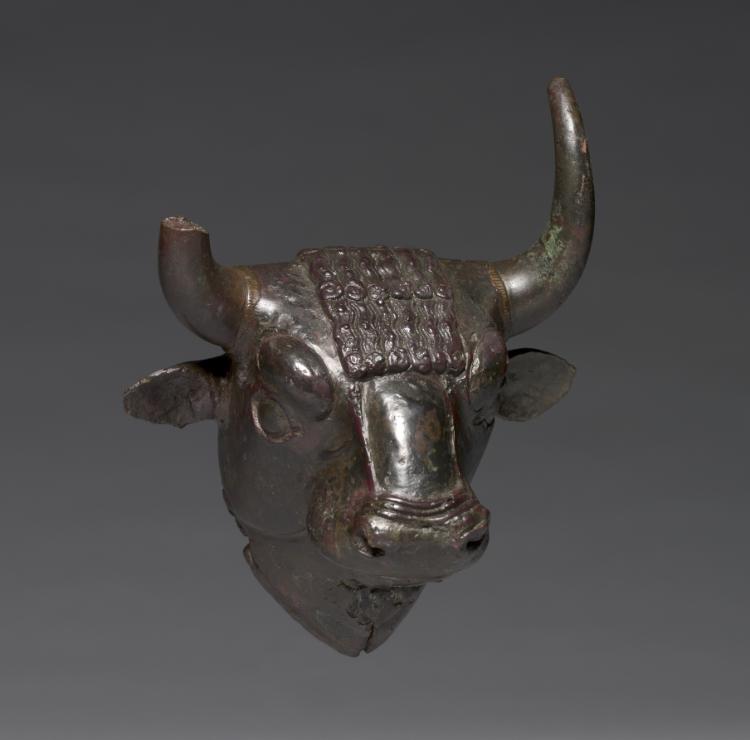
Bull Head Attachment
- Date
- c. 700–600 BCE
- Medium
- bronze
- Culture
- Urartian, northwest Iran, possibly Gusçi, Lake Urmia
- Department
- Egyptian and Ancient Near Eastern Art
- Institution
- Cleveland Museum of Art
- Object ID
- 121887
From the Cleveland Museum of Art record
The kingdom of Urartu was contemporary with the Assyrian civilization. The Urartians produced elaborate bronze objects and probably passed on many of their metalwork traditions to the Achaemenian Persians. This bull head was probably one of four placed at cardinal points around the rim of a huge Urartian bronze cauldron. Bulls were symbols of power and fertility in many ancient cultures. This bronze bull's head was made in the kingdom of Urartu, which was located in what is Iran today, and was likely attached to the rim of a giant cauldron or cooking pot.
The authoritative record is held by Cleveland Museum of Art. LinkedCulture surfaces this object and its connections; it does not alter institutional metadata.
Get printable QR codesHide QR codes
Open QR codes for this object page and the museum record. They stay collapsed until needed.
Provenance & credit
As published by the source institution. Coverage varies — not every institution's open-data feed includes ownership history.
- Credit line
- Purchase from the J. H. Wade Fund
- Provenance
- Mrs. Christian R. Holmes | Mrs. Christian R. Holmes
Related across collections
Semantically similar works from Cleveland Museum of Art and other institutions.