Cleveland Museum of Art
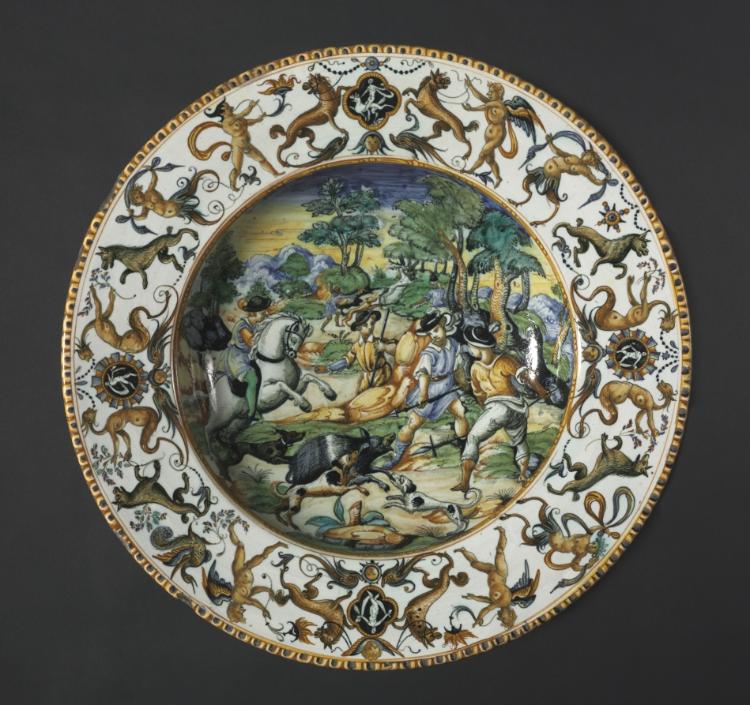
Charger Depicting a Boar Hunt
Fontana FamilyLinkedCulture matchlcp-a0bd7eb5e6ea
- Date
- c. 1575
- Medium
- tin-glazed earthenware (maiolica)
- Culture
- Italy, Urbino
- Department
- Decorative Art and Design
- Institution
- Cleveland Museum of Art
- Object ID
- 122324
From the Cleveland Museum of Art record
During the Renaissance, an understanding of classical antiquity was perceived to be a sign of social, intellectual, and economic distinction. Scenes from Greco-Roman mythology were prominently featured on maiolica, covering the surface in a style called istoriato (decorated with stories). In the centuries leading up to the Renaissance, boar hunting was an activity reserved for royalty and the aristocracy.
The authoritative record is held by Cleveland Museum of Art. LinkedCulture surfaces this object and its connections; it does not alter institutional metadata.
Get printable QR codesHide QR codes
Open QR codes for this object page and the museum record. They stay collapsed until needed.
Provenance & credit
As published by the source institution. Coverage varies — not every institution's open-data feed includes ownership history.
- Credit line
- Bequest of John L. Severance
- Provenance
- John L. Severance [1863-1936], Cleveland.
Related across collections
Semantically similar works from Cleveland Museum of Art and other institutions.