Cleveland Museum of Art
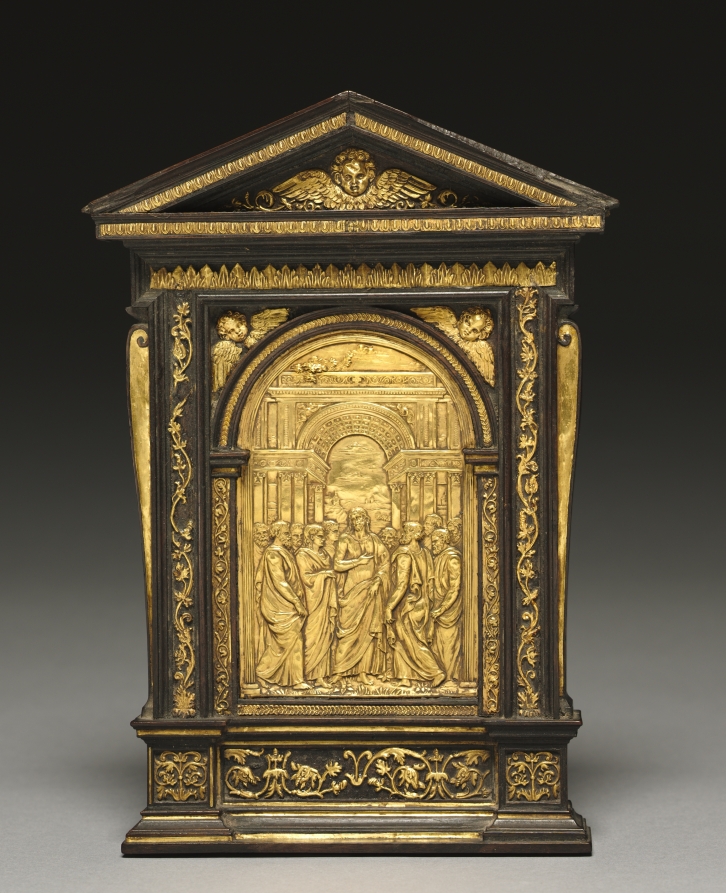
Pax with Christ Appearing to the Apostles
Valerio BelliLinkedCulture matchlcp-4bd35d2153b0
- Date
- late 1500s
- Medium
- gilt bronze in ebony frame
- Culture
- Germany, late 16th century
- Department
- European Painting and Sculpture
- Institution
- Cleveland Museum of Art
- Object ID
- 122333
From the Cleveland Museum of Art record
A pax is a tablet depicting a sacred subject that a priest held out to be kissed during the Mass. The scene on this tablet is of Christ preaching to ten apostles. The image is by an unknown artist who based it on a plaquette by the gem engraver and medalist Valerio Belli (1468–1546) and demonstrates an awareness of linear perspective and scale conventions common in Renaissance Italy. The triumphal arch seen behind the figures, for example, contains coffering and Corinthian capitals that have been present in Italian art since the early 1400s. The arch itself is supported by columns in order to reveal the landscape behind it. The foliage seen at the top of the arch and at the figures' feet, however, is not present in the Belli and suggests the stylistic influence of northern Europe. The plaquette's gilding may have been intended to create painterly effects on a low-relief metal surface. The work is encased inside an ebony frame. The wood used for the frame—and the three putti heads it contains—suggests origins in southern Germany, possibly Nuremberg or Augsburg. The frame is also decorated with vine and floral patterns, which could originate in either medieval tapestries or northern European manuscripts.
The authoritative record is held by Cleveland Museum of Art. LinkedCulture surfaces this object and its connections; it does not alter institutional metadata.
Get printable QR codesHide QR codes
Open QR codes for this object page and the museum record. They stay collapsed until needed.
Provenance & credit
As published by the source institution. Coverage varies — not every institution's open-data feed includes ownership history.
- Credit line
- Bequest of John L. Severance
- Provenance
- John L. Severance, upon his death, held in trust by the estate. | Estate of John L. Severance, by bequest to the Cleveland Museum of Art, 1942.
Related across collections
Semantically similar works from Cleveland Museum of Art and other institutions.