Cleveland Museum of Art
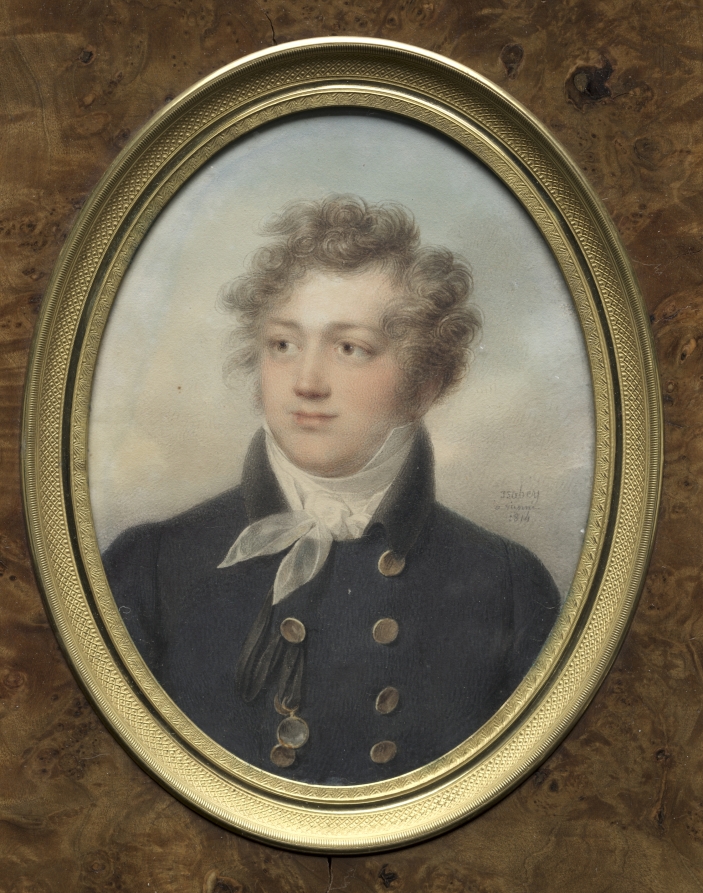
Portrait of a Man, possibly Alexander I, Emperor of Russia
Jean-Baptiste IsabeyLinkedCulture matchlcp-7a981a80af78
- Date
- 1814
- Medium
- watercolor on paper in a gilt metal mount and burr wood frame
- Culture
- France, 18th century
- Department
- Modern European Painting and Sculpture
- Institution
- Cleveland Museum of Art
- Object ID
- 123414
What the image shows
A young man with curly hair wearing a dark coat and white cravat is depicted in a portrait.
Generated by LinkedCulture from the photograph alone, without the museum’s catalogue text (Qwen/Qwen2.5-VL-7B-Instruct), and not yet reviewed by a person. It describes the picture, not the object’s history, and it is not part of the museum’s record.
From the Cleveland Museum of Art record
This portrait miniature is believed to be Alexander I, emperor of Russia, painted during the Congress of Vienna, convened between September 1814 and June 1815 to establish the terms of peace in Europe following the Napoleonic Wars. Singers, actors, and artists flocked to entertain the delegates when they were not engaged in negotiations. Among these was French miniature painter Jean-Baptiste Isabey. He had been patronized by Marie Antoinette and the Bonaparte family but managed to retain a client base when the Bourbon kings were reinstalled. Isabey established a studio in Vienna and painted portraits and miniatures documenting the congress's delegates and attendees; he was so popular that carriages lined the street in front of his studio, which became a popular place to see the elite. Isabey signed many of his works from the congress "Isabey à Vienne," indicating that he understood the historical significance of the event. This portrait is inscribed in this way.v Emperor Alexander I did not participate directly as a delegate but was present in Vienna to ensure that his political interests were defended. Despite the lack of identifying medals, this portrait closely resembles other depictions of Alexander I by Isabey and his contemporaries, including Sir Thomas Lawrence (1769–1830). These portraits all exhibit drooping eyelids, a long thin upper lip, and a slightly bulbous nose. The romantic atmosphere and perplexing lack of imperial accouterments in the miniature suggest that this work was a private memento for Alexander rather than an official record of his participation.
The authoritative record is held by Cleveland Museum of Art. LinkedCulture surfaces this object and its connections; it does not alter institutional metadata.
Get printable QR codesHide QR codes
Open QR codes for this object page and the museum record. They stay collapsed until needed.
Provenance & credit
As published by the source institution. Coverage varies — not every institution's open-data feed includes ownership history.
- Credit line
- The Edward B. Greene Collection
Part of a LinkedCulture topic
 18th-19th Century European Portrait Miniatures
These objects are predominantly portrait miniatures and small-scale portrait paintings from Central European and Russian courts, created between the 18th and 19th centuries using techniques such as watercolor on ivory, g
146 objects from 4 institutions
Related across collections
Semantically similar works from Cleveland Museum of Art and other institutions.