Cleveland Museum of Art
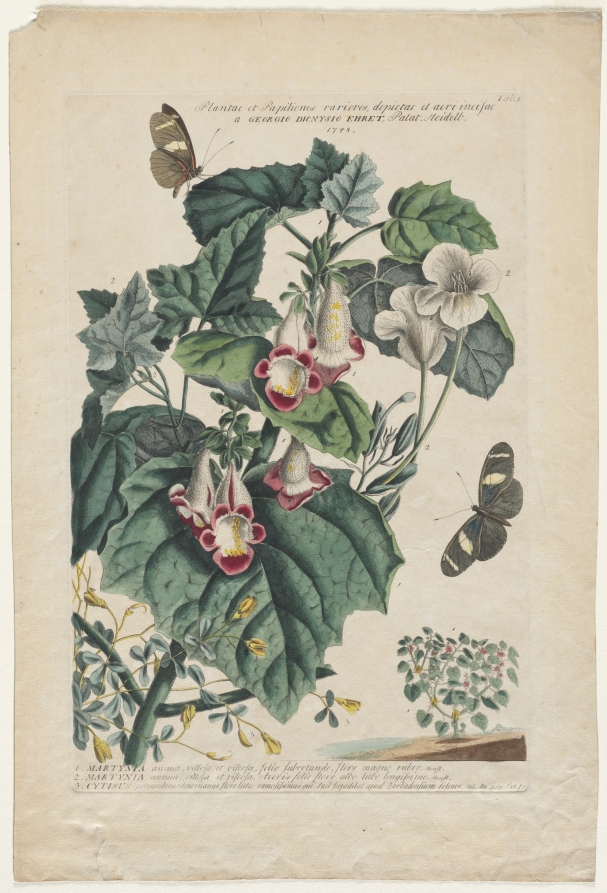
Plantae et Papiliones rariores: Martynia
Georg Dionysius EhretLinkedCulture matchlcp-52afe50cffac
- Date
- 1748
- Medium
- engraving, hand-colored
- Culture
- Germany, 18th century
- Department
- Prints
- Institution
- Cleveland Museum of Art
- Object ID
- 127082
From the Cleveland Museum of Art record
Georg Ehret met Carolus Linnaeus in 1736. The dominant botanical artist in the mid-18th century, Ehret settled in England where the nobility clamored to receive his instruction. He commented in his autobiography, “If I could have divided myself into twenty parts I could still have had my hands full.” Ehret struck a fine compromise between the artist and the scientist. “While he did not slavishly imitate what he saw, neither did he allow his feeling for the color and design of flowers distract him from the fundamentals of plant structure,” confirms Wilfrid Blunt, author of The Art of Botanical Illustration. Ehret’s crisp forms betray a sureness of touch, vigor of handling, and unerring instinct for design.
The authoritative record is held by Cleveland Museum of Art. LinkedCulture surfaces this object and its connections; it does not alter institutional metadata.
Get printable QR codesHide QR codes
Open QR codes for this object page and the museum record. They stay collapsed until needed.
Provenance & credit
As published by the source institution. Coverage varies — not every institution's open-data feed includes ownership history.
- Credit line
- Gift of The Print Club of Cleveland
Related across collections
Semantically similar works from Cleveland Museum of Art and other institutions.