Cleveland Museum of Art
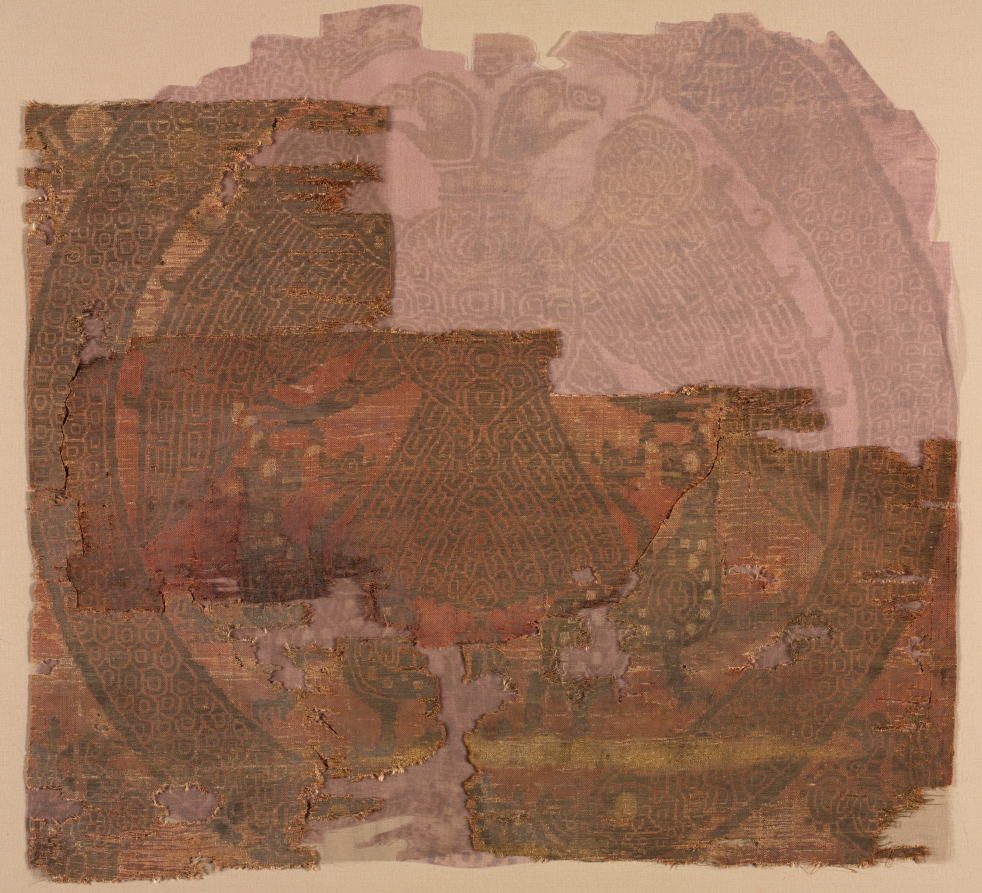
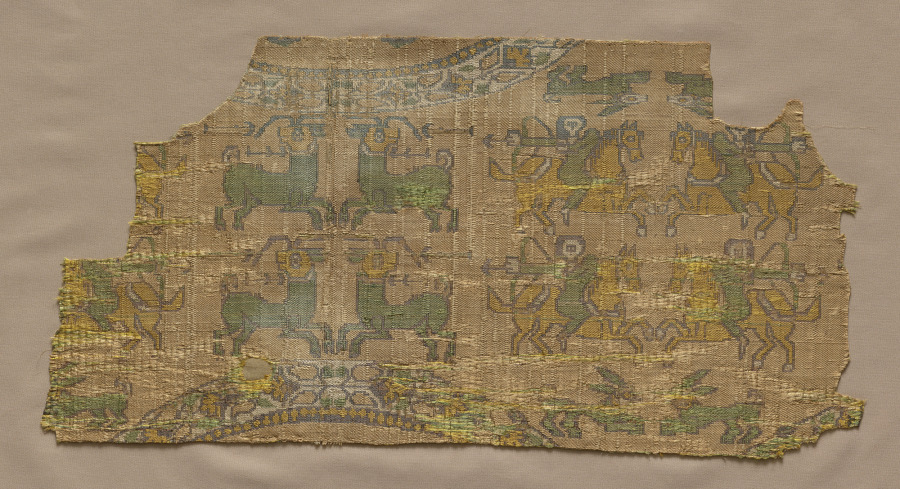
Fragment
- Date
- 900s–1000s
- Medium
- Silk and gold: compound twill, brocaded
- Culture
- Byzantium
- Department
- Textiles
- Institution
- Cleveland Museum of Art
The design of this textile offers an interesting iconographic puzzle. The double-headed eagle was a common motif in the art of the Near East in ancient times and from there seems to have found its way into Byzantine and European art. The animal tail ending in an animal's head is also found in Near Eastern art and is particularly noted in textiles of the Seljuk period (1000s–1100s) in Persia. However, the division of the roundel frame into two halves ending in animal heads is not known in the art of the Near East nor is the continuous knot motif which occurs just behind the animal head of the frames. Both of these motifs are familiar in the art of the Anglo-Saxon, Germanic, and Scandinavian peoples of Europe. The entire pattern is in gold thread, except for such minor details as claws and eyes which are in golden tan silk on a rose-red ground.
The authoritative record is held by Cleveland Museum of Art. LinkedCulture surfaces this object and its connections; it does not alter institutional metadata.
Related across collections
Semantically similar works from Cleveland Museum of Art and other institutions.
Fragment with Double-Headed "Simurgh"-Eagles
Cleveland Museum of Art
Fragment with eagles in roundels from the Reliquary of Saint Librada in Siguenza Cathedral
Cleveland Museum of Art
Embroidered border and field of animals in large roundels
Cleveland Museum of Art
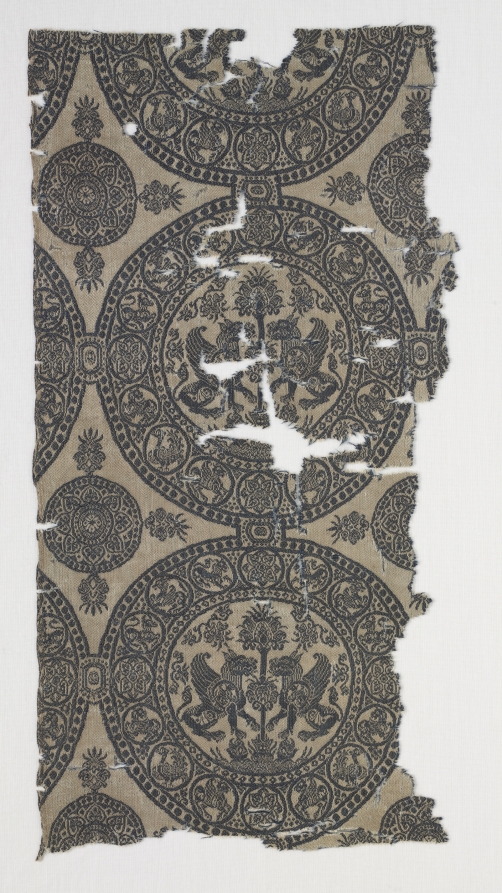
Fragments with Griffins in Roundels
Cleveland Museum of Art
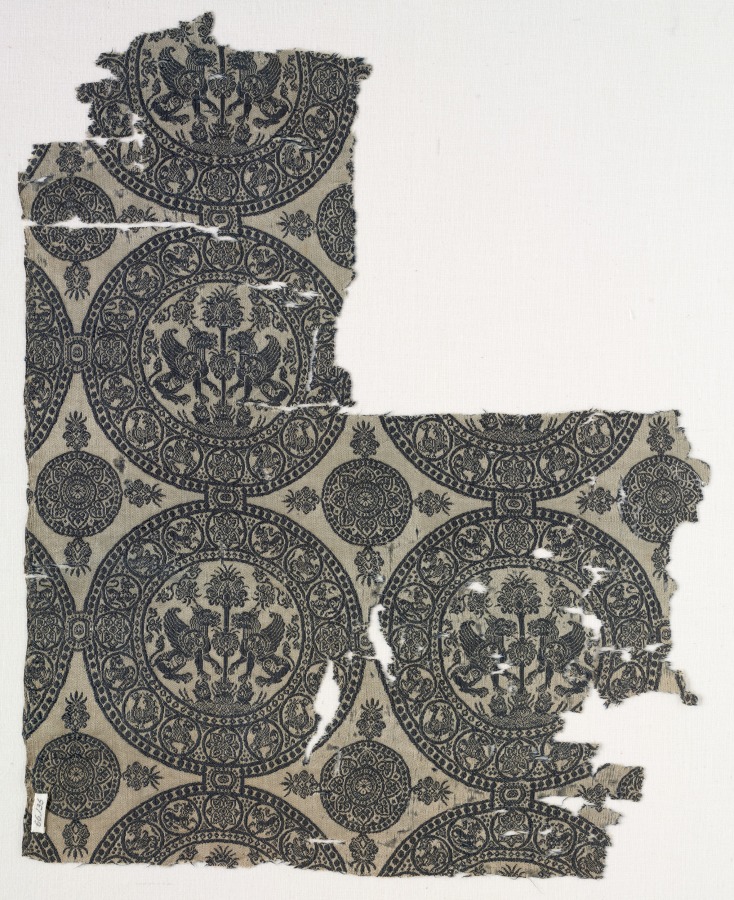
Fragments with Griffins in Roundels
Cleveland Museum of Art
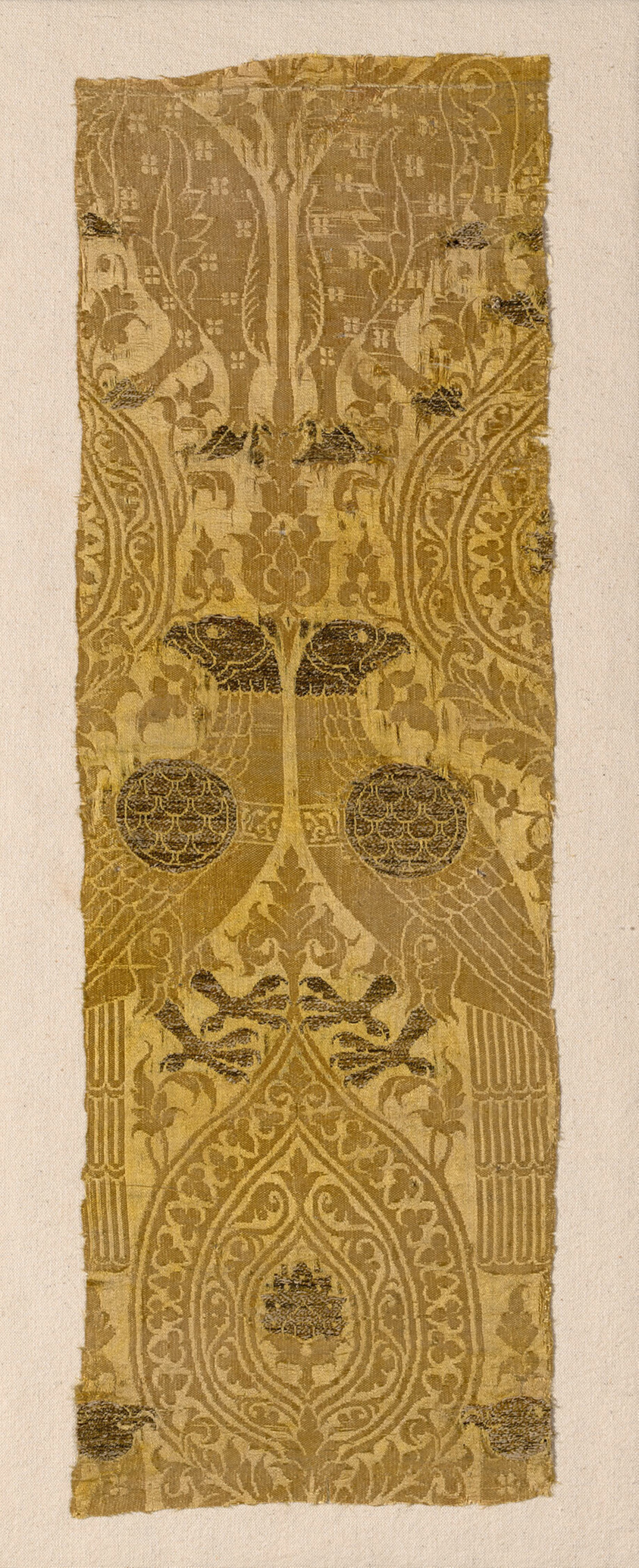
Fragment
Art Institute of Chicago
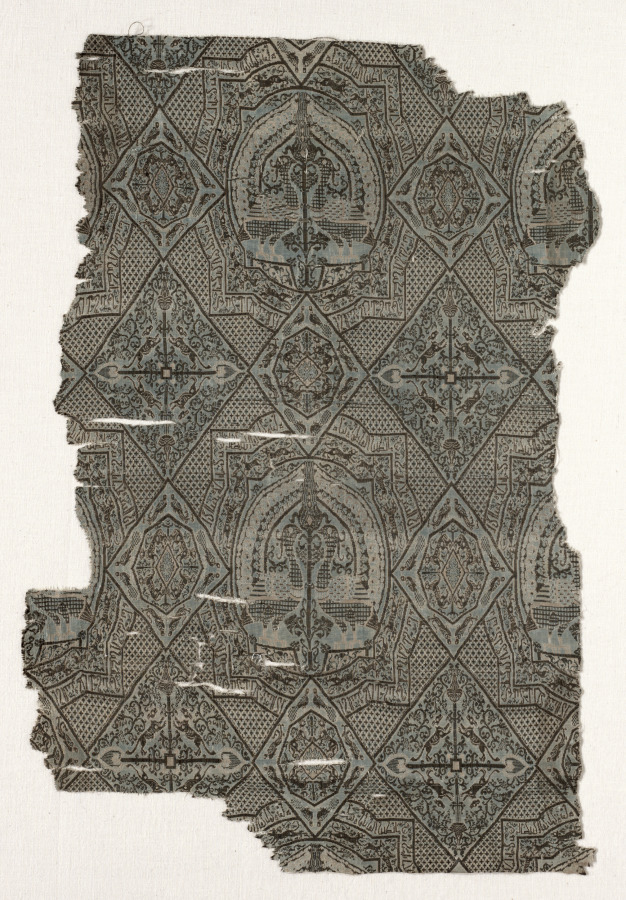
Fragment
Cleveland Museum of Art
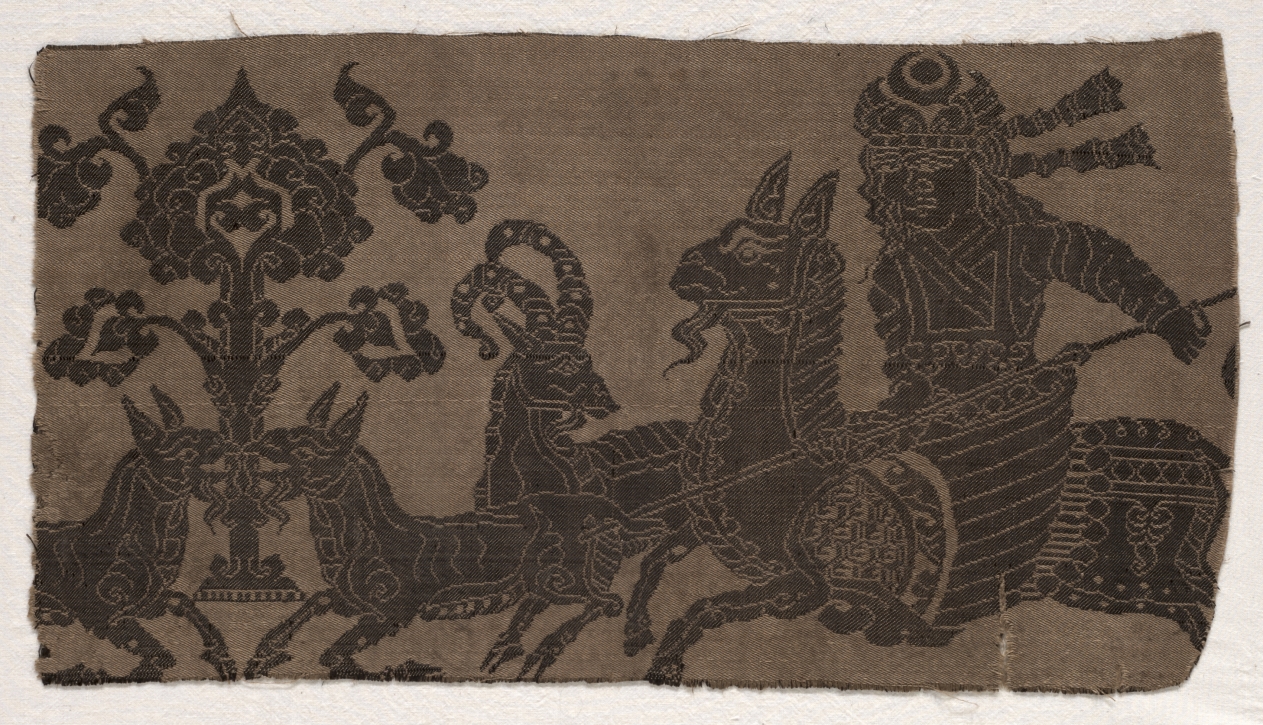
Fragment with Mounted Hunter Spearing Animals
Cleveland Museum of Art
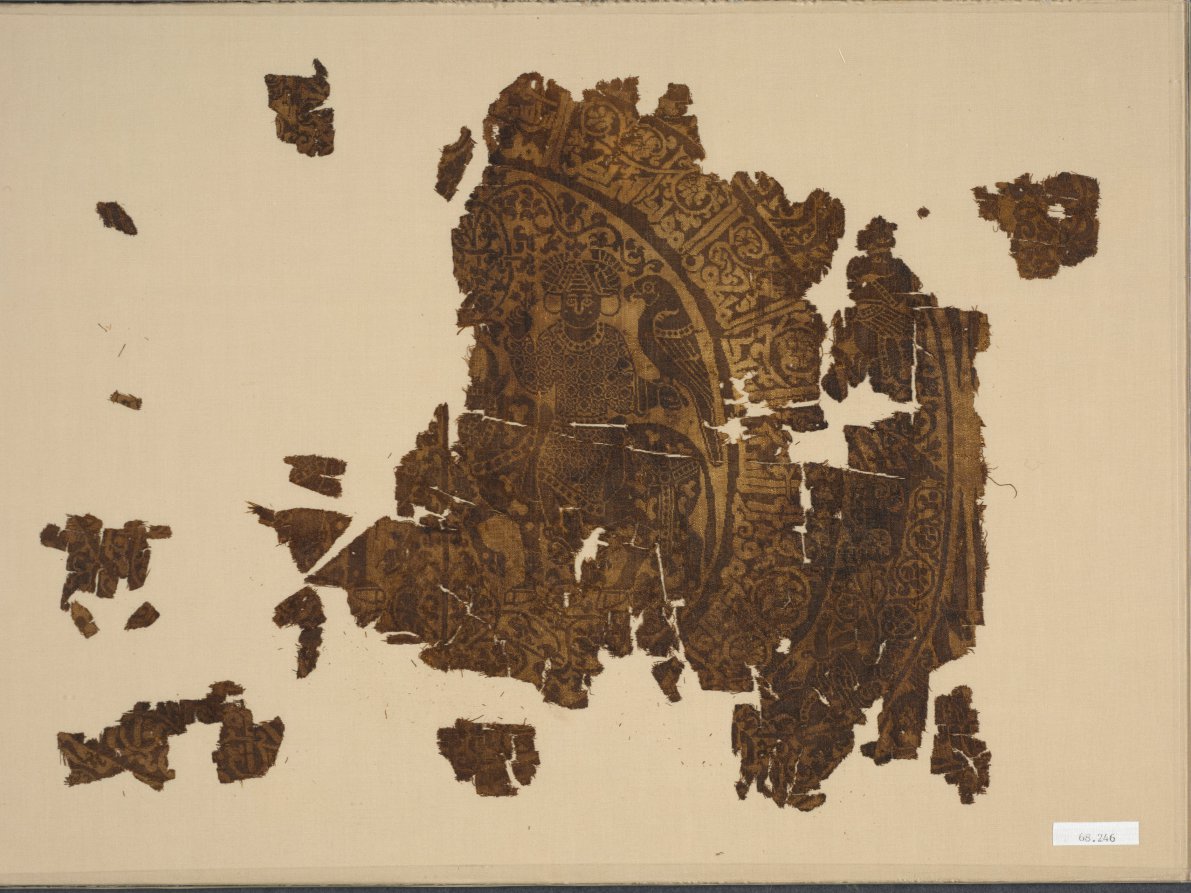
Fragment with falconer riding a bull in a rondel
Cleveland Museum of Art
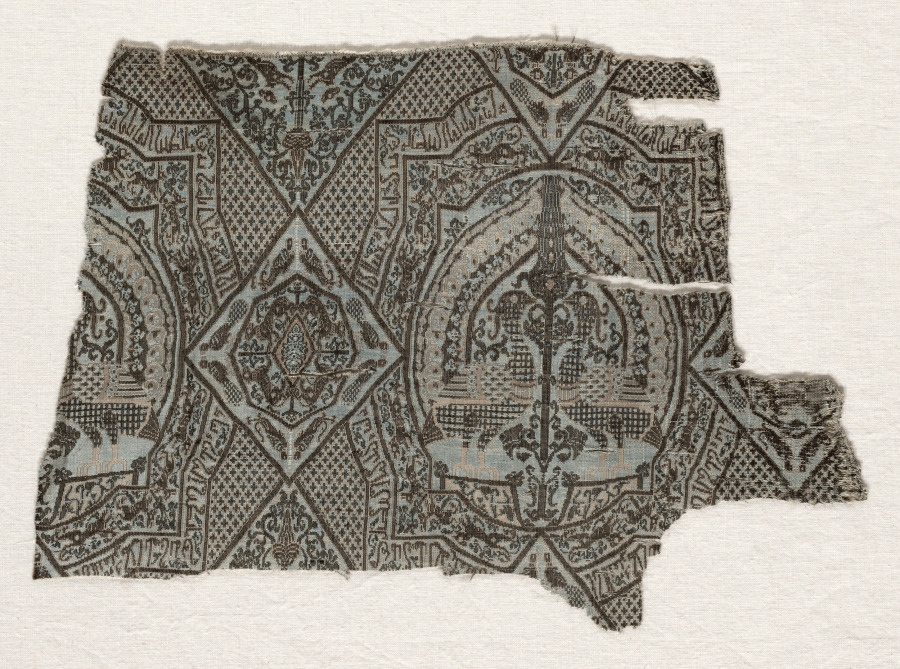
Fragment
Cleveland Museum of Art
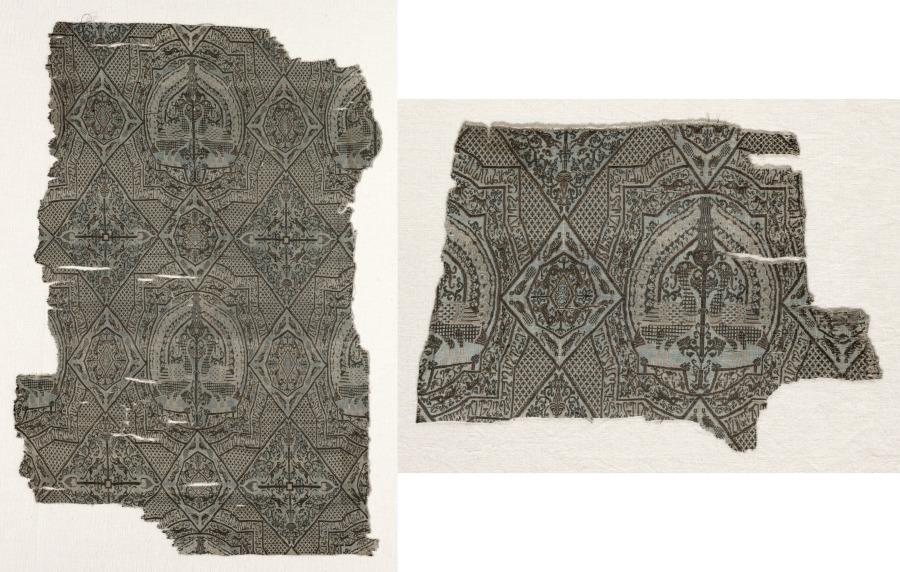
Fragments
Cleveland Museum of Art
Samite fragment with hunters
Cleveland Museum of Art