Cleveland Museum of Art
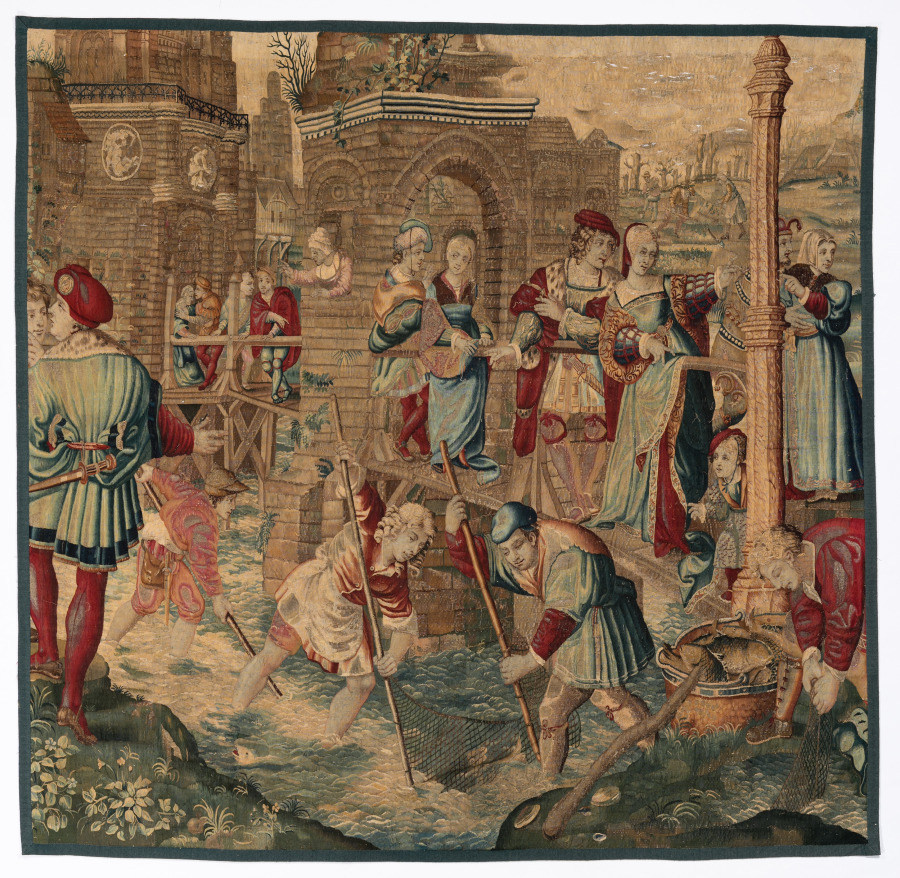
Four Seasons
Gobelins ManufactoryLinkedCulture matchlcp-55a1469dbe13
From the Cleveland Museum of Art record
LinkedCulture assembled this text from several fields of Cleveland Museum of Art’s catalogue record, so it is not the museum’s own wording as published. See “How LinkedCulture maps this record” below.
Cleveland Museum of Art’s catalogue record
- Medium
- Wool, silk, and gold filé; tapestry weave
- Credit Line
- Gift of Francis Ginn, Marian Ginn Jones, Barbara Ginn Griesinger, and Alexander Ginn in memory of Frank Hadley Ginn and Cornelia Root Ginn
- Type of artwork
- Tapestry
- Department
- Textiles
Also in Cleveland Museum of Art’s record. The museum’s own label for these fields has not been confirmed yet, so each is named by its field in the museum’s data.
- creation_date
- designed c. 1535, woven mid- to late 1600s
Taken from LinkedCulture’s stored copy of Cleveland Museum of Art’s record. A fresh capture of the museum’s own record has not been made for this object yet.
What the image shows
Four tapestries depicting lively scenes of people in medieval attire engaging in various activities.
Generated by LinkedCulture from the photograph alone, without the museum’s catalogue text (Qwen/Qwen2.5-VL-7B-Instruct), and not yet reviewed by a person. It describes the picture, not the object’s history, and it is not part of the museum’s record.
The authoritative record is held by Cleveland Museum of Art. LinkedCulture surfaces this object and its connections; it does not alter institutional metadata. The fields above are the museum’s, under its own labels. LinkedCulture’s derived fields are listed separately below and marked as ours.
Get printable QR codesHide QR codes
Open QR codes for this object page and the museum record. They stay collapsed until needed.
Provenance & credit
As published by the source institution. Coverage varies — not every institution's open-data feed includes ownership history.
- Provenance
- Balloch Castle, Scotland. | January 27-Febuary 3, 1923: Henry Symons Sale: Anderson Galleries, New York, January 27-Febuary 3, 1923 | 1923-1952: Frank Hadley Ginn (1868-1938) and Cornelia Winifred Root Ginn (1877-1937), Cleveland, OH | 1952-: The Cleveland Museum of Art, Cleveland, OH
How LinkedCulture maps this record
To search objects from different museums together, LinkedCulture reads each museum’s record into a common set of fields. The values below are LinkedCulture’s, under LinkedCulture’s names. They are not Cleveland Museum of Art’s wording; the museum’s own record is shown above under its own labels.
- Object ID
- 130165
- Object Type
- Tapestry
- Cleveland Museum of Art field “Type of artwork” · copied as is
- Creator
- Gobelins Manufactory
- Cleveland Museum of Art field
creators(museum’s label not yet confirmed) · derived by LinkedCulture from the museum field · Artist-role creator's description with life dates removed.
- Cleveland Museum of Art field
- Culture
- France
- Cleveland Museum of Art field “Culture” · copied as is
- Medium
- Wool, silk, and gold filé; tapestry weave
- Cleveland Museum of Art field “Medium” · copied as is · Cleveland's 'technique' field holds materials.
- Department
- Textiles
- Cleveland Museum of Art field “Department” · copied as is
- Tags
- gender unknown
- Cleveland Museum of Art field
tags(museum’s label not yet confirmed) · combined from several museum fields - Cleveland Museum of Art field
artists_tags(museum’s label not yet confirmed) · combined from several museum fields
- Credit Line
- Gift of Francis Ginn, Marian Ginn Jones, Barbara Ginn Griesinger, and Alexander Ginn in memory of Frank Hadley Ginn and Cornelia Root Ginn
- Cleveland Museum of Art field “Credit Line” · copied as is
- Provenance
- Balloch Castle, Scotland. | January 27-Febuary 3, 1923: Henry Symons Sale: Anderson Galleries, New York, January 27-Febuary 3, 1923 | 1923-1952: Frank Hadley Ginn (1868-1938) and Cornelia Winifred Root Ginn (1877-1937), Cleveland, OH | 1952-: The Cleveland Museum of Art, Cleveland, OH
- Cleveland Museum of Art field “Provenance” · copied as is
- Date
- designed c. 1535, woven mid- to late 1600s
- Cleveland Museum of Art field
creation_date(museum’s label not yet confirmed) · copied as is
- Cleveland Museum of Art field
- Begin Year
- 1530
- Cleveland Museum of Art field
creation_date_earliest(museum’s label not yet confirmed) · copied as is
- Cleveland Museum of Art field
- End Year
- 1700
- Cleveland Museum of Art field
creation_date_latest(museum’s label not yet confirmed) · copied as is
- Cleveland Museum of Art field
The museum’s own record has not been captured for this object yet, so the museum fields shown above are limited to values LinkedCulture stored unchanged.
Part of a LinkedCulture topic
 18th-Century French Decorative Arts
These objects represent the luxury decorative traditions of 18th-century France, unified by their use of refined materials (tapestry weave, Savonnerie knotted pile, carved wood), classical themes (Ovid's Metamorphoses, S
48 objects from 5 institutions
Related across collections
Semantically similar works from Cleveland Museum of Art and other institutions.